EdX

Antarctica in a Changing Climate (edX)

Antarctica in a Changing Climate (edX)

Explores the exceptional aspects of the Antarctic climate and its ecosystems, looking at the current and future impacts of environmental change, including climate change. This course introduces participants to the ecological and physical characteristics of the Antarctic environment and Antarctic governance.

Class Deals by MOOC List - Click here and see EdX's Active Discounts, Deals, and Promo Codes.

It has a particular focus on current environmental policies in place to protect Antarctica and future policy and governance needs. The exceptional nature of the Antarctic climate and ecosystems will be explored, along with the current state and predictions based on further human-induced climate change. A suite of potential future implications of environmental change for Antarctic governance will also be examined.

What you'll learn
Learners will gain:

  • An understanding of the peculiar governance regime for the Antarctic
  • Knowledge about the global climate system, with a focus on the role played by Antarctica
  • An appreciation for the impacts of climate change on Antarctic ecosystems
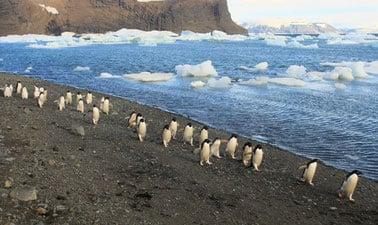
  • An insight into key characteristics of Antarctic fauna, including whales, penguins and seals
  • The ability to think creatively about possible climate futures and explore their implications for Antarctic governance and ecosystems.

Who would benefit:

  • Antarctic educators and science communicators
  • Climate scientists
  • Conservationists
  • Ecologists
  • Environmental economists
  • Glaciologists
  • Humanities scholars and social scientists
  • Marine biologists
  • Meteorologists
  • Physicists
  • Policymakers and diplomats
  • Those interested in working in Antarctica
  • Those with an interest in science outreach
Go to Class
MOOC List is learner-supported. When you buy through links on our site, we may earn an affiliate commission.

Related Courses

Urban Rewilding: Restore Your Local Ecosystem (edX) EdX
Wageningen University,WageningenX

Urban Rewilding: Restore Your Local Ecosystem (edX)

Would you like to see your neighbourhood become more liveable and sustainable? To alleviate city-specific challenges – from urban heat islands to mental health issues – we need to first change our minds. From wanting to control nature to leveraging its power, we need to allow nature to do what it does best: grow. Join Wageningen University & Research and rewild your city. With gardens, parks and ponds, with indigenous plants and animals, we will see both ecosystems and our living environment restored.

Self Paced
Self-Paced
Environmental Protection and Sustainability (edX) EdX
IsraelX

Environmental Protection and Sustainability (edX)

Uncover better solutions to help manage a wide range of environmental problems and challenges facing our world today. Do you want to understand more about the environmental problems we currently face? Do you want to learn ways we can reduce the negative effects of these problems, and keep our environment more sustainable? If so, this course is for you.

Self Paced
Self-Paced
The Effect of Fires on People, Property and the Environment (Coursera) Coursera
University of Maryland, College Park

The Effect of Fires on People, Property and the Environment (Coursera)

Fires impact people, property and the environment in all countries around the world. In some cases, the resulting losses are extraordinary, causing hundreds of deaths, widespread damage to property and contents and significant impacts on the environment. More often, fires may cause a single casualty or affect a single home, though the effects are still highly significant to those affected and collectively are substantial. This course will provide an overview of the challenges posed by fire as well as the fire safety solutions that are available to meet those challenges.

Sep 14th 2026
5-12 Weeks
Act on Climate: Steps to Individual, Community, and Political Action (Coursera) Coursera
University of Michigan

Act on Climate: Steps to Individual, Community, and Political Action (Coursera)

Are you concerned about climate change? Would you like to learn how to address and respond to this challenge? If so, this course is for you. Act on Climate: Steps to Individual, Community, and Political Action is intended to help learners understand, address and respond to climate change as individuals and in partnership with their communities and political leaders.

Sep 7th 2026
5-12 Weeks
As above, so below: An introduction to soils, ecosystems and livelihoods in the Tropics (edX) EdX
KU Leuven University,KULeuvenX

As above, so below: An introduction to soils, ecosystems and livelihoods in the Tropics (edX)

The tropics are as beautiful and diverse below-ground as they are above-ground. Learn how to use knowledge about the natural variability in soil properties for the sustainable management of ecosystems and farms. Soils form the foundation of sustainable development. They grow our food, fiber and fuel, are a habitat for organisms, buffer and purify water and safeguard archaeological legacies.

Self Paced
Self-Paced
Climate Change Education (edX) EdX
Inter-American Development Bank - IDB,IDBx

Climate Change Education (edX)

Learn how to work with your students to help them explore climate change through the use of interactive and engaging activities. These activities are designed for students at the primary and secondary levels. Our climate is changing rapidly, and now more than ever we need to be ready to act and prepare the next generation to take care of our planet. This course explores the basic science behind climate change and presents the tools to teach it in a positive, engaging and participatory way. The course also introduces some of the ethical and social issues around climate change.

Self Paced
Self-Paced
Sustainable Urban Environments (edX) EdX
Trinity College, Hartford,TrinityX

Sustainable Urban Environments (edX)

Learn how integrated systems and individual actions can shape sustainable cities, generating higher quality of life for the future. How can we strengthen sustainability? By empowering individuals and communities to transform and balance dynamic natural resources, economic prosperity, and healthy populations. In this course, you’ll explore productive and disruptive social, ecological, and economic intersections – the “triple bottom line.”

No sessions available
5-12 Weeks
Sustainable Food Security: The value of systems thinking (edX) EdX
Wageningen University,WageningenX

Sustainable Food Security: The value of systems thinking (edX)

Learn how to solve the ‘Rubik’s cube’ of systems thinking and how it’s applied to improve the environmental sustainability of food production systems! Have you ever considered how many aspects of food production affect the natural environment? Every aspect needs to be considered in attaining the future goal to produce enough food for the growing population while at the same time preserving our planet. It’s as difficult as solving a Rubik’s cube; changing one aspect may affect the environment in a major way.

Self Paced
Self-Paced
Antarctica: From Geology to Human History (edX) EdX
Victoria University of Wellington,WellingtonX

Antarctica: From Geology to Human History (edX)

Take a virtual field trip to Antarctica, as we go on location to explore the geology and history of the coldest, driest, windiest continent on earth. Explore the continent of Antarctica and more than 500 million years of geological history and 250 years of geographical discovery and scientific endeavour. In this course, you will learn through lectures filmed on location on Ross Island and in the McMurdo Dry Valleys of Antarctica.

No sessions available
5-12 Weeks
Introduction to Environmental Science (edX) EdX
DartmouthX,Dartmouth College

Introduction to Environmental Science (edX)

A scientific study of the natural world and how it is influenced by people. Major topics include: food, energy, human population, biodiversity and global change. Environmental science is the study of patterns and processes in the natural world and their modification by human activity. To understand current environmental problems, we need to consider physical, biological and chemical processes that are often the basis of those problems.

Self Paced
4 Weeks