EdX

Sustainable Urban Environments (edX)

Sustainable Urban Environments (edX)

Learn how integrated systems and individual actions can shape sustainable cities, generating higher quality of life for the future. How can we strengthen sustainability? By empowering individuals and communities to transform and balance dynamic natural resources, economic prosperity, and healthy populations. In this course, you’ll explore productive and disruptive social, ecological, and economic intersections – the “triple bottom line.”

Class Deals by MOOC List - Click here and see EdX's Active Discounts, Deals, and Promo Codes.

You’ll investigate a spectrum of global, national, regional, municipal and personal relationships that are increasing resiliency. Most importantly, you’ll learn how to effectively locate your interests, and to leverage optimistic change within emerging 21st century urban environments.

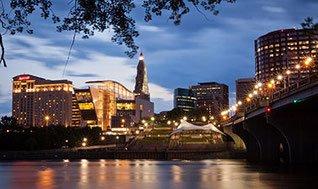
This course will describe fundamental paradigm shifts that are shaping sustainability. These include connectivity, diversity, citizen engagement, collaboration source tracing, mapping, transportation, and integrative, regenerative design. We will take examples from cities around the globe; making particular use of the complex evolution of site-specific conditions within the Connecticut River watershed. In addition we will present tools and strategies that can be utilized by individuals, communities, and corporations to orchestrate effective and collective change.
Each week, lessons will highlight the significance of clean water as a key indication of ecosystem, community and human health. Learners will be asked to investigate and share information about their local environment.
Finally, we will note the impact of such disruptive forces as industrial pollution, changing governance, privatization of public services, mining of natural resources, public awareness, and climate change. A fundamental course goal will be to characterize indicators of economic prosperity and happiness that relate to environmental sustainability – and the capacity of individuals to create change.

What you'll learn

  • Systems of thinking that can leverage change
  • How water is key to sustainability
  • Ways to trace sources of materials and knowledge
  • Identification of strategic urban infrastructure systems
  • How to strengthen sustainability, wherever you are

Syllabus

Week #1: Basic Concepts
This week will offer an introduction to basic concepts of urban sustainability and key course points. Various sustainability rating systems will be reviewed, with respect to the capacity of metrics to leverage environmental change and indicate quality-of-life benefits.

Week #2: Governance and Science
This week focuses on scientific and legal efforts to expand urban sustainability, as well as their impacts on human health, social and environmental justice, and both the management and stewardship of natural resources.

Week #3: Urban Planning for Everyday Routines
This week will emphasize the everyday world of urban sustainability, including tracing municipal services, urban parks and planning, as well as efforts to make cities more walkable. We will also explore links between sustainability and human happiness.

Week #4: Urgency and the Global Economy
We will look at the big picture to examine big corporations, development projects, and systems that can leverage climate change mitigation and adaptation, fair trade, food security, green finance – all at a planetary scale. The UN’s sustainable development goals (SDGs) will be reviewed along with international conservation and rapid urban development. We will analyze how our smart phones and computers are source of global information, and a physical trace of global resources and manufacturing.

Week #5: Adaptation and Individual Mitigation
This week, we will explore individual people’s strategies and capacities for addressing urban sustainability through consumption patterns, eating habits, health choices, energy usage, bicycling, recycling, and the new sharing economy.

Week #6:
The final week will focus on summarizing the course and completing all projects.

Go to Class
MOOC List is learner-supported. When you buy through links on our site, we may earn an affiliate commission.

Related Courses

Circular Economy for a Sustainable Built Environment (edX) EdX
Delft University of Technology,DelftX

Circular Economy for a Sustainable Built Environment (edX)

Learn how the principles of the Circular Economy can be applied to the built environment ranging from products and buildings to metropolitan and regional development strategies. In this course you will become familiar with circularity as a systemic, multi-disciplinary approach, concerned with the different scale, from material to product, building, city, and region.

Self Paced
Self-Paced
Sustainable Cities (edX) EdX
SDGAcademyX,SDG Academy

Sustainable Cities (edX)

Learn how government, the private sector, and other actors can support sustainable urban development. Did you know that experts estimate an additional three billion people will live in cities by 2050? What will the impact be on the current world population – half of which currently lives in cities and contributes to about three-fourths of global economic output?

Self Paced
Self-Paced
Feeding a Hungry Planet: Agriculture, Nutrition and Sustainability (edX) EdX
SDGAcademyX,SDG Academy

Feeding a Hungry Planet: Agriculture, Nutrition and Sustainability (edX)

How do we create a healthy and sustainable diet for the growing world population? Agriculture is more than waving fields of wheat; our ability to grow food from existing natural resources – and without decimating those resources – is key to sustainably feeding the world. In this course, learn about food security worldwide, the effects of malnutrition, how we manage ecosystems that provide food resources and more.

Self Paced
Self-Paced
Sustainable Packaging in a Circular Economy (edX) EdX
Delft University of Technology,DelftX

Sustainable Packaging in a Circular Economy (edX)

Learn how to apply the principles of the circular economy to sustainable packaging systems. It has become almost impossible to imagine what our lives would be like without the many benefits of packaging - just think about the different packaging and single-use items you use on a daily basis. Yet as our global population grows in size and affluence, both our collective demand for packaging materials and the waste we generate as a result will increasedramatically.

Self Paced
Self-Paced
Sustainable Aviation: The Route to Climate-Neutral Aviation (edX) EdX
Delft University of Technology,DelftX

Sustainable Aviation: The Route to Climate-Neutral Aviation (edX)

To reduce the environmental footprint of the aviation sector we need to start a clean sky revolution. Discover the latest developments in this field – from airplane design, energy carriers, operations – and learn how you can play a role. Sustainable aviation is a key area for climate action. In this course, we will introduce you to various aircraft technologies, and recent innovations and promising future developments in the field of aviation. All necessary mathematical and engineering concepts will explained.

Self Paced
Self-Paced
Sustainable Development: The Post-Capitalist Order (edX) EdX
SDGAcademyX,SDG Academy

Sustainable Development: The Post-Capitalist Order (edX)

Sustainable development represents a shift from our current system of inequitable capitalism to one that prioritizes prosperity for all, while remaining conscious of its environmental impact and sustainability for future generations. Learn why sustainable development has been adopted by countries and multilateral organizations around the world, and how this approach is transforming the way we live, work, and govern our planet.

Self Paced
Self-Paced
Explorer l’espace des humains: une introduction à la géographicité (edX) EdX
École Polytechnique Fédérale de Lausanne,EPFLx

Explorer l’espace des humains: une introduction à la géographicité (edX)

Explorer comment la géographie, la cartographie, l’urbanisation et la justice spatiale jouent un rôle dans la compréhension de l’espace des humains et des sociétés. Comment définir et comprendre la notion d’espace? Comment l’urbanisation, la mobilité, Internet et la mondialisation ont-ils influencé notre perception du temps et de l’espace? Ce cours a pour objectif de définir la notion d’espace en apportant des clés de lecture pour comprendre les sociétés qui nous entourent.

Self Paced
Self-Paced
Building expertise on developing sustainable and resilient infrastructure (edX) EdX
École Polytechnique Fédérale de Lausanne,EPFLx

Building expertise on developing sustainable and resilient infrastructure (edX)

This course provides knowledge, builds expertise and provides tools on the planning, financing, procurement and contracting of sustainable and resilient infrastructure projects. This course provides knowledge, builds expertise and provides tools on the planning, financing, procurement and contracting of sustainable and resilient infrastructure projects.

Self Paced
Self-Paced
SDG: Moving Towards Sustainable Work (edX) EdX
Universidad Carlos III de Madrid - UC3M,UC3Mx

SDG: Moving Towards Sustainable Work (edX)

Decent work is thecritical engine of sustainable development. This course explores the United Nations' Sustainable Development Goals and mechanisms for developing decent and sustainable work. The United Nations' Sustainable Development 2030 Agenda gives us the opportunity to change and improve the lives of millions of people. These widespread efforts won't juststem from organizations in the formal public or private sectors (governments, corporations, trade unions, etc.) but will also require participation from ordinary people and civil society as a whole.

Self Paced
Self-Paced
Sustainability & Major Sport Events: Principles (edX) EdX
Hamad Bin Khalifa University - HBKU,HBKUx

Sustainability & Major Sport Events: Principles (edX)

Learn the five pillars of sustainability and how to apply these when planning and hosting a major sport event. While any major sport event can pose great opportunities for the host city or region, there are also challenges associated with hosting these events. The environmental impact on the country's natural resources, the workforce, and infrastructure are just some of the considerations. It is essential to ensure that your major sport event is sustainable for your city throughout the event, but also after the event has been completed.

Self Paced
Self-Paced
Built environment sustainability assessment (edX) EdX
Universitat Politècnica de València,UPValenciaX

Built environment sustainability assessment (edX)

The course introduces the basic elements and trends for performing a through built environment assessment and develops the tools for urban sustainability policy impact analysis. The course introduces the basic elements and trends for performing a through built environment assessment and develops the tools for urban sustainability policy impact analysis.

Self Paced
Self-Paced
Ethical Decision-Making: Cultural and Environmental Impact (edX) EdX
Georgetown University,GeorgetownX

Ethical Decision-Making: Cultural and Environmental Impact (edX)

International corporations can trigger significant cultural shifts and environmental impacts. For example, when foreign corporations set up large mineral extraction operations in developing countries, both culture and environment are altered. Ethical concerns arise when manipulative marketing techniques are used to mislead foreign consumers, especially about potentially harmful products. In this course, you will consider the ethics of these types of global influence.

Self Paced
Self-Paced