Animals, Self, and Society (Coursera)

Animals, Self, and Society (Coursera)

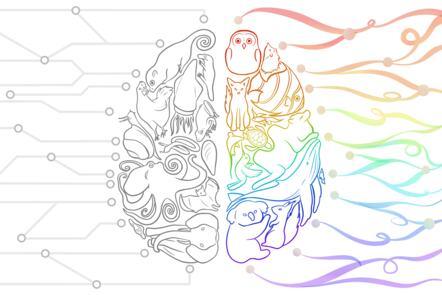
This course explores how animals and people are situated within the web of structures and connections known as “society.” Module 1 considers some of the key symbolic roles that animals play in society by investigating the practice of “thinking with animals.” We investigate how people construct different meanings of animals and the implications these meanings have for both animals and humans. You will gain first-hand experience of this by analyzing how animals are represented in the media.

Class Deals by MOOC List - Click here and see Coursera's Active Discounts, Deals, and Promo Codes.

Modules 2 and 3 investigate human-animal relationships, including those that involve suffering as well as those that are beneficial. Although many people describe their pets as friends or family members, Module 2 takes a deeper dive into what constitutes friendship and family membership where other species are concerned. Module 3 examines the dark side of these relationships, focusing on animal abuse and its relationship to domestic violence. Module 4 focuses on people’s encounters with those animals outside the boundaries of the home and the farm. The way people understand and regard the species commonly considered “wild” shapes the treatment and moral status of these animals.
What You Will Learn

  • Demonstrate knowledge of how animals serve as symbols and metaphors in the media
  • Summarize the practices and interactions that allow for human-animal relationships
  • Identify the major factors that lead to animal abuse
  • Represent instances of human-wildlife conflict

Course 1 of 3 in the Animals and Society Specialization.

Syllabus

WEEK 1
Thinking with Animals
In this module, you will gain an understanding of how we socially construct animals.

WEEK 2
Close Relationships
In this module, you will examine the interaction between humans and the animals we consider pets.

WEEK 3
The Dark Side
In this module, you will investigate the process of defining animal abuse and its relationship with other aspects of society.

WEEK 4
Wild(life) Encounters
In this module, you will explore key questions about the interactions between humans and wild animals.

Go to Class
MOOC List is learner-supported. When you buy through links on our site, we may earn an affiliate commission.

Related Courses

Ethical Social Media (Coursera) Coursera
The University of Sydney

Ethical Social Media (Coursera)

Social media connects us across space and time, allowing us to find like-minded communities and participate creatively in public life as never before. We may often use social media without thinking much about the possible consequences. But there is a shadow side associated with social media use, which takes the form of hate speech, increased surveillance, lack of anonymity and questionable use of our data. What do we need to know to use social media spaces effectively, in a way that is safe and productive for all?

Jun 15th 2026
5-12 Weeks
Compassion in Fashion: Sustainability and the Global Fur Trade (FutureLearn) FutureLearn
ACTAsia

Compassion in Fashion: Sustainability and the Global Fur Trade (FutureLearn)

Learn how fashion designers and businesses can make more compassionate choices to build fur-free, sustainable fashion brands. Explore why sustainability in fashion begins with fur-free. As the fashion industry’s future leaders and decision-makers, students in the fashion industry today have the potential to steer the industry to a fur-free and sustainable future. On this course, you’ll examine fashion sustainability through the lens of the fur industry.

Jan 2nd 2023
5-12 Weeks
Understanding Food Labels (FutureLearn) FutureLearn
University of Reading,EIT Food,EIT

Understanding Food Labels (FutureLearn)

Learn how to interpret food labels so you can make informed food choices and buy food that supports your health and wellbeing. Get the facts you need to put your trust in the food system. Huge amounts of information are provided on food product labels, but surveys have shown that we’re often unsure of its meaning. On this course, you’ll learn how to make sense of the regulations, data, and logos on packaging so that you can make more informed food choices.

Jan 2nd 2023
3 Weeks
Sharks! (edX) EdX
University of Queensland,CornellX,Cornell University,UQx

Sharks! (edX)

Learn about the most fascinating animals on Earth, their sophisticated senses and how sharks and their relatives have impacted human history and culture. Did you know that you can track some sharks’ movements on Twitter? Or that the scales on their skin have influenced the way humans design boats, planes, and even swimsuits? Or that sharks have more senses than humans?

Jul 3rd 2023
4 Weeks
New Models of Business in Society (Coursera) Coursera
University of Virginia

New Models of Business in Society (Coursera)

In this course, developed at the Darden School of Business at the University of Virginia and taught by top-ranked faculty, we will be discussing the emergence of a new story about business. This new story locates business within a societal framework. Almost every business creates or destroys value for customers, suppliers, employees, communities and society, in addition to shareholders and other financiers. A number of new models of business can be built on this idea such as corporate responsibility, philanthropy, shared value and sustainability. Profits and stakeholder value go together, and this course explains how. The final session explores the idea of how to become a stakeholder entrepreneur and create a business that makes money and makes the world a better place.

Jun 8th 2026
4 Weeks
Chimpanzee Behavior and Conservation (Coursera) Coursera
Duke University

Chimpanzee Behavior and Conservation (Coursera)

Chimpanzees are one of our closest living relatives, yet almost nothing was known about their behavior in the wild until Jane Goodall started her groundbreaking study of the chimpanzees of Gombe, Tanzania in 1960. This study continues today, following the same chimpanzee families that Jane Goodall first encountered over 55 years ago. Guided by three course instructors who have lived and worked with the Gombe chimpanzees, you will learn how Goodall’s early discoveries changed our view of human uniqueness.

Jun 8th 2026
5-12 Weeks
Global Health at the Human-Animal-Ecosystem Interface (Coursera) Coursera
University of Geneva

Global Health at the Human-Animal-Ecosystem Interface (Coursera)

The University of Geneva, Institute Pasteur, University of Montreal and Centre Virchow-Villermé/University Paris Descartes welcome you to this new MOOC on "Global Health at the Human-Animal-Ecosystem Interface"! Over the next 5 weeks, you will explore and learn about some of the major and current Global Health Challenges at the Human-Animal-Ecosystem Interface: zoonotic emerging infections (e.g. Ebola, Nipah, MERS, Avian Influenza), antimicrobial resistance, neglected tropical diseases (e.g. rabies, leishmaniasis, zoonotic TB), snakebite and other human-animal conflicts etc.

Jun 1st 2026
5-12 Weeks
Political Geography (Coursera) Coursera
Moscow State Institute of International Relations - MGIMO

Political Geography (Coursera)

Political geography is a discipline concerned with the spatial dimensions of politics. This course is an introduction to the study of political science, international relations and area studies, providing a systemic approach to the spatial dimension of political processes at all levels. It covers their basic elements, including states, supranational unions, geopolitical systems, regions, borders, capitals, dependent, and internationally administered territories.

Aug 1st 2022
5-12 Weeks