Movements Are Controlled By Muscle Forces (Coursera)

Movements Are Controlled By Muscle Forces (Coursera)

Movements Are Controlled By Muscle Forces is the first course of the specialization "Science of Movement". In this course, we will delve into the mechanisms by which our nervous system communicates with our muscles, allowing us to perform a wide range of coordinated movements with precision. Whether you are a fitness enthusiast, a sports coach, a medical student, or simply curious about the inner workings of your body, this course will provide you with a comprehensive understanding of how the nervous system plays a vital role in enabling our muscles to produce movements.

Class Deals by MOOC List - Click here and see Coursera's Active Discounts, Deals, and Promo Codes.

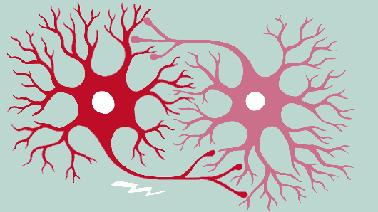
The discussion begins with an explanation of how the activation signal is generated by neurons and then transmitted to targeted muscles. You will learn how the nervous system provides muscles with the activation signals needed to perform movement. You will learn about the contractile properties of motor units and how the force produced by a muscle depends on the amount of motor unit activity.
By the end of this course, you will have gained a deep understanding of the intricate relation between the nervous system and muscle activation. You will be equipped with knowledge that can be applied to various fields, such as exercise prescription, sports performance, physical therapy, and neurology.

What you'll learn

  • To describe the generation and transmission of the activation signal.
  • To explain the translation of the activation signal into muscle force.

Syllabus

Excitable Membranes
This week you will be introduced to this course and get started right away with discovering how the nervous system generates and transmits the activation signal needed by muscles to perform movement. You will learn that this ability depends critically on the electrical properties of neurons.

Nerve-Muscle Synapse
In the second week of this course you will learn about the transmission of the electrical activation signal from the nervous system to muscle and how to measure and interpret the resulting activation of muscle. In addition, we will discuss a transport system that moves organelles and proteins away from and toward the soma of a neuron and the functional significance of these actions.

Motor Unit
The third week of the first course establishes the motor unit as the final common pathway between the nervous system and muscle. We will also compare the contracile properties of motor units and emphasize that it is not possible to identify distinct types of motor units even though muscle fibers can be classified into three types.

Control of Muscle Force
The final week for this course examines the strategies used by the nervous system to control muscle force, the influence of muscle design on the force it generates, and the types of muscle contractions used during voluntary actions.

Go to Class
MOOC List is learner-supported. When you buy through links on our site, we may earn an affiliate commission.

Related Courses

Health Coaching Conversations (Coursera) Coursera
Imperial College London

Health Coaching Conversations (Coursera)

Are you a healthcare practitioner or student in a healthcare field? Do you want to learn how to have more empowering conversations with your patients and support them to take control of their own health and wellbeing? Are you looking for a course to start learning these skills that also fits with your busy life? If so, this is the course for you!

Jul 1st 2026
4 Weeks
Fundamentals of Neuroscience, Part 1: The Electrical Properties of the Neuron (edX) EdX
HarvardX,Harvard University

Fundamentals of Neuroscience, Part 1: The Electrical Properties of the Neuron (edX)

Learn how electricity makes the neurons in your brain tick. Fundamentals of Neuroscience is a three-courseseries that explores the structure and function of the nervous system—from the inner workings of a single nerve cell to the staggering complexity of the brain and the social interactions they enable.

Self Paced
Self-Paced
Music Moves: Why Does Music Make You Move? (FutureLearn) FutureLearn
University of Oslo

Music Moves: Why Does Music Make You Move? (FutureLearn)

Learn about the psychology of music and movement, and how researchers study music-related movements, with this free online course. Learn about why and how music makes you move. Music is movement. A bold statement, but one that we will explore together in this free online course. Together we will study music through different types of body movement. This includes everything from the sound-producing keyboard actions of a pianist to the energetic dance moves in a club.

Jan 24th 2022
5-12 Weeks
Neuropsychology (saylor.org) Saylor Academy
Saylor.org

Neuropsychology (saylor.org)

How does the brain function? How does it interact with the body in order to control and mediate behaviors and actions? Though psychologists have long studied these questions, the workings of the brain remain, in large part, a mystery. In this course, we will explore the field of psychology devoted to the pursuit of these questions: neuropsychology or the study of the structure and function of the brain as it relates to psychological processes.

Legacy Course
Self-Paced
How to Build Muscle and Lose Fat (Skillshare) Skillshare
Skillshare

How to Build Muscle and Lose Fat (Skillshare)

Looking to build muscle? Do you want to lose some fat? Then this course is perfect for you! In this course I'll go over (in depth) how to do both so that you can understand the principals and then apply them yourself for the rest of your life. It's about consistent progress! This course is all you need to reach your goals and continue progressing on your Fitness and Nutrition journey.

Self Paced
Self-Paced
Understanding the Brain: The Neurobiology of Everyday Life (Coursera) Coursera
University of Chicago

Understanding the Brain: The Neurobiology of Everyday Life (Coursera)

Learn how the nervous system produces behavior, how we use our brain every day, and how neuroscience can explain the common problems afflicting people today. We will study functional human neuroanatomy and neuronal communication, and then use this information to understand how we perceive the outside world, move our bodies voluntarily, stay alive, and play well with others.

Jun 29th 2026
5-12 Weeks
Public Involvement in Research (Coursera) Coursera
Imperial College London

Public Involvement in Research (Coursera)

This course focuses on participatory approaches in research, known as 'public involvement' in the UK. You'll specifically, consider why citizens and patients would be involved in research and explore participatory approaches across and within the research cycle in more detail, diving into questions such as: What kinds of participation can be undertaken at each of the 7 stages of the cycle? How can you utilise participation in research? What examples of using participatory approaches exist in research?

Jul 1st 2026
4 Weeks