Agroforestry I: Principles and Practices (Coursera)

Offered by University of Florida,
Agroforestry I: Principles and Practices (Coursera)

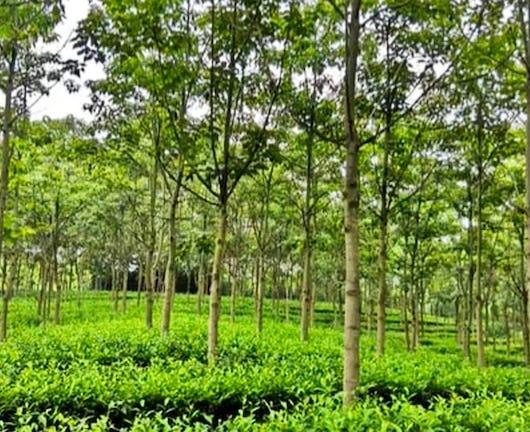
Agroforestry – the practice of growing trees and crops in interacting combinations – is recognized the world over as an integrated approach to sustainable land-use. Agroforestry systems, being multifunctional, facilitate not only the production of food and wood products but also provide a variety of ecosystem services such as climate-change mitigation, biodiversity conservation, and soil quality improvement. This course teaches a broad overview of the most current research and best practices in global agroforestry.

Class Deals by MOOC List - Click here and see Coursera's Active Discounts, Deals, and Promo Codes.

This course is part of the Agroforestry Specialization.

Syllabus

Introduction: A Synthesis of Scientific Developments in Agroforestry
Section 1 presents an overview of the history of scientific developments in agroforestry.

Definitions, Concepts, Classification and Global Distribution
Section 2 investigates how we define and categorize agroforestry methods

Agroforestry Systems in the Tropics and Subtropics
Section 3 is an exploration of agroforestry topics for the tropics and subtropics

Agroforestry Systems in the Temperate Zones
Section 4 is an exploration of agroforestry topics for the temperate zones

Agroforestry (Tree) Species and Their Productivity
Agroforestry tree species and their improvement, uses and products.

Soil Management and Agroforestry
Proper soil management based on understanding the nature and property of soils is critical to the success of any land-use system.

Climate Change, Carbon Sequestration and Agroforestry Systems
The role of agroforestry systems in climate change mitigation.

Ecosystem Services of Agroforestry
A review of the many additional ecosystem services potentially provided by agroforestry systems.

Food Security, Sustainable Development Goals and Agroforestry
Agroforestry's roles in sustainable development and global food security efforts.
Go to Class
MOOC List is learner-supported. When you buy through links on our site, we may earn an affiliate commission.

Related Courses

The Brain and Space (Coursera) Coursera
Duke University

The Brain and Space (Coursera)

This course is about how the brain creates our sense of spatial location from a variety of sensory and motor sources, and how this spatial sense in turn shapes our cognitive abilities. Knowing where things are is effortless. But “under the hood,” your brain must figure out even the simplest of details about the world around you and your position in it.

Jun 22nd 2026
5-12 Weeks
Contemporary Biology (Coursera) Coursera
University of North Texas

Contemporary Biology (Coursera)

This course is an introduction to biology as it applies to our everyday life. Learners will explore the interplay between science and self through a personalized case study of themselves and their environment. By the end of the course, learners will be able to recognize the interactions among natural phenomena and the implications of the scientific principles behind the physical world and their experiences living in it.

Jun 22nd 2026
4 Weeks
ESG Investing: Industry Impacts & Transformations (Coursera) Coursera
Interactive Brokers

ESG Investing: Industry Impacts & Transformations (Coursera)

Through this ESG Investing: Industry Impacts & Transformations course, students with basic knowledge of traditional financial products can explore how certain financial market sectors have been transforming, amid a heightened focus on risk factors that underpin the three pillars of ESG. For example, what led age-old, iconic companies such as Borden and Dean Foods to file for bankruptcy? How are traditional oil giants BP and Exxon Mobil managing the energy transition? And what steps are firms such as International Paper and WestRock taking to align their business operations with forestry concerns?

Jun 22nd 2026
5-12 Weeks
Introduction to Biology: Ecology (Coursera) Coursera
Rice University

Introduction to Biology: Ecology (Coursera)

Ecology is all about connections. In this course, we’ll see how interdependent every living thing is and how people are impacting the natural world. Like all sciences, ecology isn’t just a list of known facts– it’s also a process. I love telling stories, and I’ve included many stories about how we’ve come to know what we know about ecology through observations and experiments.

Jun 22nd 2026
4 Weeks
The Worldview of Thomas Berry: The Flourishing of the Earth Community (Coursera) Coursera
Yale University

The Worldview of Thomas Berry: The Flourishing of the Earth Community (Coursera)

Thomas Berry (1914-2009) was a historian of world religions and an early voice awakening moral sensibilities to the environmental crisis. He is known for articulating a “new story” of the universe that explores the implications of the evolutionary sciences and cultural traditions for creating a flourishing future. This course investigates Berry’s life and thought in relation to the Journey of the Universe project.

Jun 22nd 2026
5-12 Weeks
Agroforestry III: Principles of Plant and Soil Management (Coursera) Coursera
University of Florida

Agroforestry III: Principles of Plant and Soil Management (Coursera)

Agroforestry III: Principles of Plant and Soil Management is a detailed review of fundamental principles and best practices for successful agroforestry projects through understanding plant and soil interactions. This interdisciplinary module, presented by leading experts in the field, is the third in the five-module course covering the various aspects of agroforestry including the global distribution of the practices, their underlying principles, and major scientific advances during the past nearly five decades.

Jun 22nd 2026
3 Weeks
Western Religions & Ecology (Coursera) Coursera
Yale University

Western Religions & Ecology (Coursera)

At first glance the fields of religion and ecology may seem and unlikely pairing, but a deeper consideration reveals the two have a great deal to contribute to one another and are indeed inextricably linked. Religions recognize the unity and interdependence of humans with nature. Ecological sciences affirm this deep interconnection with the natural world. This partnership can inspire work for the wellbeing of the Earth community

Jun 22nd 2026
5-12 Weeks
Agroforestry IV: Climate, Carbon Storage and Agroforestry (Coursera) Coursera
University of Florida

Agroforestry IV: Climate, Carbon Storage and Agroforestry (Coursera)

Welcome to Agroforestry IV: Climate Change, Carbon Storage and Agroforestry Systems, a detailed review of fundamental principles and best practices for successful agroforestry projects. This interdisciplinary module, presented by leading experts in the field, is the fourth in the five-module course covering the various aspects of agroforestry including the global distribution of the practices, their underlying principles, and major scientific advances during the past nearly five decades.

Jun 22nd 2026
1 Week
Epidemics - the Dynamics of Infectious Diseases (Coursera) Coursera
Pennsylvania State University

Epidemics - the Dynamics of Infectious Diseases (Coursera)

Not so long ago, it was almost guaranteed that you would die of an infectious disease. In fact, had you been born just 150 years ago, your chances of dying of an infectious disease before you've reached the tender age of 5 would have been extremely high. Since then, science has come a long way in understanding infectious diseases - what they are, how they spread, and how they can be prevented. But diseases like HIV/AIDS, Malaria, Tuberculosis, or the flu are still major killers worldwide, and novel emerging diseases are a constant threat to public health. In addition, the bugs are evolving. Antibiotics, our most potent weapon against bacterial infections, are losing their power because the bacteria are becoming resistant. In this course, we'll explore the major themes of infectious diseases dynamics.

Jun 22nd 2026
5-12 Weeks