Drones for Environmental Science (Coursera)

Offered by Duke University,
Drones for Environmental Science (Coursera)

Duke Environment+ will be hosting a virtual informational session on Drones for Environmental Science on July 25 at 7 p.m. ET. For more details and to register for the Zoom webinar, see the related FAQ at the bottom of this page. How can drones be used for good in environmental science? What types of data can scientists collect, and how should they go about collecting it using drones? Why should someone integrate drones into their existing career or pursue this field?

Class Deals by MOOC List - Click here and see Coursera's Active Discounts, Deals, and Promo Codes.

This Duke Environment+ course serves as an introduction for anyone interested in learning more about drone use in the environmental sciences. No background knowledge in drones is assumed or necessary.
Over the course of four weeks, you will discover the basics of drone use in the environmental sciences, including specific benefits of using drones for scientific research; types of drones and how they are used for different purposes and missions; and best research practices, including legal and ethical concerns. The final week of the course will help you get started on exploring different career paths that involve drones by introducing you to professionals working with this technology in the environmental sciences.
By the end of the course, you should be better equipped to consider how to use drones for your own research interests, and you will be better prepared for the more in-depth Environment+ course sequence UAS Applicants and Operations in Environmental Science, should you decide to continue your studies.

What You Will Learn
Describe how a variety of drones can accomplish important missions for environmental science.
Explain the importance of key best practices in drone research, including legal and ethical concerns.
Discover relevant career paths in drones for environmental science.

Syllabus

WEEK 1
Introduction to Drones
This week will provide you with foundational drone knowledge. You will learn about inclusive language that you can use to describe drones, the major drone components, and different types of drones. Your knowledge will be assessed via quizzes.

WEEK 2
Why Drones Are Good for Environmental Research
This week, you will learn about the importance of drones for environmental science and management, including the pros and cons of gathering data using drones versus using traditional techniques. Your knowledge will be assessed via quizzes, and an optional discussion post gives you an opportunity to consider how you could use drones in your own research.

WEEK 3
How to Approach Research with Drones
This week, you will learn about how you should approach using drones for research both ethically and legally. You’ll also learn about how to choose an appropriate drone for different types of environmental missions. Your knowledge will be assessed via quizzes, and you will have the opportunity to explore mission planning in an optional discussion post.

WEEK 4
Career Paths
This week, you’ll learn about the concept of the scientist pilot and meet four different professionals who embody its characteristics. This week will help you think about different career pathways that use drones for environmental sciences, and you’ll complete a final graded quiz and discussion post to help you consider these fields of interest.
Go to Class
MOOC List is learner-supported. When you buy through links on our site, we may earn an affiliate commission.

Related Courses

Sound the Alarm: Detection and Response (Coursera) Coursera
Google

Sound the Alarm: Detection and Response (Coursera)

This is the sixth course in the Google Cybersecurity Certificate. These courses will equip you with the skills you need to apply for an entry-level cybersecurity job. You’ll build on your understanding of the topics that were introduced in the fifth Google Cybersecurity Certificate course. In this course, you will focus on incident detection and response.

Aug 24th 2026
4 Weeks
Planning for Climate Change in African Cities (Coursera) Coursera
Erasmus University Rotterdam,United Cities and Local Governments of Africa,African Local Government Academy,Institute for Housing and Urban Development

Planning for Climate Change in African Cities (Coursera)

Climate change poses a threat to economic growth and long-term prosperity of many countries around the world. Africa is not an exception, considering the actual and potential impacts of climate change and climate variability that will threaten its vulnerable sectors and human populations. African countries are projected to experience changing rainfall patterns, rising sea levels, and higher temperatures that will affect food security, agricultural production, water availability, and public health, among others. These climate change impacts and climate variability can further produce social and political problems, such as rural-urban migration and water resource disputes.

Sep 14th 2026
5-12 Weeks
Sustainability through Soccer: Systems-Thinking in Action (Coursera) Coursera
University of Virginia

Sustainability through Soccer: Systems-Thinking in Action (Coursera)

This course takes learners on a journey through a progression of systems-thinking and sustainability concepts. Using the beautiful game of soccer as an analogy, we'll work together to illuminate real-world interdependencies (such as between climate change and human rights), building the chain of concepts in a fun, accessible way. Soccer nerds and newbies alike will be entertained and, ultimately, rewarded with the epiphanies that come from seeing in systems more clearly.

Sep 14th 2026
4 Weeks
Algae Biotechnology (Coursera) Coursera
University of California, San Diego

Algae Biotechnology (Coursera)

For decades, researchers have been studying microalgae to understand their biological functions and how we can use technology to harness algae’s power to create a wide range of commercial products. In this course, we will cover how synthetic biology, genetic engineering, and metabolic engineering is used in algae biotechnology, and also examine the current state of algae biotechnology research and tools. We’ll also explore some of the common bio-products we can make from algae, and take a look at some real-world algae companies that are using algae biotechnology to create products consumers can buy today.

Sep 14th 2026
5-12 Weeks
Renewable Energy: Fundamentals and Job Opportunities (Coursera) Coursera
University at Buffalo

Renewable Energy: Fundamentals and Job Opportunities (Coursera)

This course prepares you to recognize the complexities and nuances of different renewable energy solutions, as well as relevant career opportunities (both technical occupations and roles not typically associated with clean energy). Learners are immersed in discussions about green energy technologies, the impact of sustainability on society, energy consumption in the United States and conservation. Topics include: tenets of green building design and construction, solar energy conversion through photovoltaic cells, wind turbine site selection and design, and nanotechnology applications in clean energy.

Sep 7th 2026
5-12 Weeks
Greening the Economy: Lessons from Scandinavia (Coursera) Coursera
Lund University

Greening the Economy: Lessons from Scandinavia (Coursera)

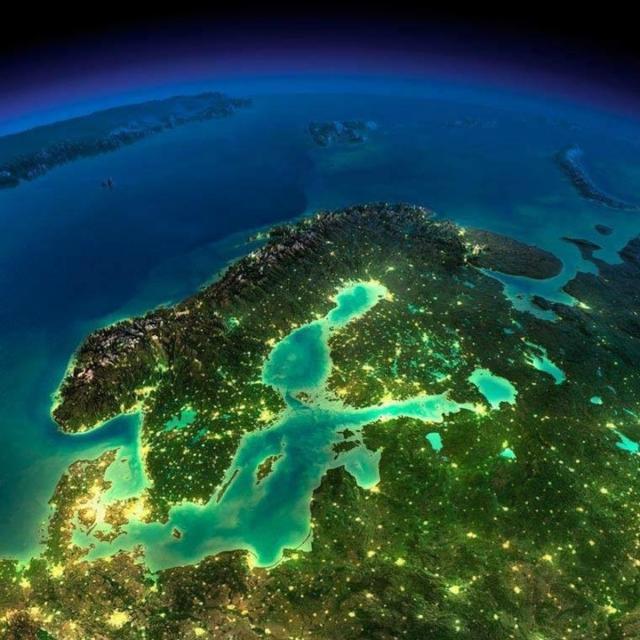
How can we live a good life on one planet with over seven billion people? This course will explore greening the economy on four levels – individual, business, city, and nation. We will look at the relationships between these levels and give many practical examples of the complexities and solutions across the levels. Scandinavia, a pioneering place advancing sustainability and combating climate change, is a unique starting point for learning about greening the economy. We will learn from many initiatives attempted in Scandinavia since the 1970s, which are all potentially helpful and useful for other countries and contexts.

Sep 7th 2026
5-12 Weeks
Environmental Science (Coursera) Coursera
Dartmouth College

Environmental Science (Coursera)

The Introduction to Environmental Science course explores the field of environmental science and encourages participants to understand how environmental scientists think. It addresses some important questions such as: 1. What is the difference between environmental science and environmental studies? 2. How do both differ from environmentalism? 3. Why is energy so important in environmental science? 4. What do you mean by biodiversity?

Aug 31st 2026
4 Weeks
Lymphoedema: Monitoring & Intervention After Breast Cancer (Coursera) Coursera
Macquarie University

Lymphoedema: Monitoring & Intervention After Breast Cancer (Coursera)

Lymphoedema following breast cancer treatment is a poorly understood and under-researched condition which can significantly impact physical and psychological function, reduce quality of life and result in substantial cost burdens to both patients and the healthcare system. In these interactive modules we will cover an introduction to lymphoedema, lymphatic physiology and anatomy, assessment and treatment, as well as utilise case studies to understand the prospective surveillance and early intervention model of care in breast cancer rehabilitation.

Sep 7th 2026
4 Weeks
Environmental Management & Ethics (Coursera) Coursera
Technical University of Denmark - DTU

Environmental Management & Ethics (Coursera)

Decision-makers often turn to scientists and engineers to assist them to navigate through complex environmental, health and societal challenges pervaded by systemic uncertainty, ambiguity and ethical implications. This course prepares you to meet the requests and demands of current and future decision-makers and in this course, you will analyze ethical challenges associated with environmental dilemmas and apply different decision making tools relevant to environmental management and regulation.

Aug 31st 2026
5-12 Weeks