Modern American Poetry (Coursera)

Modern American Poetry (Coursera)

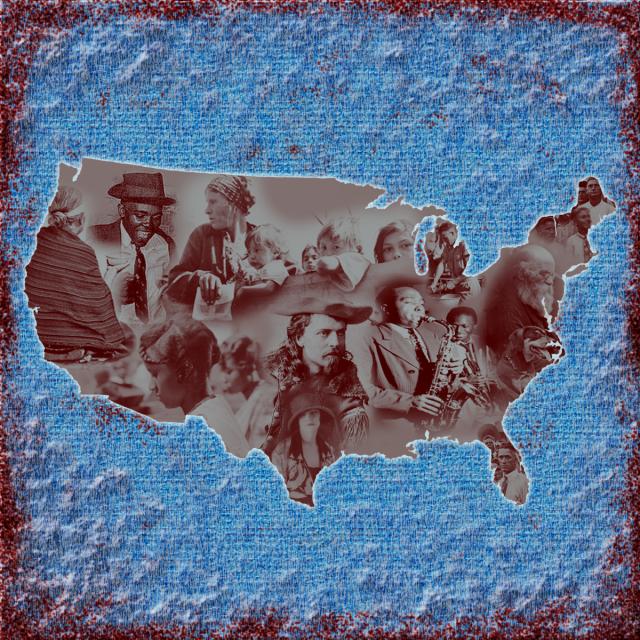
Twelve experienced faculty members from across the United States present their analyses of ground-breaking modern American poets in richly illustrated video lectures. The course highlights both major poets—from Walt Whitman and Emily Dickinson through T.S. Eliot, H.D., Amy Lowell, Hart Crane, Langston Hughes, Muriel Rukeyser, and many others—and influential movements. The course mixes historical overview with close readings of individual poets and poems.

Class Deals by MOOC List - Click here and see Coursera's Active Discounts, Deals, and Promo Codes.

Most courses give only one instructor’s point of view. This one matches the diversity of US poetry with lectures by a score of talented faculty. They bring their special perspective to the material while also presenting a coherent view of more than fifty years of US poetry. Throughout the course the lectures are illustrated with vivid images of the events, people, and places mentioned in the poems themselves. Readings by both the poets themselves and experienced faculty highlight the texts. On screen displays of text and quotations make it easy to follow the material. This is a course that takes advantage of the medium to bring you sights and sounds that would be difficult to incorporate in classroom lectures.

Syllabus

WEEK 1: Orientation - Reassessing Modernism's Origins
WEEK 2: The Difference Women Made
WEEK 3: Poetry's Social Voice
WEEK 4: Modernism's Legacies

Go to Class
MOOC List is learner-supported. When you buy through links on our site, we may earn an affiliate commission.

Related Courses

Art and the Digital Transformation (Coursera) Coursera
Copenhagen Business School

Art and the Digital Transformation (Coursera)

More than two decades into the new millennium, it is difficult to envision a future in which digital technologies do not play a significant role. Digital technologies frequently make a lot of promises. However, in recent years, we have seen an increasing number of artists address fundamental issues of the Digital Transformation, such as surveillance, lack of representation, and digital illiteracy. Artists have demonstrated that, while digital technologies have the potential to support processes leading to greater equality, they are frequently viewed as perpetuating and even exacerbating inequalities.

Nov 2nd 2026
5-12 Weeks
Making Architecture (Coursera) Coursera
IE Business School,IE School of Architecture & Design

Making Architecture (Coursera)

Making architecture offers a unique insight into the mind and work of an Architect, starting with the basics of the profession and culminating with the production of a scaled site model. The course should act as ideal preparation for those interested in undertaking an undergraduate degree in Architecture, although its flexible, intriguing and enjoyable content makes it accessible for all those looking to increase their knowledge in the field.

Nov 9th 2026
4 Weeks
The Modern and the Postmodern (Part 2) (Coursera) Coursera
Wesleyan University

The Modern and the Postmodern (Part 2) (Coursera)

This course examines how the idea of "the modern" develops at the end of the 18th century in European philosophy and literature, and how being modern (or progressive, or hip) became one of the crucial criteria for understanding and evaluating cultural change. Are we still in modernity, or have we moved beyond the modern to the postmodern?

Nov 2nd 2026
5-12 Weeks
William Shakespeare's Twelfth Night: Comedy, Conflict, and Community (Coursera) Coursera
University of Colorado Boulder

William Shakespeare's Twelfth Night: Comedy, Conflict, and Community (Coursera)

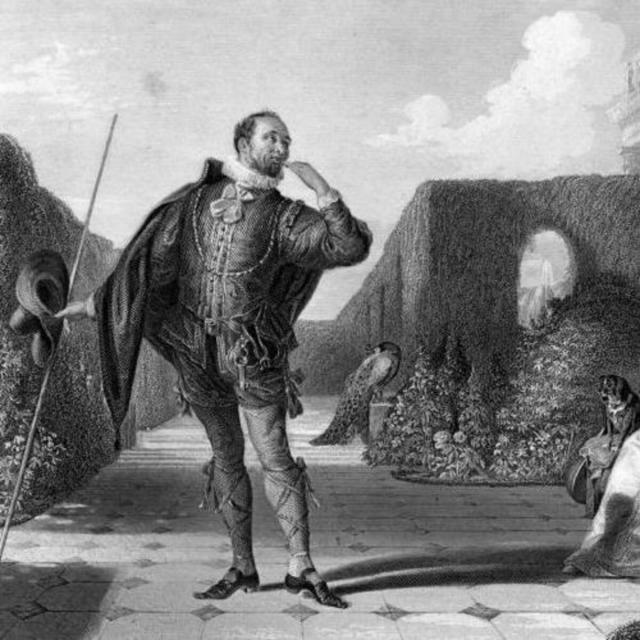
This course introduces and explores William Shakespeare’s classic comedy, Twelfth Night. Interviews with actors who appeared in the Colorado Shakespeare Festival’s 2019 production of Twelfth Night, as well as lectures by scholars and theater professionals who work and teach at the University of Colorado Boulder, offer students insight into Shakespeare’s artistic vision and its applications.

Nov 9th 2026
5-12 Weeks
The Cycle: Management of Successful Arts and Cultural Organizations (Coursera) Coursera
University of Maryland, College Park

The Cycle: Management of Successful Arts and Cultural Organizations (Coursera)

What makes a successful arts and cultural organization? Led by DeVos Institute Chairman Michael M. Kaiser and President Brett Egan, this course will introduce you to a management theory called the Cycle which supports thriving arts and cultural organizations. Learning from our work with managers from over 80 countries around the world, the DeVos Institute developed the Cycle as a simple, but powerful tool to assist managers in their effort to respond to an increasingly complex environment and propel their institutions to excellence.

Nov 2nd 2026
5-12 Weeks
The Blues: Understanding and Performing an American Art Form (Coursera) Coursera
University of Rochester

The Blues: Understanding and Performing an American Art Form (Coursera)

The blues is an American art form and the most important musical form in jazz. Although there are other formal paradigms of the blues, such as 8-bar or 16-bar, this course focuses on different incarnations of the 12-bar blues. There are considerable differences between Early Jazz blues, Swing blues, Bebop blues, Modal blues, and Post Bop blues.

Nov 2nd 2026
5-12 Weeks
Art & Activity: Interactive Strategies for Engaging with Art (Coursera) Coursera
The Museum of Modern Art

Art & Activity: Interactive Strategies for Engaging with Art (Coursera)

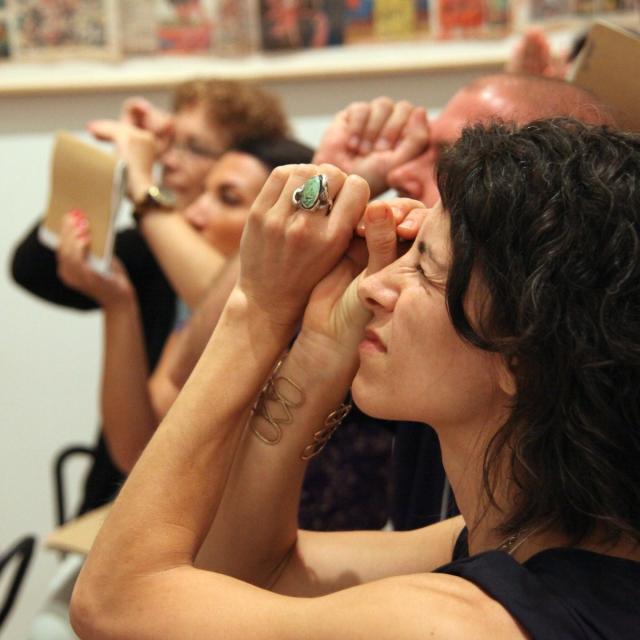
Art can be a powerful catalyst for building skills and understanding a range of subjects. Intended for primary and secondary teachers of all disciplines, Art & Activity builds upon the inquiry-based approaches of Art and Inquiry: Museum Teaching Strategies for Your Classroom, while delving into activity-based strategies that will make your students empowered participants.

Oct 26th 2026
4 Weeks
ART of the MOOC: Public Art and Pedagogy (Coursera) Coursera
Duke University,Creative Time

ART of the MOOC: Public Art and Pedagogy (Coursera)

Students of this course may try their hand at their own public art interventions, or simply focus on learning from the theory of public practice and its recent history. Designed by artist and Duke professor, Pedro Lasch, and co-taught by Creative Time artistic director, Nato Thompson, this course presents public culture and art in their radically reinenvented contemporary forms. The lectures link major developments of recent decades to wider topics like spatial politics, everyday social structures, and experimental education.

Nov 9th 2026
5-12 Weeks
Videojuegos: ¿de qué hablamos? (Coursera) Coursera
Universitat Autònoma de Barcelona

Videojuegos: ¿de qué hablamos? (Coursera)

Probablemente, todos hemos jugado a algún videojuego, pero ¿qué hay detrás de él? Podemos decir que - con independencia del videojuego - hay un árduo trabajo multidisciplinar que incluye desde aspectos de diseño hasta la programación como tal del videojuego. Este curso pretende ser un curso introductorio que muestre qué aspectos hay que considerar en el videojuego, y que permita con posterioridad abordar individualmente los temas que se consideran nucleares: diseño, arte, motor del videojuego y 'game play'.

Nov 16th 2026
5-12 Weeks
Accessibility to the Scenic Arts (Coursera) Coursera
Universitat Autònoma de Barcelona

Accessibility to the Scenic Arts (Coursera)

Is your show accessible? When we ask about accessibility to shows, most people think about access for wheel chairs: the sitting arrangements and where their WC is accessible. When we ask for more details, people usually think about producing a show where persons with disabilities are performing, for example producing a show where there is some dancing with people on wheel chairs.

Nov 16th 2026
5-12 Weeks
Introduction to Game Design (Coursera) Coursera
California Institute of the Arts

Introduction to Game Design (Coursera)

Welcome! This course is an introduction to the primary concepts of gaming, and an exploration of how these basic concepts affect the way gamers interact with our games. In this course you will understand what defines a “game” and the mechanics and rules behind different types of games. Through four linked assignments you'll learn ways to create and describe a game concept, and specifically what makes a compelling game. This course focuses on the conceptual underpinnings of games, and all assignments can be completed with a pencil and paper – no previous programming knowledge is required.

Nov 2nd 2026
4 Weeks