Who Made My Clothes? (FutureLearn)

Offered by University of Exeter,
Who Made My Clothes? (FutureLearn)

Discover who made your clothes, share their stories, and find out how you can influence global change. Do you ever think about where your clothes come from, who made them, how and at what cost? Created with Fashion Revolution - a global movement for transparency catalysed by the fatal Rana Plaza garment factory collapse in Bangladesh - this course lifts the lid on the global fashion industry.

Class Deals by MOOC List - Click here and see FutureLearn's Active Discounts, Deals, and Promo Codes.

We will share with you a variety of simple techniques to find the answer yourself, and to use your findings to press the fashion industry to value people, the environment, creativity and profit in equal measure. It will encourage us to question what we, as active global citizens, can do to enable change.

What topics will you cover?

  • Introduction to a variety of techniques to enable learners to understand who made their clothes
  • Teach learners how to use this knowledge to influence the fashion industry so that it values people, the environment, creativity, and profit in equal measure
  • Enable learners to gain knowledge and practical skills for thinking about our global economy and who makes our clothes
  • Encourage learners to consider themselves as active global citizens who can enable change
  • Provide tools with which learners can spread knowledge acquired in the course

What will you achieve?
By the end of the course, you'll be able to...

  • Explain garment supply chains
  • Explore the interdependence of places, resources, and the people upon which supply chains rely
  • Investigate your own clothing: its brand, where it was made, and from what materials
  • Identify and employ search techniques for investigating the policies employed by clothing brands, and the human stories behind them
  • Demonstrate empathetic writing about the stories of garment production
  • Reflect on how to use your findings to influence brands

Who is the course for?
This course is aimed at anyone with an interest in fashion, trade, ethics and activism, including those involved in the Fashion Revolution movement. It is also suitable for teachers who want to enrich their school, further education, and higher education curricula.
We will draw together themes from Geography, Fashion and Textile, English Language, English as a Foreign Language, Historical Enquiry, Politics, Sociology, Art, Economics, Environmental Studies, Global Citizenship, Sustainable Development, Personal and Social Studies. It is possible to participate in the course using skills and knowledge acquired outside formal education. Key concepts will be explained in accessible and thought-provoking ways.

What software or tools do you need?
You will need access to an internet browser, and word processing software. You will also be encouraged, with our guidance, to use simple online tools to aid, collate, publish and share your findings.
Go to Class
MOOC List is learner-supported. When you buy through links on our site, we may earn an affiliate commission.

Related Courses

World War 1: Trauma, Memory, Controversy (FutureLearn) FutureLearn
The Open University

World War 1: Trauma, Memory, Controversy (FutureLearn)

Explore the traumatic effects of WW1 on soldiers and civilians. Discover how we remember and debate the history of this war. In this free online course, you will study the social, cultural, medical and diplomatic history of the First World War. Topics range from physical and mental trauma suffered by combatants to the traumatic experiences of civilians in wartime.

Self Paced
4 Weeks
Responsible Innovation and Circular Fashion (edX) EdX
SDA_Bocconi,SDA Bocconi School of Management

Responsible Innovation and Circular Fashion (edX)

Deep dive into the opportunities and challenges of responsible innovation, sustainability and circularity in fashion. Implement eco-design principles to reshape fashion business models towards circularity. Responsible Innovation and Circular Fashion course provides a theoretical understanding of core concepts surrounding sustainability and circularity within the fashion industry. You will gain an in-depth understanding of what circularity means as well as the strategies adopted within the fashion industry in order to move towards circularity.

Self Paced
Self-Paced
Fashion Systems (Coursera) Coursera
Parsons School of Design, The New School

Fashion Systems (Coursera)

The fashion business has grown from the storied Parisian houses of the early 20th century into a global phenomenon. It is highly complex, multi-faceted, and undergoing reinvention. In this course, you will learn about long-standing factors that impact the existing fashion system such as consumption, inclusion, and labor. You’ll explore the “slow fashion” movement, look at holistic and human-centric product development strategies, and build a brand story with core values at its heart.

Sep 30th 2024
4 Weeks
Fashion's Future: The Sustainable Development Goals (FutureLearn) FutureLearn
Fashion Revolution

Fashion's Future: The Sustainable Development Goals (FutureLearn)

Explore the fashion industry’s impact on people and planet, what the Sustainable Development Goals are, and how they are linked. Learn about the link between fashion and the Sustainable Development Goals. The global fashion industry has an enormous social impact and ecological footprint. Many of us don’t understand how the clothes we wear every day affects the world around us.

Available now
4 Weeks
Fashion Retail Transformation (Coursera) Coursera
Parsons School of Design, The New School

Fashion Retail Transformation (Coursera)

In this course, Parsons faculty and industry experts dive deep into the transformation of fashion retail. You’ll explore the fusion of retail and entertainment and the increasing importance of omnichannel client relationships. Through an examination of disruptive retail innovations, such as on-demand delivery and virtual reality, you’ll learn how industry leaders are keeping up with customer expectations. You’ll look at e-commerce strategies through the lens of listening to and applying customer feedback and how brands stay relevant in the direct-to-consumer marketplace.

Sep 30th 2024
4 Weeks
New Business Models and Creative Entrepreneurship in the digital era (POK) Polimi OPEN KNOWLEDGE
Politecnico di Milano

New Business Models and Creative Entrepreneurship in the digital era (POK)

How digital tools have impacted the fashion value chain and how to get the best of them? This MOOC will propose an analysis of the main evolutions experienced by different players in the fashion industry due to a series of key technologies as well as strategies and best practices to adapt to this new context.

Available
5-12 Weeks
Hadrian's Wall: Life on the Roman Frontier (FutureLearn) FutureLearn
Newcastle University

Hadrian's Wall: Life on the Roman Frontier (FutureLearn)

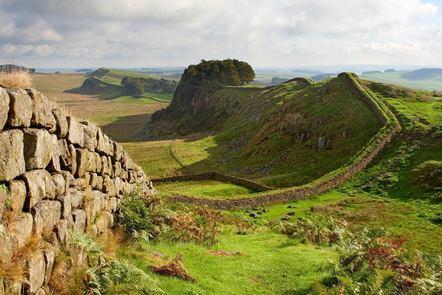
Explore the archaeology of the most heavily fortified frontier in the Roman Empire, its people and their lives. Hadrian’s Wall stretches over 73 miles (117 km), from coast to coast in what is now Northern England. The Wall, complemented by a sophisticated system of outposts and coastal watch stations, offers a remarkable glimpse of ancient society. In addition to housing one of the largest concentrations of Roman soldiers anywhere in the Empire’s provinces, Hadrian’s frontier system was home to an incredibly cosmopolitan array of civilians. This six week course offers a comprehensive introduction to Hadrian’s Wall and its people and raises fascinating issues concerning colonisation, cultural transformation, immigration, integration and imperialism.

Self Paced
5-12 Weeks
Fashion and Sustainability: Understanding Luxury Fashion in a Changing World (FutureLearn) FutureLearn
Kering,London College of Fashion

Fashion and Sustainability: Understanding Luxury Fashion in a Changing World (FutureLearn)

Get an introduction to issues, agendas and contexts relating to fashion and sustainability in a changing world. How can we make fashion more sustainable? Fashion is a global industry worth $2.4 trillion, employing around 50 million people, and is said to be one of the world’s most polluting industries. Fashion has the power to make positive change, re-imagining currently damaging systems. Get an introduction to sustainable fashion design, research and business practice, with this course from London College of Fashion’s Centre for Sustainable Fashion, supported by luxury fashion group Kering. On this course, you’ll explore key sustainability issues, agendas and contexts associated with luxury fashion.

Jun 6th 2022
5-12 Weeks