EdX

Western Civilization: Ancient and Medieval Europe (edX)

Western Civilization: Ancient and Medieval Europe (edX)

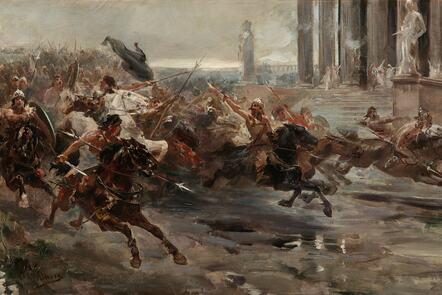
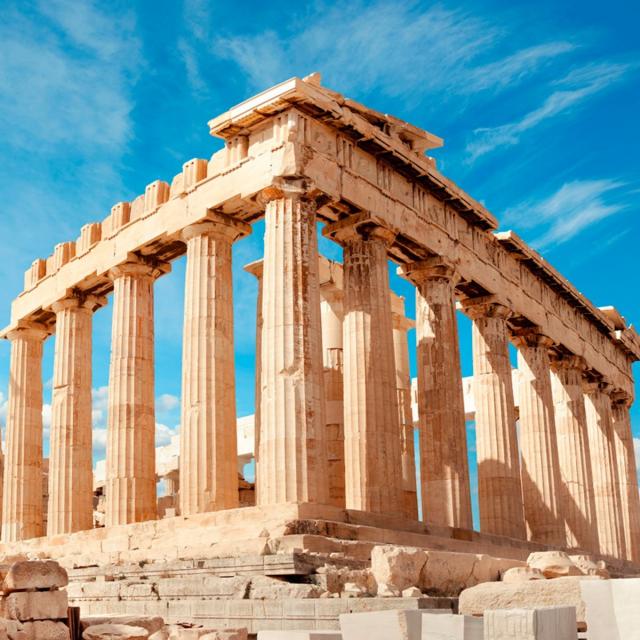
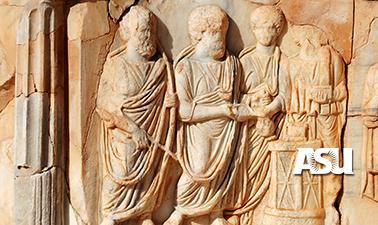
Learn about the origins and development of Western societies and institutions from the ancient world through the Middle Ages in this credit-eligible course. This course will provide a general outline of European history from Ancient times through 1500 AD, covering a variety of European historical periods and cultures, including Greek, Roman, Byzantine, Celtic, Frankish and others.

Class Deals by MOOC List - Click here and see EdX's Active Discounts, Deals, and Promo Codes.

This course satisfies the Social-Behavioral Sciences (SB) and Historical Awareness (H) general studies requirements at Arizona State University. This course may satisfy a general education requirement at other institutions; however, it is strongly encouraged that you consult with your institution of choice to determine how these credits will be applied to their degree requirements prior to transferring the credit.

What you'll learn:

  • Think critically about the development of people politically, socially, and economically
  • Evaluate evolution of political systems and their contribution to western society
  • Understand the changing social role of religion in European society
  • Explore the changing relations between Ancient and Medieval Europe and the world beyond

Go to Class
MOOC List is learner-supported. When you buy through links on our site, we may earn an affiliate commission.

Related Courses

Medieval Women Writers (saylor.org) Saylor Academy
Saylor.org

Medieval Women Writers (saylor.org)

Scholarship on medieval women writers is a somewhat recent phenomenon, in part because we know relatively little about men of the Middle Ages—and what we know about women from the period is even more limited. In this course, we will engage this new frontier in literary studies by examining the writings of a diverse group of medieval women—from reclusive anchoresses to aristocratic women of the court—and analyzing the perceptions of reality, both secular and religious, that they present.

Legacy Course
Self-Paced
The Einstein Revolution (edX) EdX
HarvardX,Harvard University

The Einstein Revolution (edX)

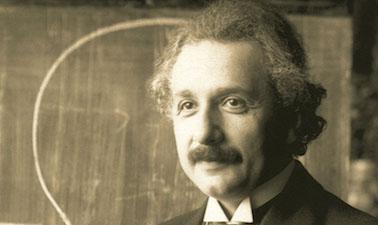
Traces Albert Einstein’s engagement with relativity, quantum mechanics, Nazism, nuclear weapons, philosophy, the arts, and technology. Albert Einstein has become the icon of modern science. Following his scientific, cultural, philosophical, and political trajectory, this course aims to track the changing role of physics in the 20th and 21st centuries.

Self Paced
Self-Paced
Visualizing Postwar Tokyo, Part 2 (edX) EdX
The University of Tokyo,UTokyoX

Visualizing Postwar Tokyo, Part 2 (edX)

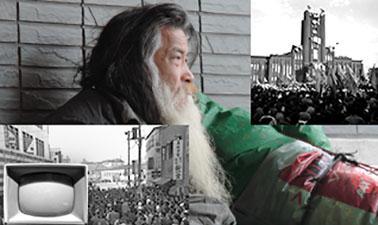
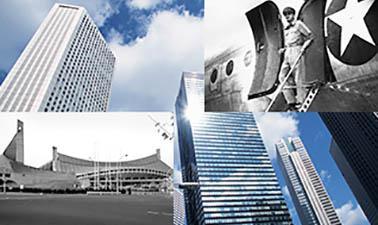
Identify the geopolitics historically involved in the practice of “visualizing postwar Tokyo.” The history of postwar Tokyo reveals an essential feature of the modern city, i.e., the city as a place of visualities. In postwar Tokyo, countless gazes fell upon others; gazes from and upon Americans and the Emperor, gazes going up skyscrapers or rushing aggressively through the cityscape, and gazes twining and wriggling among classes, genders, and ethnic groups in downtown Tokyo.

Self Paced
Self-Paced
Deciphering Secrets: The Illuminated Manuscripts of Medieval Europe (Coursera) Coursera
University of Colorado System

Deciphering Secrets: The Illuminated Manuscripts of Medieval Europe (Coursera)

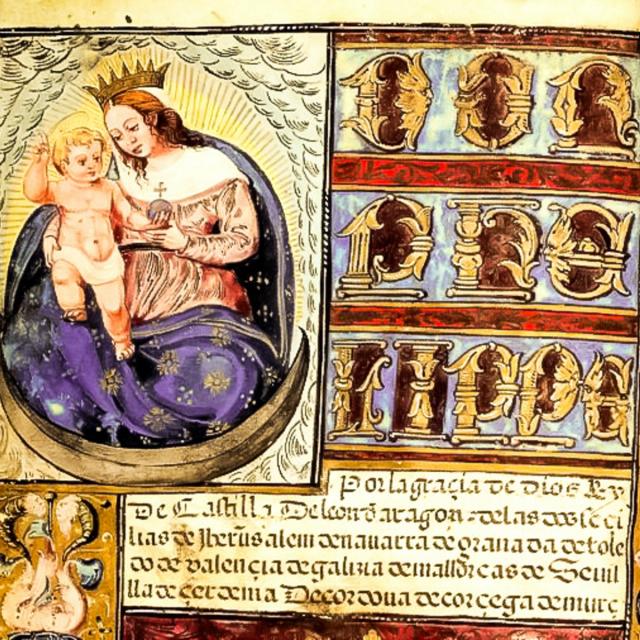
Perhaps no other relic of the European Middle Ages captures our imagination more than illuminated medieval manuscripts, or those documents decorated with images and colored pigments. Serving as windows unto a lost world of kings, ladies, faith, war, and culture, they communicate complex visual and textual narratives of Europe’s collective cultural heritage and patrimony. In this fashion, illuminated manuscripts are dynamic messages from our communal past that are still relevant today in fields like graphic design and typography.

Jul 8th 2024
5-12 Weeks
Enlightening the Dark Ages: Early Medieval Archaeology in Italy (FutureLearn) FutureLearn
University of Padova

Enlightening the Dark Ages: Early Medieval Archaeology in Italy (FutureLearn)

Learn what innovative methods and tools applied to the material culture of the past can tell us about the Early Middle Ages. Discovering the cultural heritage of Medieval Europe through archaeology On this archaeology course, you will explore what we can learn about the past through material culture. It focuses on the history of Medieval Europe, from the end of the Roman Empire in the West.

Self Paced
4 Weeks
Historia del Arte: Del Arte Prehistórico al Renacimiento (Coursera) Coursera
Universidad de Palermo

Historia del Arte: Del Arte Prehistórico al Renacimiento (Coursera)

El arte deriva de un deseo de la persona para comunicarse con otros” (Edvard Munch). Y es desde la prehistoria que el humano ha dejado impresas sus huellas a través del arte. ¿Qué características tienen esas huellas artísticas? ¿Qué nos comunican sobre el periodo de tiempo al que pertenecen? Sumergite en la historia del arte recorriendo este curso.

Sep 28th 2026
4 Weeks
Histoire des sciences : une introduction (FUN) FUN
Université de Montpellier

Histoire des sciences : une introduction (FUN)

L'histoire des sciences, qu'est-ce que c'est et à quoi ça sert ? Comprendre les dynamiques qui ont permis aux sciences de se constituer, explorer ses évolutions, son organisation et ses démarches, telle est l'ambition de ce MOOC qui propose une initiation à une histoire critique des sciences. Se repérer dans l'histoire des sciences en abordant les grandes étapes de la science. Comparer les méthodes développées. La place de la mathématisation, le statut de l'observation et de l'expérience seront particulièrement examinés. Aborder à l'aide d'études de cas la question de la construction sociale des sciences et celle des communautés scientifiques (statut, institution, etc.)

No sessions available
5-12 Weeks
Visualizing Postwar Tokyo, Part 1 (edX) EdX
The University of Tokyo,UTokyoX

Visualizing Postwar Tokyo, Part 1 (edX)

Analyze the history of change and development in postwar Tokyo from different perspectives using archived photographs, films, and TV programs. Tokyo emerged out of the ruins of war to become a large city of 10 million people in only a quarter of a century. During this process of change, the capital of a military empire that once invaded East Asia experienced occupation by the U.S. armed forces, hosted the Olympic Games, and transformed into a consumer hub where young people could enjoy economic “wealth.”

Self Paced
Self-Paced
English Grammar and Style (edX) EdX
University of Queensland,UQx

English Grammar and Style (edX)

Learn key concepts and strategies in grammar and style to help enhance your writing and confidently respond to the demand of high levels of literacy in the 21st century. With the rise of social media and the Internet, many people are writing more today for different mediums than ever before. We’ll present materials that cover grammatical principles, word usage, writing style, sentence and paragraph structure, and punctuation.

Self Paced
Self-Paced
Chinese History From Warring States to the Tang Dynasty | 资治通鉴 (edX) EdX
Tsinghua University,TsinghuaX

Chinese History From Warring States to the Tang Dynasty | 资治通鉴 (edX)

Guides you through the Chinese masterpiece _Zizhi Tongjian, _an unprecedented work of governance and philosophical thinking spanning from the Warring States Period to the Tang Dynasty. Through the teacher's guided reading, students can go deep into the interior of this classic text, gain an overview of thousands of years of history, and improve their literacy in Chinese studies.

Self Paced
Self-Paced
Modern China’s Foundations: The Manchus and the Qing (edX) EdX
HarvardX,Harvard University

Modern China’s Foundations: The Manchus and the Qing (edX)

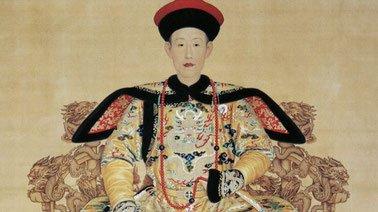
Learn how the Manchus conquered the Qing and established the last of the imperial dynasties. This course, part of a comprehensive series on China, looks at the Qing state in the early 1600s and the challenges that the Manchus faced as minority rulers. While living in Chinese cities and surrounded by Chinese culture — a culture that was far more sophisticated than their own — the Manchus struggled to hold onto their identity as a conquesting people.

Self Paced
Self-Paced