Visual Basic Programming: Classes and Collections (Coursera)

Offered by LearnQuest,
Visual Basic Programming: Classes and Collections (Coursera)

This course is the third course in a series that aims to prepare you for a role working as a programmer. In this course, you will be introduced to the four main concepts in programming: Advanced String Operations and Dates, Modeling Classes, Development of Classes and Collections. Labs will allow the students to apply the material in the lectures in simple computer programs designed to re-enforce the material in the lesson.

Class Deals by MOOC List - Click here and see Coursera's Active Discounts, Deals, and Promo Codes.

Learners will need to have a local machine with any one of the following operating systems; Windows 7 SP1 or higher, macOS 10.1.13 or higher, or almost any version of Linux from the last several years. The learner will either need to download the free community edition of Visual Studio or the open source .NET Core installation.

What You Will Learn

  • Develop computer programs that utilize classes and objects to solve business and mathematical problems

Course 3 of 4 in the Introduction to Computer Programming with Visual Basic Specialization

Syllabus

WEEK 1
Dates and Advanced Strings
In this module, we continue our adventure coding! We will build on our skills by working with dates and time values. We will expand our abilities by looking at how to work with advance string operations. Lastly we will explore was to format values for output.

WEEK 2
Modeling Classes
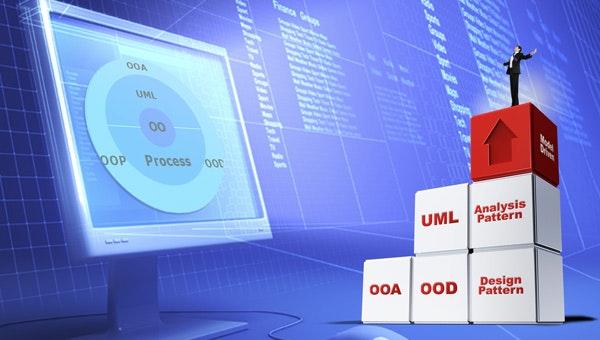
In this module, we continue building out our programming toolset by adding the ability to abstract code and data. We begin to look at how classes are used to store both data and the operations on the data. In this module, we will not program, but we will model the classes in the Unified Modeling Language (UML). UML is a general-purpose, developmental, modeling language in the field of software engineering that is intended to provide a standard way to visualize the design of a system

WEEK 3
Developing Classes
In this module, we continue looking at abstraction utilizing classes. We will implement parts of the models we developed in the previous module. In this module we will implement the individual classes and one-to-one has-a relationships. In future modules we will implement the one-to-many has-a relationships and is-a relationships.

WEEK 4
Collections
In this module, we add the ability to store multiple values in a single variable. We look at both low-level arrays and a few higher-level data structures used to store multiple variables. We will utilize the collections to implement classes with one-to-many has-a relationships we discussed in our previous modeling module.
Go to Class
MOOC List is learner-supported. When you buy through links on our site, we may earn an affiliate commission.

Related Courses

Basic Modeling for Discrete Optimization (Coursera) Coursera
University of Melbourne,The Chinese University of Hong Kong

Basic Modeling for Discrete Optimization (Coursera)

Optimization is a common form of decision making, and is ubiquitous in our society. Its applications range from solving Sudoku puzzles to arranging seating in a wedding banquet. The same technology can schedule planes and their crews, coordinate the production of steel, and organize the transportation of iron ore from the mines to the ports. Good decisions in manpower and material resources management also allow corporations to improve profit by millions of dollars.

Jun 22nd 2026
4 Weeks
Engineering Practices for Building Quality Software (Coursera) Coursera
University of Minnesota

Engineering Practices for Building Quality Software (Coursera)

Agile embraces change which means that team should be able to effectively make changes to the system as team learns about users and market. To be good at effectively making changes to the system, teams need to have engineering rigor and excellence else embracing change becomes very painful and expensive. In this course, you will learn about engineering practices and processes that agile and traditional teams use to make sure the team is prepared for change. In additional, you will also learn about practices, techniques and processes that can help team build high quality software. You will also learn how to calculate a variety of quantitative metrics related to software quality.

Jun 22nd 2026
4 Weeks
COBOL Programming with VSCode (Coursera) Coursera
IBM

COBOL Programming with VSCode (Coursera)

Professor Tak Auyeung of American River College, said it beautifully, “A programming language is not a fashion statement” it is used for a purpose. Whether it is to add new features, modify logic, create APIs to integrate it into other applications, or implement modern development practices, businesses around the world need application developers who know COBOL.

Jun 22nd 2026
3 Weeks
Object Oriented Programming in Java (Coursera) Coursera
University of California, San Diego

Object Oriented Programming in Java (Coursera)

Welcome to our course on Object Oriented Programming in Java using data visualization. People come to this course with many different goals -- and we are really excited to work with all of you! Some of you want to be professional software developers, others want to improve your programming skills to implement that cool personal project that you’ve been thinking about, while others of you might not yet know why you’re here and are trying to figure out what this course is all about.

Jun 22nd 2026
5-12 Weeks
Python Classes and Inheritance (Coursera) Coursera
University of Michigan

Python Classes and Inheritance (Coursera)

This course introduces classes, instances, and inheritance. You will learn how to use classes to represent data in concise and natural ways. You'll also learn how to override built-in methods and how to create "inherited" classes that reuse functionality. You'll also learn about how to design classes. Finally, you will be introduced to the good programming habit of writing automated tests for their own code.

Jun 22nd 2026
3 Weeks
Introduction to Java (Coursera) Coursera
LearnQuest

Introduction to Java (Coursera)

This Course is the first of a series of courses that make up the Core Java Specialization. The Core Java Specialization, in turn, is part of a series of programming specializations, derived from LearnQuest's private Java Bootcamps, designed to provide the skill set necessary to be hired as an IT developer using Java in many corporate environments. This course includes hands-on practice and will give you a solid knowledge of the Java language. After completing this course, you will be able to identify Java’s benefits, program in basic Java syntax using Java data types, and incorporate branches and loops.

Jun 22nd 2026
3 Weeks
Software Design Methods and Tools (Coursera) Coursera
University of Colorado System

Software Design Methods and Tools (Coursera)

Since many software developers are compulsive coders, they have created software over the years to help them do their job. There are tools which make design and its associated tasks easier. The course introduces some basic tools and techniques to help you with design. Tools aren’t always tangible, however. The last two lessons of this course discuss questions of Ethics in software development. The purpose here is, as with tools, to equip you to better carry our your responsibilities as a designer. Students will be required to have a prior knowledge of writing and delivering software and some programming knowledge in java.

Jun 22nd 2026
5-12 Weeks
Julia Scientific Programming (Coursera) Coursera
University of Cape Town

Julia Scientific Programming (Coursera)

This four-module course introduces users to Julia as a first language. Julia is a high-level, high-performance dynamic programming language developed specifically for scientific computing. This language will be particularly useful for applications in physics, chemistry, astronomy, engineering, data science, bioinformatics and many more.

Jun 22nd 2026
4 Weeks
Modern Robotics, Course 6: Capstone Project, Mobile Manipulation (Coursera) Coursera
Northwestern University

Modern Robotics, Course 6: Capstone Project, Mobile Manipulation (Coursera)

The capstone project of the Modern Robotics specialization is on mobile manipulation: simultaneously controlling the motion of a wheeled mobile base and its robot arm to achieve a manipulation task. This project integrates several topics from the specialization, including trajectory planning, odometry for mobile robots, and feedback control. Beginning from the Modern Robotics software library provided to you (written in Python, Mathematica, and MATLAB), and software you have written for previous courses, you will develop software to plan and control the motion of a mobile manipulator to perform a pick and place task.

Jun 22nd 2026
4 Weeks