Learn to Program: The Fundamentals (Coursera)

Offered by University of Toronto,
Learn to Program: The Fundamentals (Coursera)

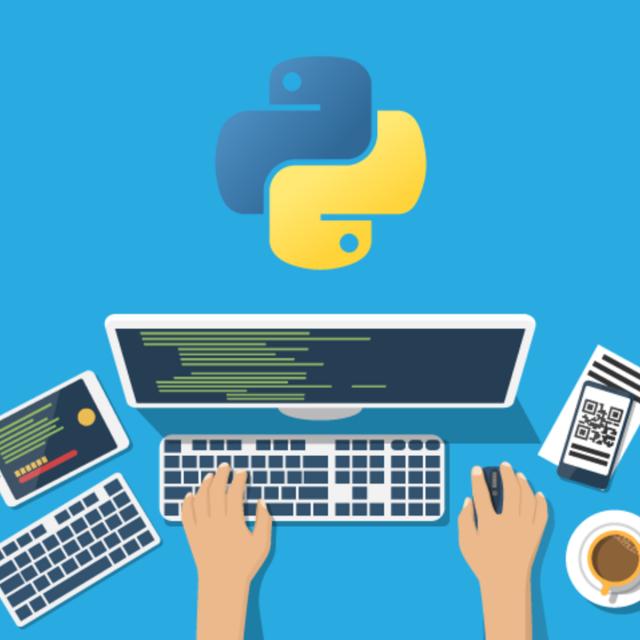
Behind every mouse click and touch-screen tap, there is a computer program that makes things happen. This course introduces the fundamental building blocks of programming and teaches you how to write fun and useful programs using the Python language.

Class Deals by MOOC List - Click here and see Coursera's Active Discounts, Deals, and Promo Codes.

Syllabus

WEEK 1
Python, Variables, and Functions
This module gives an overview of the course, the editor we will use to write programs, and an introduction to fundamental concepts in Python including variables, mathematical expressions, and functions.

WEEK 2
Strings and Designing Functions
This module introduces strings (a Python data type used to represent text), and a process to follow when creating a function.

WEEK 3
Booleans, Import, Namespaces, and if Statements
This module introduces Booleans (logical values True and False), how to convert between types, how to use Boolean expressions in if statements to selectively run code, and the concept of a Python module.

WEEK 4
For Loops and Fancy String Manipulation
This module introduces one way to repeat code (using a for loop), how to manipulate strings, and how to use a debugger to watch a program execute step by step.

WEEK 5
While Loops, Lists, and Mutability
This module introduces another way to repeat code (using a while loop), how to properly document your code to help other programmers understand it, Python's list data type, and the concept of mutation.

WEEK 6
For Loops Over Indices, Parallel and Nested Lists and Strings, and Files
This module introduces how to use a for loop over the indexes of a list, how to nest lists, and how to read a write files.

WEEK 7
Tuples and Dictionaries
This module introduces tuples (an immutable version of lists), and Python's dictionary type.
Go to Class
MOOC List is learner-supported. When you buy through links on our site, we may earn an affiliate commission.

Related Courses

Functions, Tools and Agents with LangChain (Coursera) Coursera
DeepLearning.AI

Functions, Tools and Agents with LangChain (Coursera)

The landscape of LLMs and the libraries that support them has evolved rapidly in recent months. This course is designed to keep you ahead of these changes. You’ll explore new advancements like ChatGPT’s function calling capability, and build a conversational agent using a new syntax called LangChain Expression Language (LCEL) for tasks like tagging, extraction, tool selection, and routing.

Sep 21st 2026
1 Week
Programming Languages, Part C (Coursera) Coursera
University of Washington

Programming Languages, Part C (Coursera)

This course is an introduction to the basic concepts of programming languages, with a strong emphasis on functional programming. The course uses the languages ML, Racket, and Ruby as vehicles for teaching the concepts, but the real intent is to teach enough about how any language “fits together” to make you more effective programming in any language -- and in learning new ones.

Sep 21st 2026
3 Weeks
Algorithms, Part I (Coursera) Coursera
Princeton University

Algorithms, Part I (Coursera)

This course covers the essential information that every serious programmer needs to know about algorithms and data structures, with emphasis on applications and scientific performance analysis of Java implementations. Part I covers elementary data structures, sorting, and searching algorithms. Part II focuses on graph- and string-processing algorithms.

Sep 21st 2026
5-12 Weeks
C++程序设计 (Coursera) Coursera
Peking University

C++程序设计 (Coursera)

讲授C++语言中和面向对象有关的概念和语法,如类和对象、运算符重载、继承和多态、类模板和算法模板、标准模板库等。目标是使得学生能够用C++语言,以面向对象的方法编写可维护性、可扩充性好的,较大规模的程序,初步领会面向对象程序设计方法的优势所在。

Sep 21st 2026
5-12 Weeks
Introduction to Advanced Vibrations (Coursera) Coursera
Korea Advanced Institute of Science and Technology - KAIST

Introduction to Advanced Vibrations (Coursera)

Introduction to Advanced Vibrations starts with a review of single and double degree of freedom systems. After that, multiple degrees of freedom systems are introduced to explain the vibrations of string and beam. These vibration systems provide to apply or use them into practical problems.

Sep 21st 2026
5-12 Weeks
Exam Prep AI-102: Microsoft Azure AI Engineer Associate (Coursera) Coursera
Whizlabs

Exam Prep AI-102: Microsoft Azure AI Engineer Associate (Coursera)

The AI-102: Designing and Implementing a Microsoft Azure AI Solution certification exam tests the candidate’s experience and knowledge of the AI solutions that make the most of Azure Cognitive Services and Azure services. In addition, the exam also tests the candidate's ability to implement this knowledge by participating in all phases of AI solutions development—from defining requirements, and design to development, deployment, integration, maintenance, performance tuning, and monitoring.

Sep 21st 2026
5-12 Weeks
Analíticas de Datos con Pandas (Coursera) Coursera
Tecnológico de Monterrey

Analíticas de Datos con Pandas (Coursera)

La analítica de datos ha avanzado considerablemente en los últimos años y ahora existen diversas herramientas que nos permiten realizar tareas o procesos que antes eran complicados de realizar. Gracias a su versatilidad, el lenguaje de programación Python posee una serie de librerías que permiten realizar proyectos de analítica de datos de una forma muy sencilla y una de las librerías más populares es Pandas.

Sep 21st 2026
4 Weeks
Laboratório de Programação Orientada a Objetos - Parte 1 (Coursera) Coursera
Universidade de São Paulo, Brasil

Laboratório de Programação Orientada a Objetos - Parte 1 (Coursera)

Este curso apresenta os conceitos mais importantes em torno do paradigma de desenvolvimento mais comum da indústria de software hoje: a Programação Orientação a Objetos (POO). Oferecido pelo Departamento de Ciência da Computação do Instituto de Matemática e Estatística da USP, o curso é voltado para quem já conhece os conceitos básicos de POO e quer se aprofundar no assunto, tornando-se um excelente programador. Ele funciona bem como uma sequência natural aos 2 cursos anteriores do Prof. Fabio Kon do IME-USP no coursera: Introdução à Ciência da Computação com Python.

Sep 21st 2026
5-12 Weeks
¡A Programar! Una introducción a la programación (Coursera) Coursera
University of Edinburgh,Universidad ORT Uruguay

¡A Programar! Una introducción a la programación (Coursera)

¿Alguna vez pensaste en crear tus propios juegos de computadora, pero no tenías idea cómo hacerlo o por dónde comenzar? Este curso te enseñará a programar utilizando Scratch, un lenguaje de programación visual muy fácil de usar, y más importante aún, aprenderás los principios fundamentales de la computación para que comiences a pensar como ingeniero/a de software.

Sep 21st 2026
5-12 Weeks
Problem Solving, Python Programming, and Video Games (Coursera) Coursera
University of Alberta

Problem Solving, Python Programming, and Video Games (Coursera)

This course is an introduction to computer science and programming in Python. Important computer science concepts such as problem solving (computational thinking), problem decomposition, algorithms, abstraction, and software quality are emphasized throughout. The Python programming language and video games are used to demonstrate computer science concepts in a concrete and fun manner. However, a learner can take the knowledge and skills from this course and apply them to non-game problems, other programming languages, and other computer science courses.

Sep 21st 2026
5-12 Weeks