Version Control with Git (Coursera)

Offered by Atlassian,
Version Control with Git (Coursera)

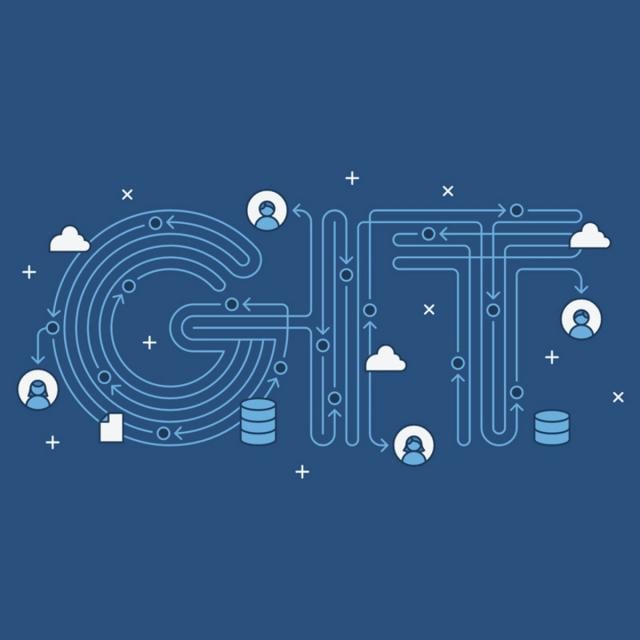
The Version Control with Git course provides you with a solid, hands-on foundation for understanding the Git version control system. Git is open source software originally created by Linus Torvalds. Git manages team files for large and small projects. This allows the team to continuously improve its product. It is used by most major technology companies, and is assumed knowledge for many modern programming and IT jobs. It is a core component of DevOps, continuous delivery pipelines and cloud-native computing. You could also use Git to manage the many continuously improving revisions of that book that you are writing.

Class Deals by MOOC List - Click here and see Coursera's Active Discounts, Deals, and Promo Codes.

In this course, you will not learn everything there is to know about Git, but you will build a strong conceptual understanding of the technology, and afterward will be able to confidently dig deeper on any topic that interests you. This course assumes no previous knowledge of Git, but if you do have experience with it, you may find this course to be both useful and challenging. This is especially true if you currently "know just enough Git to be dangerous".
There are two paths in this course. Both rely heavily on hands-on labs. One path assumes that you have experience using a command line interface, and the other path uses the Sourcetree graphical client. If you are not experienced with a command line, we highly suggest that you go through the Sourcetree path. Eventually, you might want to go through both paths, so that you can decide which tool to use for specific tasks. Besides, repetition is good for learning :)
You can watch the videos and take the quizzes from your phone if you want, but the hands-on labs require you to have a Windows or Mac computer. If you use the command line path through the course, you can also use Linux.
This course uses Bitbucket as the hosted provider for remote Git repositories. Bitbucket is free for teams of up to 5 people, including private repositories. However, most of the knowledge that you gain in this course applies to Git itself, and you can apply this knowledge to other hosted Git providers (such as GitHub).
This course tries to be as concise as possible. It will probably take you about 5-10 hours to go through one of the two paths, but your mileage may vary.

Syllabus

WEEK 1
Our First Repository
This module gets you started using Git. It provides the foundation for the rest of the course. You will install Git and/or Sourcetree, create a local repository, create a commit, create a remote repository and push commits to a remote repository. You have the option of doing the hands-on labs using the Sourcetree graphical Git client and/or using a command line.

WEEK 2
Branching and Merging I
This module discusses to of the key concepts involved with Git: branching and merging. It starts with foundational knowledge on Git's commit graph model, Git IDs and references. Branching and merging are then covered, including the difference between fast-forward merges and using merge commits.

WEEK 3
Branching and Merging II
This module continues the discussion of branching and merging. It starts with resolving a merge conflict. Then synchronizing with remote repositories is covered, including the fetch, pull and push commands. The other major topic of this module is rewriting history. The commit history is an important part of a project. A clean commit history makes it easier to understand the project, and then contribute to it by adding new features or fixing problems. If you have not shared your commits, you can rewrite them in a way that makes a cleaner project history. Rewriting history includes amending commits and rebasing.

WEEK 4
Git Workflows
This module covers topics on how teams work with Git. Git is flexible enough to work with many types of projects and teams. The better you understand Git's capabilities, the more effectively to can use it in your projects. Topics include pull requests, centralized workflows, feature branch workflows, forking workflows and Gitflow workflows. This module concludes with a project in which you use Git with a Gitflow workflow.

Go to Class
MOOC List is learner-supported. When you buy through links on our site, we may earn an affiliate commission.

Related Courses

Programming Languages, Part A (Coursera) Coursera
University of Washington

Programming Languages, Part A (Coursera)

This course is an introduction to the basic concepts of programming languages, with a strong emphasis on functional programming. The course uses the languages ML, Racket, and Ruby as vehicles for teaching the concepts, but the real intent is to teach enough about how any language “fits together” to make you more effective programming in any language -- and in learning new ones.

Oct 5th 2026
5-12 Weeks
Introduction to Web Development with HTML, CSS, JavaScript (Coursera) Coursera
IBM

Introduction to Web Development with HTML, CSS, JavaScript (Coursera)

Want to take the first steps to become a Cloud Application Developer? This course will lead you through the languages and tools you will need to develop your own Cloud Apps. Beginning with an explanation of how internet servers and clients work together to deliver applications to users, this course then takes you through the context for application development in the Cloud, introducing front-end, back-end, and full-stack development.

Sep 21st 2026
5-12 Weeks
Fundamentals of Red Hat Enterprise Linux (Coursera) Coursera
Red Hat

Fundamentals of Red Hat Enterprise Linux (Coursera)

This course will provide you with a basic introduction to Linux® skills using Red Hat® Enterprise Linux 8. It will show you how a Linux system is organized, and will demonstrate introductory system administration tasks, which you will be able to practice on your own. You will be introduced to reasons why Linux and the open source development model are so important in today's computing environment. Linux systems are used everywhere—the internet, point-of-sale systems, and the world's stock markets. You’ll find Linux running smart TVs, in-flight entertainment systems, and most of the top supercomputers in the world.

Sep 28th 2026
5-12 Weeks
Integrating Test-Driven Development into Your Workflow (Coursera) Coursera
LearnQuest

Integrating Test-Driven Development into Your Workflow (Coursera)

In this course we will discuss how to integrate best practices of test-driven development into your programming workflow. We will start out by discussing how to refactor legacy codebases with the help of agile methodologies. Then, we will explore continuous integration and how to write automated tests in Python. Finally, we will work everything we've learned together to write code that contains error handlers, automated tests, and refactored functions.

Sep 21st 2026
4 Weeks
Introdução ao Teste de Software (Coursera) Coursera
Universidade de São Paulo, Brasil

Introdução ao Teste de Software (Coursera)

A necessidade das empresas em produzir software com qualidade tem aumentado a demanda por profissionais com conhecimentos e habilidades em Teste de Software. Entretanto, existe uma escassez de mão-de-obra especializada nesta área. Considerando essa lacuna, o curso de Introdução ao Teste de Software foi planejado para servir como um guia para pessoas que necessitam de uma fonte de consulta e/ou aprendizado na área.

Oct 5th 2026
5-12 Weeks
Modeling Data in the Tidyverse (Coursera) Coursera
Johns Hopkins University

Modeling Data in the Tidyverse (Coursera)

Developing insights about your organization, business, or research project depends on effective modeling and analysis of the data you collect. Building effective models requires understanding the different types of questions you can ask and how to map those questions to your data. Different modeling approaches can be chosen to detect interesting patterns in the data and identify hidden relationships. This course covers the types of questions you can ask of data and the various modeling approaches that you can apply.

Sep 21st 2026
5-12 Weeks
Dasar-Dasar Dukungan Teknis (Coursera) Coursera
Google

Dasar-Dasar Dukungan Teknis (Coursera)

Materi ini adalah rangkaian pertama dari keseluruhan program pelatihan yang akan membantu Anda untuk berperan sebagai Spesialis Teknisi IT tingkat pemula. Dalam kursus ini, Anda akan diperkenalkan ke dunia Teknologi Informasi, atau IT. Anda akan mempelajari berbagai aspek Teknologi Informasi, seperti perangkat keras komputer, Internet, perangkat lunak komputer, pemecahan masalah, dan layanan pelanggan. Pelatihan ini mencakup berbagai topik dalam dunia IT yang dirancang untuk memberi Anda gambaran tentang pelajaran apa yang akan diperoleh melalui program sertifikasi ini.

Sep 21st 2026
5-12 Weeks
Agile with Atlassian Jira (Coursera) Coursera
Atlassian

Agile with Atlassian Jira (Coursera)

Agile teams use “just enough” planning and an incremental approach to accomplishing the work of the team. Every project and every team uses a custom agile methodology. This course discusses common foundational principles and practices used by agile methodologies, providing the student a flexible set of tools to use in any role (e.g. product owner, scrum master, project manager, team member) on any agile team.

Sep 28th 2026
4 Weeks
Follow a Machine Learning Workflow (Coursera) Coursera
CertNexus

Follow a Machine Learning Workflow (Coursera)

Machine learning is not just a single task or even a small group of tasks; it is an entire process, one that practitioners must follow from beginning to end. It is this process—also called a workflow—that enables the organization to get the most useful results out of their machine learning technologies. No matter what form the final product or service takes, leveraging the workflow is key to the success of the business's AI solution. This second course within the Certified Artificial Intelligence Practitioner (CAIP) professional certificate explores each step along the machine learning workflow, from problem formulation all the way to model presentation and deployment.

Sep 21st 2026
5-12 Weeks
Introduction to Computers and Office Productivity Software (Coursera) Coursera
The Hong Kong University of Science and Technology - HKUST

Introduction to Computers and Office Productivity Software (Coursera)

In this course, you will learn the following essential computer skills for the digital age: major hardware components of a computer system; different types of software on a computer system; photo Editing using GIMP; and word processing applications, including MS Word, MS Excel, and MS PowerPoint.

Sep 28th 2026
5-12 Weeks
Real-Time Mission-Critical Systems Design (Coursera) Coursera
University of Colorado Boulder

Real-Time Mission-Critical Systems Design (Coursera)

Upon completion of this course the learner will know the difference between systems you can bet your life on (mission critical) and those which provide predictable response and quality of service (reliable). This will be achieved not only by study of design methods and patterns for mission critical systems, but also through implementation of soft real-time systems and comparison to hard real-time. Methods of verification to determine ability to meet mission critical as well as soft real-time requirements will be learned so that the learner can properly assess risk, reliability and impact of failure in real-time systems.

Sep 21st 2026
4 Weeks