Vehicle Dynamics III: Vertical oscillations (iversity)

Vehicle Dynamics III: Vertical oscillations (iversity)

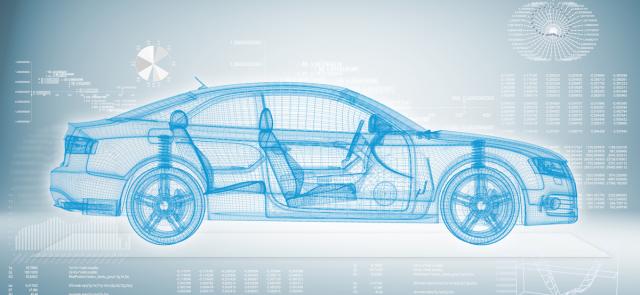
From Bugatti Veyron to Volkswagen Beetle, from racing to passenger car: Learn how they behave on a country road and on the autobahn! In this third part of Vehicle Dynamics, we will illuminate the vertical dynamic aspects of vehicles. In short, we will describe the elements involved when a car drives on a bumpy or rough street.

We will start with a survey of suspensions and springs and dampers. After this, we will explain the description of rough streets and give an introduction to Fourier integrals. Next, we will take a closer look at vertical models. In the last fundamental part of the course, we will describe the conflict between driving safety and comfort. The course will be finished with two applications from automotive mechatronics.
At the end of the course you will …

  • know different kinds of suspensions, springs and dampers.
  • know the description of rough and bumpy streets
  • understand the Fourier integral
  • understand the conflict between driving safety and comfort
  • be able to calculate simple properties of a car

Course structure

This course has a total of 11 chapters, and the topics for each chapter are the following:
Chapter 1: Overview
Chapter 2: Damped Oscillator
Chapter 3: Fourier integral
Chapter 4: Conflict: Comfort vs. Safety I
Chapter 5: Conflict: Comfort vs. Safety II
Chapter 6: Ideal active system and skyhook damper principle
Chapter 7: Vibration absorber in powertrains
Chapter 8: Models and nonlinearities
Chapter 9: Homework solutions of chapter 1, 2 and 3
Chapter 10: Homework solutions of chapter 4, 5 and 6
Chapter 11: Homework solutions of chapter 7 and 8

Go to Class
MOOC List is learner-supported. When you buy through links on our site, we may earn an affiliate commission.

Related Courses

Protecting the World: Introducing Corrosion Science and Engineering (Coursera) Coursera
University of Manchester

Protecting the World: Introducing Corrosion Science and Engineering (Coursera)

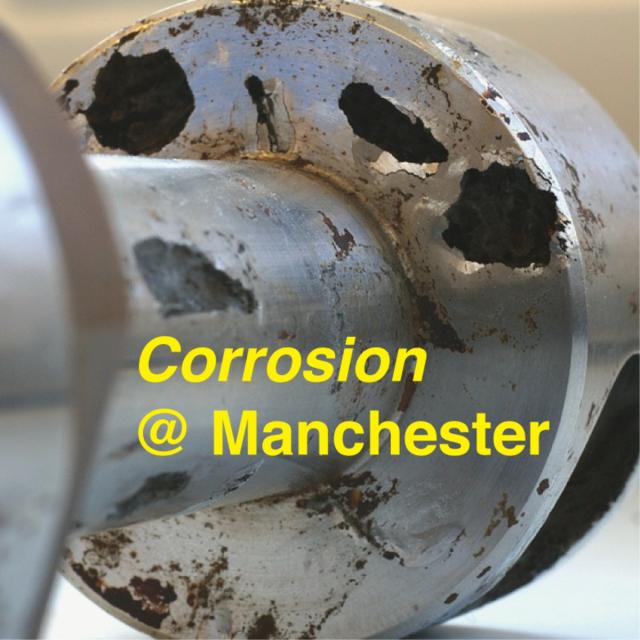
If you have ever encountered rusty car bodies, leaking pipes, tarnished silverware or the green patina of a copper roof then you have experienced corrosion in action. This course, from the Corrosion@Manchester team in collaboration with AkzoNobel, will teach you why metals corrode, what the environmental consequences are, how much corrosion costs and how corrosion can be controlled. It is designed for students, householders, teachers, professionals and anyone in-between.

Oct 19th 2026
4 Weeks
Major Engineering Projects: Governance, Risk and Scope (Coursera) Coursera
University of Leeds

Major Engineering Projects: Governance, Risk and Scope (Coursera)

Gain confidence when dealing with stakeholders of major projects by learning to identify and manage those that are involved in the project planning and delivery. This course will enable you to explore project governance in theory and practice. Through real life examples you’ll understand how the critical challenges of the governance in major projects are resolved.

Oct 19th 2026
5-12 Weeks
The Finite Element Method for Problems in Physics (Coursera) Coursera
University of Michigan

The Finite Element Method for Problems in Physics (Coursera)

This course is an introduction to the finite element method as applicable to a range of problems in physics and engineering sciences. The treatment is mathematical, but only for the purpose of clarifying the formulation. The emphasis is on coding up the formulations in a modern, open-source environment that can be expanded to other applications, subsequently.

Nov 2nd 2026
13-24 Weeks
Chemical Engineering Thermodynamics 2 (Coursera) Coursera
Korea Advanced Institute of Science and Technology - KAIST

Chemical Engineering Thermodynamics 2 (Coursera)

An appreciation of thermodynamics is required to become a chemical and biomolecular engineer. Thermodynamics can assess the viability of a process and is one of the curriculum's most essential topics. The principles are utilized in following engineering courses (kinetics, mass transfer, design, materials) and are applicable to numerous engineering disciplines. The increased emphasis on energy usage and transformation as a result of rising demand, diminishing supply, and global warming necessitates that the engineers who will tackle these issues have a firm grasp of thermodynamics.

Oct 26th 2026
5-12 Weeks
Foundation of Structural Dynamics (Coursera) Coursera
ISAE-SUPAERO

Foundation of Structural Dynamics (Coursera)

A course with variable geometry where everyone, we hope, will find personal benefits. The parts can be studied sequentially or independently; and inside each part, elementary learning items can be picked up. Globally, this course proposes a deep knowledge of fundamental dynamics, with possible explicit and implicit applications in structural dynamics, but also in physics and control of any dynamic system (automatics, …).

Nov 2nd 2026
5-12 Weeks
Wind resources for renewable energies (Coursera) Coursera
École Polytechnique

Wind resources for renewable energies (Coursera)

The main goal of this course is to get the necessary knowledge on atmospheric and fluid dynamics in order to quantify the wind resource of a local or regional area. We’ll learn about basic meteorology, the specific dynamics of turbulent boundary layers and some standard techniques to estimate wind resources regardless of the type of turbine used or the level of efficiency achieved.

Nov 2nd 2026
4 Weeks
Oral Communication for Engineering Leaders (Coursera) Coursera
Rice University

Oral Communication for Engineering Leaders (Coursera)

Taught by Rice University communication faculty from the Rice Center for Engineering Leadership (RCEL). This course covers core topics in oral communication: Communication strategy, content, data visualization, and delivery. You’ll learn key principles in: Creating a communication strategy; Developing a clear message and organizing persuasive content; Creating strong visual support; Presenting data effectively; Presenting professionally and confidently; Handling formal presentations, giving pitches, speaking extemporaneously, managing online presentations, and lowering public speaking anxiety.

Oct 19th 2026
5-12 Weeks
Industrial Biotechnology (Coursera) Coursera
University of Manchester

Industrial Biotechnology (Coursera)

Fossil fuels have been the primary energy source for society since the Industrial Revolution. They provide the raw material for the manufacture of many everyday products that we take for granted, including pharmaceuticals, food and drink, materials, plastics and personal care. As the 21st century progresses we need solutions for the manufacture of chemicals that are smarter, more predictable and more sustainable.

Nov 2nd 2026
5-12 Weeks