Vehicle Dynamics II: Cornering (iversity)

Vehicle Dynamics II: Cornering (iversity)

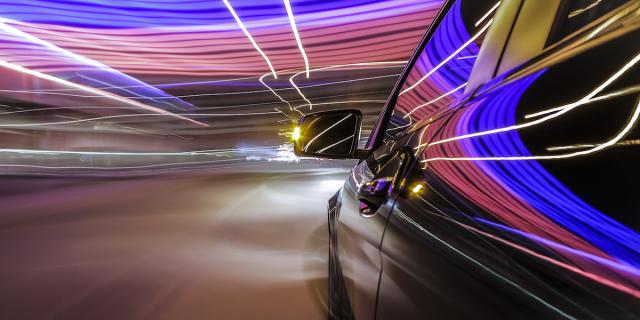
From Bugatti Veyron to Volkswagen Bettle, from racing to passenger car: learn more about cornering and drifting and look deeper into Kamm’s circles and Kemple’s diagram.

In this second part of Vehicle Dynamics, we will illuminate the lateral dynamic aspects of vehicles.
Clear and brief: the cornering of a car.

In Detail: We will start with a simple single-track model and then describe the slip angle of a wheel. The slip angle results in cornering forces, which are essential for understanding lateral dynamics. After that, we will look at the dependency between longitudinal and lateral forces using Kamm’s circle and Krempel’s diagram. Then we will investigate steady state cornering, stability and the influence of different weight distributions between inner and outer side wheels of the car. The course will be finished by two applications from automotive mechatronics.
At the end of the course you will …

  • understand basic principles of cornering of a car.
  • know slip angle and cornering forces.
  • understand the single track model.
  • understand the steady state cornering, stability and the influence of different weight distribution between inner and outer side of the car.
  • be able to calculate simple properties of a car.
Go to Class
MOOC List is learner-supported. When you buy through links on our site, we may earn an affiliate commission.

Related Courses

Thermodynamique : fondements (Coursera) Coursera
École Polytechnique Fédérale de Lausanne

Thermodynamique : fondements (Coursera)

Ce cours vous apportera une compréhension des concepts fondamentaux de la thermodynamique du point de vue de la physique, de la chimie et de l’ingénierie. Il est scindé un deux MOOCs. Dans la première partie, le Professeur J.-Ph. Ansermet de l’EPFL et son collaborateur le Dr. Sylvain Bréchet ont rassemblé en quatre leçons tous les principes fondamentaux de la thermodynamique. La deuxième partie du MOOC illustre l’approche thermodynamique par une série d’applications présentées par des spécialistes provenant de diverses institutions partenaires du réseau RESCIF.

Jun 22nd 2026
4 Weeks
Modelling and Simulation using Simulink (iversity) Iversity
Hochschule RheinMain - Wiesbaden Rüsselsheim

Modelling and Simulation using Simulink (iversity)

Do you want to use Simulink® to simulate technical systems? Do you want to control real systems using an Arduino® microcontroller? Then this MOOC's for you. Enrol today! The main objective of this MOOC is to teach you how to use of Simulink® as a simulation tool suitable for a broad variety of application domains. We will specifically focus on topics of interaction of the simulation models with the real world using Arduino Microcontrollers and Simulink®'s corresponding Arduino Support Package.

No sessions available
5-12 Weeks
Image and video processing: From Mars to Hollywood with a stop at the hospital (Coursera) Coursera
Duke University

Image and video processing: From Mars to Hollywood with a stop at the hospital (Coursera)

In this course, you will learn the science behind how digital images and video are made, altered, stored, and used. We will look at the vast world of digital imaging, from how computers and digital cameras form images to how digital special effects are used in Hollywood movies to how the Mars Rover was able to send photographs across millions of miles of space.

Jun 15th 2026
5-12 Weeks
Introduction to Social Media Analytics (Coursera) Coursera
Emory University

Introduction to Social Media Analytics (Coursera)

Social media not only provides marketers with a means of communicating with their customers, but also a way to better understand their customers. Viewing consumers’ social media activity as the “voice of the consumer,” this session exposes learners to the analytic methods that can be used to convert social media data to marketing insights. In Introduction to Social Media Analytics, learners will be exposed to both the benefits and limitations of relying on social media data compared to traditional methods of marketing research.

Jun 22nd 2026
4 Weeks
Introduction to Systems Engineering (Coursera) Coursera
UNSW Sydney - University of New South Wales

Introduction to Systems Engineering (Coursera)

"Introduction to Systems Engineering" uses a structured yet flexible approach to provide a holistic, solid foundation to the successful development of complicated systems. The course takes you step by step through the system life cycle, from design to development, production and management. You will learn how the different components of a system interrelate, and how each contributes to a project’s goals and success.

Jun 15th 2026
5-12 Weeks
Cómo autoconstruir tu vivienda (Coursera) Coursera
Universidad Nacional Autónoma de México

Cómo autoconstruir tu vivienda (Coursera)

Aprenderás las bases y los procedimientos precisos paso a paso para que puedas llevar a cabo la autoconstrucción de una vivienda básica, segura y económica para ti y tu familia; también te será de gran utilidad si estás buscando aprender a reparar, mejorar la estructura de tu vivienda e incluso si buscas autoemplearte.

Jun 22nd 2026
4 Weeks
A Circular Economy of Metals: Towards a Sustainable Societal Metabolism (Coursera) Coursera
Leiden University

A Circular Economy of Metals: Towards a Sustainable Societal Metabolism (Coursera)

Metals are present everywhere around us and are one of the major materials upon which our economies are built. Economic development is deeply coupled with the use of metals. During the 20th century the variety of metal applications in society grew rapidly. In addition to mass applications such as steel in buildings and aluminium in planes, more and more different metals are in use for innovative technologies such as the use of the specialty metal indium in LCD screens. A lot of metals will be needed in the future. It will not be easy to provide them. In particular in emerging economies, but also in industrialized countries, the demand for metals is increasing rapidly. Mining and production activities expand, and with that also the environmental consequences of metal production. In this course, we will explore those consequences and we will also explore options to move towards a more sustainable system of metals production and use.

Jun 15th 2026
5-12 Weeks
Particle Dynamics (Coursera) Coursera
Korea Advanced Institute of Science and Technology - KAIST

Particle Dynamics (Coursera)

This course teaches dynamics, one of the basic mechanics subjects of Mechanical Engineering. Students would be able to organize their knowledge about force and motion, work-energy, impulse-momentum in view of Newton's 2nd law and its integration over time and displacement. The Engineering Dynamics consists of two parts: particle dynamics and rigid body dynamics.

Jun 22nd 2026
13-24 Weeks
Engineering Systems in Motion: Dynamics of Particles and Bodies in 2D Motion (Coursera) Coursera
Georgia Institute of Technology

Engineering Systems in Motion: Dynamics of Particles and Bodies in 2D Motion (Coursera)

This course is an introduction to the study of bodies in motion as applied to engineering systems and structures. We will study the dynamics of particle motion and bodies in rigid planar (2D) motion. This will consist of both the kinematics and kinetics of motion. Kinematics deals with the geometrical aspects of motion describing position, velocity, and acceleration, all as a function of time. Kinetics is the study of forces acting on these bodies and how it affects their motion.

Jun 15th 2026
5-12 Weeks
Advanced Engineering Systems in Motion: Dynamics of Three Dimensional (3D) Motion (Coursera) Coursera
Georgia Institute of Technology

Advanced Engineering Systems in Motion: Dynamics of Three Dimensional (3D) Motion (Coursera)

This course is an advanced study of bodies in motion as applied to engineering systems and structures. We will study the dynamics of rigid bodies in 3D motion. This will consist of both the kinematics and kinetics of motion. Kinematics deals with the geometrical aspects of motion describing position, velocity, and acceleration, all as a function of time. Kinetics is the study of forces acting on these bodies and how it affects their motion.

Jun 15th 2026
5-12 Weeks