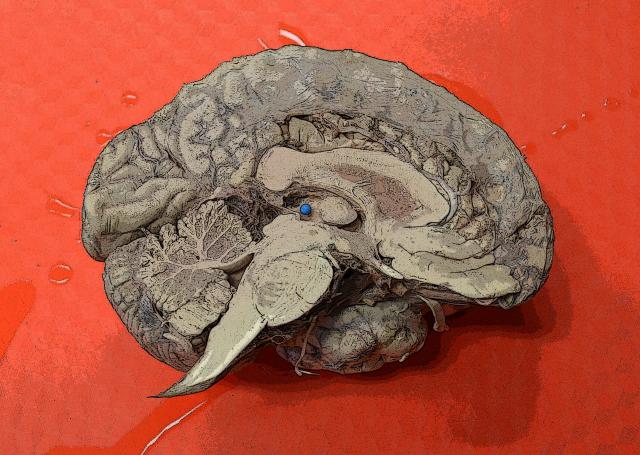
Understanding the Brain: The Neurobiology of Everyday Life (Coursera)

Offered by University of Chicago,
Understanding the Brain: The Neurobiology of Everyday Life (Coursera)

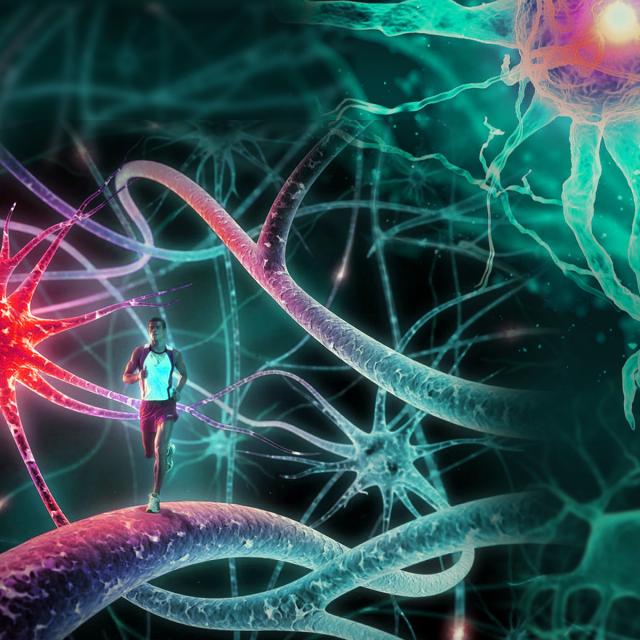
Learn how the nervous system produces behavior, how we use our brain every day, and how neuroscience can explain the common problems afflicting people today. We will study functional human neuroanatomy and neuronal communication, and then use this information to understand how we perceive the outside world, move our bodies voluntarily, stay alive, and play well with others.

Class Deals by MOOC List - Click here and see Coursera's Active Discounts, Deals, and Promo Codes.

Suggested Reading: Medical Neurobiology

Syllabus

WEEK 1
The Nervous System
Neurobiology is a rapidly growing area of scientific research, and is becoming increasingly prevalent in the news and popular culture. In this course, we will study of the nervous system from a biological perspective by exploring the fundamental concepts in neurobiology, including how we sense the world, how we act in the world, and common neurological disorders.

WEEK 2
Neural Communication + Embodied Emotion
Neurons are the cells of the nervous system responsible for communicating, relaying, and integrating information. Neurons "talk" to other neurons through a special type of language that involves electrical signaling within individual neurons, and the use of chemical compounds known as neurotransmitters to communicate between neurons. In this module, you will learn more about how a neuron functions at rest, how information is relayed within a neuron, and how neurons relay information to other neurons or target tissues. In the second half of this module, you will be learning about how the body and emotions work together to produce our everyday emotional experiences. We will look at the enteric nervous system and learn how to discern whether the sympathetic or parasympathetic system is impacting our current emotional state.

WEEK 3
Neuroanatomy
Neuroanatomy tells us how the nervous system is organized. Understanding the form of the brain is essential to understanding its function. By comparing the structure of the brain with a patient's symptoms, neurologists are able to identify the location of certain disorders. Studying how the human brain develops provides insight to why it is organized as it is. This module, you will learn about how the brain develops during gestation, some major pathways in the nervous system, and what can go wrong!

WEEK 4
Perception and Vision
Perception is how the brain interprets incoming stimuli. Not all stimuli that can be sensed are perceivable, and sometimes those that can be perceived play tricks on us. The systematic ways that stimuli are interpreted (or misinterpreted) show how well the brain can understand our surroundings, sometimes with limited information. This module we will explore perception and vision.This module contains a lot of material, so be sure to start early so that you have time to finish!

WEEK 5
Hearing
The sound of birds chirping in the morning, a babbling brook or crashing waves on the beach, or warm conversation with the ones you love. The experience of all these things requires the ability to hear. Arguably the most important sense for human communication, it is also the most commonly impaired of our senses. In this module, you will learn how the human ear is artfully designed to enhance our ability to hear the human voice. You will follow sound waves as they travel from the external world, to the eardrum, through the bones of the middle ear, and to the cochlea that transduces sound information into neural impulses.

WEEK 6
The Vestibular Sense & Gaze
The vestibular system and gaze control give us so much but are grossly under appreciated. They are so fundamental that we discount them, assuming that they will always be there. When the vestibular system fails us, its importance dominates our lives. Living with either a vestibular or an eye movement disorder is very disruptive to everyday life. In this module, you will learn how the inner ear is designed to detect and respond to head movements. You will learn about the circuit that connects the inner ear to the motoneurons that control the location of your eyes, allowing us to reflexively maintain our view of an object even as we move about in the world. Finally, we will talk about how you can modify this reflexive control of the eyes and how you can control where you are looking.

WEEK 7
Voluntary Movements
"Voluntary movements are how we interact with the world. The organization of the motor system has implications for how we move, and the types of movements we can make. This module we'll start to explore the organization of the motor system, from neurons to muscles. This module contains a lot of material, so be sure to start early so that you have time to finish!"

WEEK 8
Motor Modulation
You should now have an understanding of how muscles function to initiate movements. However, the brain requires more than just the cerebral cortex to determine what movements to perform and to make those movements smooth and guided. This module, we'll explore the cerebellum and the basal ganglia, fascinating structures that play a major role in movement. You'll also learn how these brain regions are involved in motor learning and disease.

WEEK 9
Homeostasis
Although our bodies are very robust and we can live in a range of environments, our brain requires very specific conditions to function properly. Homeostasis is the active process by which our nervous system regulates internal conditions, such as blood pressure and temperature. This module we will explore what homeostasis does, and how it functions in everyday life.

WEEK 10
Abstract Function
You've now learned an incredible amount about the way the brain functions to perceive and act upon the world we live in. You've gained an understanding of neurobiology on a cellular level, and how many diseases and disorders of the nervous system can affect our bodies and minds. In our final module, we will journey into the realms of emotion, attention, memory, and language. By the end of this module, you will have a greater understanding of the more abstract cognitive functions the brain.

Go to Class
MOOC List is learner-supported. When you buy through links on our site, we may earn an affiliate commission.

Related Courses

La Solución del Conflicto Ético (Coursera) Coursera
Universidad Nacional Autónoma de México

La Solución del Conflicto Ético (Coursera)

En este curso los participantes lograrán identificar y tomar decisiones sobre casos clínicos con conflictos éticos en el área de la salud por medio de la aplicación del razonamiento ético desde una perspectiva universal y considerando los aspectos médicos y éticos, el marco jurídico y la decisión ética.

Oct 5th 2026
5-12 Weeks
Emergence of Life (Coursera) Coursera
University of Illinois at Urbana-Champaign

Emergence of Life (Coursera)

How did life emerge on Earth? How have life and Earth co-evolved through geological time? Is life elsewhere in the universe? Take a look through the 4-billion-year history of life on Earth through the lens of the modern Tree of Life. This course will evaluate the entire history of life on Earth within the context of our cutting-edge understanding of the Tree of Life. This includes the pioneering work of Professor Carl Woese on the University of Illinois Urbana-Champaign campus which revolutionized our understanding with a new "Tree of Life."

Oct 5th 2026
5-12 Weeks
Lymphoedema: Monitoring & Intervention After Breast Cancer (Coursera) Coursera
Macquarie University

Lymphoedema: Monitoring & Intervention After Breast Cancer (Coursera)

Lymphoedema following breast cancer treatment is a poorly understood and under-researched condition which can significantly impact physical and psychological function, reduce quality of life and result in substantial cost burdens to both patients and the healthcare system. In these interactive modules we will cover an introduction to lymphoedema, lymphatic physiology and anatomy, assessment and treatment, as well as utilise case studies to understand the prospective surveillance and early intervention model of care in breast cancer rehabilitation.

Oct 5th 2026
4 Weeks
Community Awareness Course: Sexuality and Disability (Coursera) Coursera
University of Minnesota

Community Awareness Course: Sexuality and Disability (Coursera)

This community awareness course from the University of Minnesota Program on Human Sexuality will provide you with a solid introduction to human sexuality for those living with disabilities. Often there are assumptions that the disabled or differently abled people are not sexual, do not have sexual needs, or cannot be involved sexually. In this professionally produced one-hour course, you'll learn about the basics of disabilities and human sexuality.

Oct 5th 2026
5-12 Weeks
Sustainable Food Production Through Livestock Health Management (Coursera) Coursera
University of Illinois at Urbana-Champaign

Sustainable Food Production Through Livestock Health Management (Coursera)

Learn about the impact of infectious disease on sustainable animal-based food production by understanding the science of growth, immunity, and infection and by learning the problem-solving skills needed to advance animal health and food production through optimal management practices. In this course we will explore the effect of infectious disease on sustainable animal-based food production. The content and learning outcomes of this new course will be designed to be relevant across different food production sectors (i.e., beef, dairy, poultry, and pigs).

Oct 5th 2026
5-12 Weeks
Advanced Neurobiology II (Coursera) Coursera
Peking University

Advanced Neurobiology II (Coursera)

Hello everyone! Welcome to advanced neurobiology! Neuroscience is a wonderful branch of science on how our brain perceives the external world, how our brain thinks, how our brain responds to the outside of the world, and how during disease or aging the neuronal connections deteriorate. We’re trying to understand the molecular, cellular nature and the circuitry arrangement of how nervous system works.

Oct 5th 2026
5-12 Weeks
Introduction to Dental Medicine (Coursera) Coursera
University of Pennsylvania

Introduction to Dental Medicine (Coursera)

The mouth is the window into human health. This course provides an overview of dental medicine to engage, educate, excite and assist you in improving the oral health of your patients and members of your community. We will review topics in dental medicine including scope of the field, what to expect in function, and some of the many ways that dysfunction may present for different patients.

Oct 5th 2026
5-12 Weeks
Foundational Skills for Communicating About Health (Coursera) Coursera
University of Michigan

Foundational Skills for Communicating About Health (Coursera)

Effective communication is a core skill that nearly every health professional will need and use during their careers. Yet, few health professionals receive even basic training in how to design communications to be clear and successful. As “foundational skills,” the content in this course can be applied to both oral and written communication, within and beyond health.

Oct 5th 2026
5-12 Weeks
Ecosystems of California (Coursera) Coursera
University of California, Santa Cruz

Ecosystems of California (Coursera)

This course surveys the diversity, structure and functioning of California’s ecosystems through time and the ways they have influenced and responded to human activities and stewardship. Topics include ecosystem drivers such as climate, soils, and land use history; human and ecological prehistory of the state; comparative marine, freshwater, and terrestrial ecosystem dynamics; and managed ecosystems such as range, fisheries and agriculture in California.

Oct 5th 2026
5-12 Weeks
Whole genome sequencing of bacterial genomes - tools and applications (Coursera) Coursera
Technical University of Denmark - DTU

Whole genome sequencing of bacterial genomes - tools and applications (Coursera)

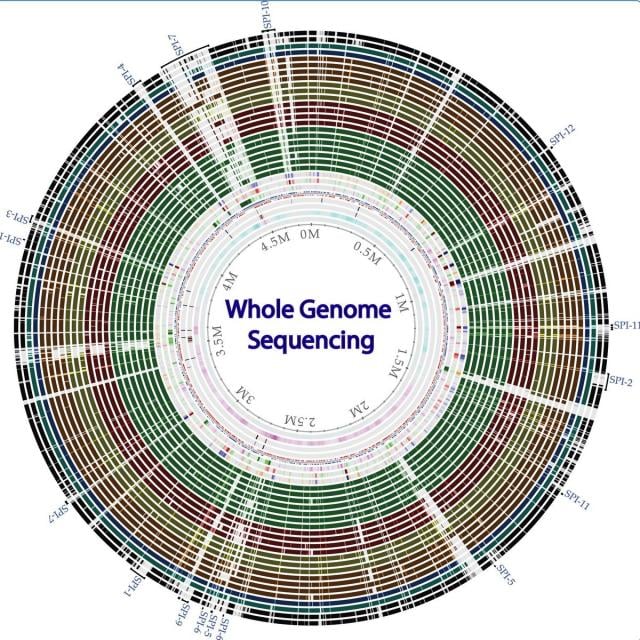
This course will cover the topic of Whole genome sequencing (WGS) of bacterial genomes which is becoming more and more relevant for the medical sector. WGS technology and applications are high on international political agenda, as the classical methods are being replaced by WGS technology and therefore bioinformatic tools are extremely important for allowing the people working in this sector to be able to analyze the data and obtain results that can be interpreted and used for different purposes.

Oct 5th 2026
5-12 Weeks
Discover Best Practice Farming for a Sustainable 2050 (Coursera) Coursera
University of Western Australia

Discover Best Practice Farming for a Sustainable 2050 (Coursera)

The Discover Best Practice Farming for a Sustainable 2050 Course is based on a clear vision: imagine best practice farming for 2050, start to implement these strategies now, all the while making sure it will still be profitable. At UWA we're doing just that with the Future Farm 2050 Project, set on a mixed-enterprise farm in Western Australia and we want you to learn how it can be done in your part of the world.

Oct 5th 2026
5-12 Weeks