Understanding the Australian economy: An introduction to macroeconomic and financial policies (Coursera)

Understanding the Australian economy: An introduction to macroeconomic and financial policies (Coursera)

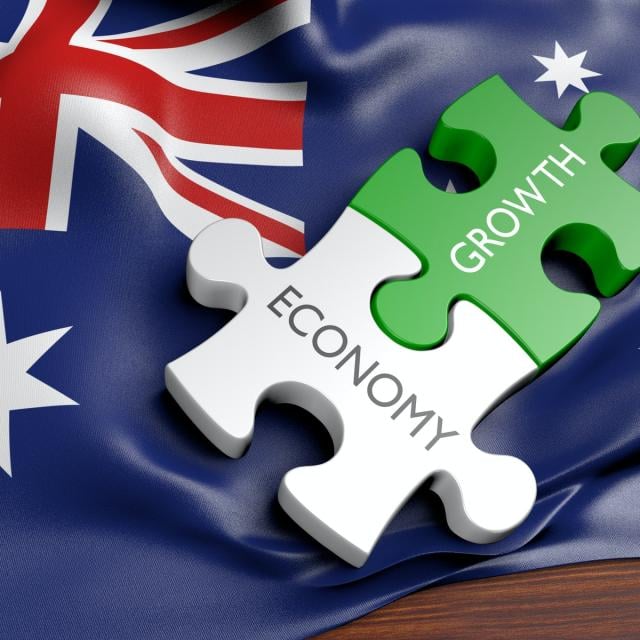
This four-week, four-module course explores selective aspects of the Australian economy, with emphasis on macroeconomic and financial policies. The course introduces participants to several key attributes of the Australian economy and discusses how they are influenced by both domestic and international forces. We will examine some of the key issues and dilemmas facing the Australian economy and how policymakers can deal with them using monetary and fiscal policies.

Class Deals by MOOC List - Click here and see Coursera's Active Discounts, Deals, and Promo Codes.

There will also be a discussion on the still-fresh 2007-2010s global financial crisis, the lessons learned, and how policymakers deal with the aftermath. Discussions will be centered around sound economic theories and reasoning, and utilize actual data whenever applicable. Applications of the economic reasoning and theories to current, real-world issues pertaining to the Australian economy will also be provided. In addition to conventional lectures, the course also contains several interviews with relevant experts and practitioners. No prior knowledge or training in economics is required.

Syllabus

WEEK 1
The Australian economy in a nutshell
Welcome to the MOOC! This week we will take a whirlwind tour of the Australian economy. More specifically, we will examine Australia's economy according to four key macroeconomic variables: gross domestic product, unemployment rate, inflation rate and exchange rate. Also, this week we will step back in time for a short history of the exchange rate regimes in Australia. Through this journey, we will explore why our nation is currently in the era of floating exchange rates.

WEEK 2
Monetary policy and the RBA
This week, we will drill down deeper into the heart of the Australian economy to explore monetary policy and the role of the central bank (the Reserve Bank of Australia, RBA) in stabilising and influencing the economy. First, we'll look at the transmission channels of monetary policy to see how the RBA can influence inflation and the level of activity in the economy. Next, we'll examine a simple but powerful framework to explain the RBA's stabilisation policies.

WEEK 3
Fiscal policy in Australia
This week we will have a brief overview of fiscal policy in Australia. Fiscal policy is an important topic and is widely used by policymakers to influence economic fluctuations, both in the short and medium run. In this module we will discuss the primary objectives and functions of fiscal policy in our nation. We will then apply a (familiar) economic framework in order to analyse fiscal policy and its impact on the economy. Using this framework, we’ll analyse several actual past, past policy episodes in the Australian economy.

WEEK 4
The 2007 - 2010s Global Financial Crisis
This week, we will investigate a momentous economic event: the 2007 Global Financial Crisis, or GFC.
Here we’ll have a crash course on the crisis – its main causes and consequences, the subsequent policy responses by policymakers and regulators, as well as its particular impact on the Australian economy.

Go to Class
MOOC List is learner-supported. When you buy through links on our site, we may earn an affiliate commission.

Related Courses

Business Opportunities and Risks in a Globalized Economy (Coursera) Coursera
IE Business School

Business Opportunities and Risks in a Globalized Economy (Coursera)

This is the last of the three courses part of the Globalization, Economic Growth and Stability Specialization.¨Business Opportunities and Risks in a Globalized World¨ is the the 3rd and final course of the ¨Globalization, Economic Growth and Stability¨ Specialization taught by IE Business School's Professor Gayle Allard. This course is designed to help an investor, businessperson or economist approach macroeconomic, institutional and international data and derive information from the indicators that point to the types of opportunities and risks that they present.

Aug 17th 2026
5-12 Weeks
Taiwan Law in Focus: Economy, Society and Democracy (Coursera) Coursera
National Taiwan University

Taiwan Law in Focus: Economy, Society and Democracy (Coursera)

“Taiwan Law in Focus” is the first online course provided by the College of Law, National Taiwan University. This course will give you an introduction to the legal system in Taiwan, which includes the topics of Constitution, administration law, criminal law, civil law, corporative law, and some related issues. You will learn about the brief history of Taiwan’s legal system and its transition in recent decades.

Sep 7th 2026
5-12 Weeks
Introduction to Formal Concept Analysis (Coursera) Coursera
Higher School of Economics - HSE University

Introduction to Formal Concept Analysis (Coursera)

This course is an introduction into formal concept analysis (FCA), a mathematical theory oriented at applications in knowledge representation, knowledge acquisition, data analysis and visualization. It provides tools for understanding the data by representing it as a hierarchy of concepts or, more exactly, a concept lattice. FCA can help in processing a wide class of data types providing a framework in which various data analysis and knowledge acquisition techniques can be formulated. In this course, we focus on some of these techniques, as well as cover the theoretical foundations and algorithmic issues of FCA.

Aug 8th 2022
5-12 Weeks
Central Banks and Monetary Policy (Coursera) Coursera
University of Illinois at Urbana-Champaign

Central Banks and Monetary Policy (Coursera)

The purpose of this course is to provide you with an understanding of central bank policies and how such policies affect financial markets and the economy. The main aim of this course is to provide you with insights about the macroeconomic relationships between interest rates, inflation, and unemployment that allow you to assess central bank actions and appreciate how this action will affect the economy.

Aug 31st 2026
4 Weeks
Municipal Solid Waste Management in Developing Countries (Coursera) Coursera
École Polytechnique Fédérale de Lausanne

Municipal Solid Waste Management in Developing Countries (Coursera)

Have you come across large piles of garbage in neighborhoods and streets, or smelly waste disposal sites polluting the environment of low and middle income countries? Are you also convinced that improvements are necessary and do you want to know what kind of sustainable solutions are appropriate to better manage waste and enhance recycling and recovery? If yes, this course is for you!

Sep 7th 2026
5-12 Weeks
Global Strategy II: Doing Business in The Global Economy (Coursera) Coursera
University of Illinois at Urbana-Champaign

Global Strategy II: Doing Business in The Global Economy (Coursera)

This course explores the ways firms overcome challenges when operating globally. The global economy is characterized for its high complexity and uncertainty. Corporations trying to succeed in the global economy need to develop different types of strategies depending on where they are conducting business or what type business they are in.

Aug 17th 2026
4 Weeks
Principles of Economics: Macroeconomics - The Big Picture (Coursera) Coursera
Rice University

Principles of Economics: Macroeconomics - The Big Picture (Coursera)

Take a trip with me in this the third and final course of this Economics 100 Specialization which is a direct adaptation from one of my courses I teach at Rice University. Specifically, in this course we're going to be focusing on Macroeconomics. What is Macroeconomics you might be asking? Well, you've come to the right place! We're going to be going over the big picture of economics- which is examining the measures we use to gauge the health of national economies and study the theories and policies aimed at improving economic health. In a nutshell, how can we use economics to make the world a better place?

Aug 17th 2026
5-12 Weeks
Understanding Financial Markets (Coursera) Coursera
University of Geneva

Understanding Financial Markets (Coursera)

In this course, you will learn what the main financial markets and their characteristics are as well as how they are linked to the economy. Our very diversified team of experts will start by teaching you how the price of stocks and bonds are computed and why they move while you will become increasingly aware of the notion of risk and why it matters when measuring an investment's performance. The focus will then move to less popular markets such as gold, emerging markets, real estate, hedge funds and private markets.

Aug 10th 2026
4 Weeks
Deploying the circular economy within organisations (Coursera) Coursera
ESSEC Business School

Deploying the circular economy within organisations (Coursera)

How can companies act in the fight against global warming? This is an increasingly pressing question for all actors of our society. Big companies, SMEs, start-ups but also charities and public actors, the circular economy is part of solutions to be deployed at a large scale by all these actors, to promote an economy that respects planet boundaries, consumes less natural resources, emits less greenhouse gases and produces less waste. With this MOOC, you will understand the limits of the linear economy, based on the "Take-Make-Waste" principle, as well as the need for a shift towards circular economy.

Sep 7th 2026
4 Weeks
Typology of countries and European economies (Coursera) Coursera
National Research Tomsk State University,Financial University

Typology of countries and European economies (Coursera)

The course topology of countries and European economies actually contains three modules. The first one will explain how the different countries of the world are divided into several groups of different economic organizations of the world, like, for example, the World Bank or United Nations.

May 9th 2022
5-12 Weeks
Macroeconomics for Business Management (Coursera) Coursera
FIA Business School

Macroeconomics for Business Management (Coursera)

In this course, you will be introduced to some basic concepts of country-level Macroeconomics that are relevant for an integrated understanding of the macroeconomic environment in which your business (or future business) operates. In this course, the first three weeks will cover the Gross Domestic Product (GDP) and its components deeply, and the fourth week will cover inflation, monetary policy, balance of payments, and the concept of real exchange rate.

Aug 17th 2026
4 Weeks