Cultural Competence - Aboriginal Sydney (Coursera)

Cultural Competence - Aboriginal Sydney (Coursera)

This course explores some of the key themes and capabilities of cultural competence by exploring Aboriginal experiences and narratives of Sydney. Australia was ‘claimed’ for the British Crown in 1770, by Captain James Cook, but the invasion began in earnest when the First Fleet of British arrived in 1788 and established a penal colony in Sydney.

Class Deals by MOOC List - Click here and see Coursera's Active Discounts, Deals, and Promo Codes.

As a consequence Sydney is a city rich in diverse pre-colonial, colonial and contemporary sites of significance to Aboriginal peoples. Too often though our perceptions about Aboriginal peoples consign them to an ancient past or perpetuates stereotypical imaginations that Aboriginal peoples live in remote communities (Hinkson, 2010).
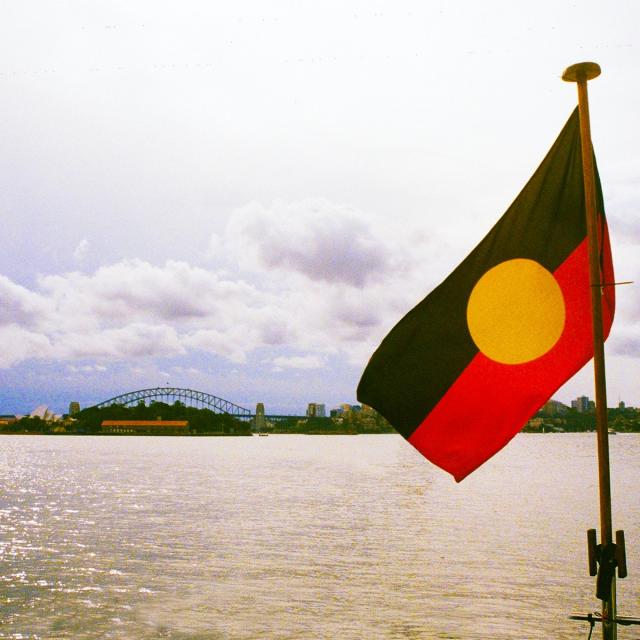
At the heart of this MOOC is the theme that Sovereignty was never ceded and Sydney always was and always will be Aboriginal Land. Despite this the Aboriginal presence in the city is often invisible to non-Aboriginal eyes. This course aims to bring to light marginalised narratives of Aboriginal presence in this space.
To understand hidden and marginalised narratives and experiences it is necessary to develop cultural competence capabilities. Key elements of practicing cultural competence include being able to understand and interrogate context, which in the case of Sydney includes not only learning about the peoples, places and histories of Aboriginal Sydney but to also understand issues about how knowledge is created and how dominant narratives can exclude diverse knowledges and experiences.
Course learning outcomes

  1. Develop knowledge about cultural competence capabilities.
  2. Develop a deeper and multi-layered knowledge and understanding about Aboriginal peoples, cultures and places in Sydney.
  3. Develop a greater understanding of how history, cultures and places are represented, contested and interpreted and how that relates to their own context.

Acknowledgement of Country
We acknowledge that this course was developed on the land of the Gadigal Peoples of the Eora nation. We pay our respect to the Traditional Owners of this land and acknowledge that the land that the University of Sydney was built on has been a place of learning for many thousands of years.

Syllabus

WEEK 1
Introductions
Welcome to the Cultural Competence - Aboriginal Sydney MOOC.

WEEK 2
Representation and visibility in Aboriginal Sydney
This week highlights how Aboriginal peoples are represented and made invisible. We will look at how museums and anthropologists collected and studied Aboriginal peoples and their artefacts. We will also look at how Aboriginal peoples engaged with the colonisers and continue to do so.

WEEK 3
Sovereignty and self-determination in a colonised place
Aboriginal sovereignty has never been ceded. This means that Aboriginal peoples never came to any agreement which conceded their lands. One of the myths of colonisation was that Aboriginal people didn't resist. But they did resist, and they continue to fight for their sovereign rights in a myriad of different ways: from the overtly political to the revitalisation of cultures and languages, to expression through artistic endeavours. This week's lectures and activities highlight the many different perspectives about how people claim and embody sovereignty.

WEEK 4
People, past and present
This week, we will show the diversity of Aboriginal peoples and hear some stories and experiences which show the continued absence of Aboriginal peoples in Sydney.

WEEK 5
Visibility in place
This week's lectures and activities aim to draw our attention to Aboriginal presence in the city. All around us - even in a developed city like Sydney - there are significant sites, but we often don't notice them. From ancient rock engravings to contemporary public art projects, significant sites serve as a reminder of the ongoing presence and occupation of the Sydney area by Aboriginal people for thousands of years. In this Module, we will be shown some sites by the CEO and Cultural Officer of the Metropolitan Local Aboriginal Land Council. We will also be introduced to the work of the City of Sydney council who are working on raising awareness and understanding about Aboriginal people in Sydney.

WEEK 6
Resistance
This week we will focus on stories and experiences of resistance and activism, many of which were fostered in Sydney's inner city areas. For many years, Aboriginal people from around the country came to Sydney and settled near the industrial areas, finding work there and making their home in Sydney's inner city suburbs. In particular, the suburb of Redfern is the birthplace of contemporary Aboriginal political consciousness, where the fight for self-determination became tangible. The people we hear from this week share their stories on how they have negotiated their identities and made sense of their own experiences within this context.

Go to Class
MOOC List is learner-supported. When you buy through links on our site, we may earn an affiliate commission.

Related Courses

The History of Modern Israel - Part II: Challenges of Israel as a sovereign state (Coursera) Coursera
Tel Aviv University

The History of Modern Israel - Part II: Challenges of Israel as a sovereign state (Coursera)

This course deals with the Israeli politics, economy, society and culture, since its creation in 1948 till today. It analyzes the construction of the Israeli historical narrative as an identity-building narrative, intending to inculcate a collective memory to a diverse society. We will focus on key events and essential components that shaped the Israeli society from the fifties till the present. We will also discuss the changes that the Israeli society experiences in its almost seventy years of existence and how it affects its politics and culture.

Aug 17th 2026
5-12 Weeks
Benjamin Franklin and His World (Coursera) Coursera
University of Pennsylvania

Benjamin Franklin and His World (Coursera)

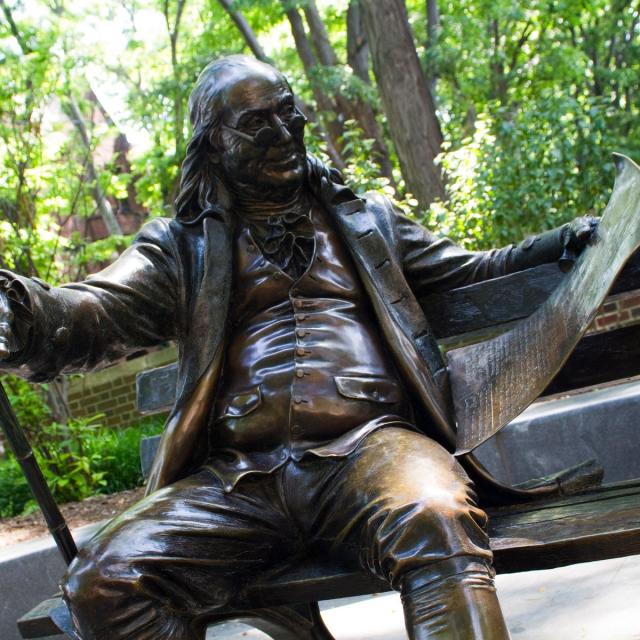
Welcome to Benjamin Franklin and His World! In this course, we explore the life of one of the United States’ most important historical figures. We examine Franklin’s early life growing up in the American colonies, his professional career as a printer and scientist, and his role in the American Revolution and the founding the United States as a new nation on the world stage.

Aug 24th 2026
4 Weeks
Data Science Ethics (Coursera) Coursera
University of Michigan

Data Science Ethics (Coursera)

What are the ethical considerations regarding the privacy and control of consumer information and big data, especially in the aftermath of recent large-scale data breaches? This course provides a framework to analyze these concerns as you examine the ethical and privacy implications of collecting and managing big data. Explore the broader impact of the data science field on modern society and the principles of fairness, accountability and transparency as you gain a deeper understanding of the importance of a shared set of ethical values.

Aug 24th 2026
4 Weeks
Roman Art and Archaeology (Coursera) Coursera
University of Arizona

Roman Art and Archaeology (Coursera)

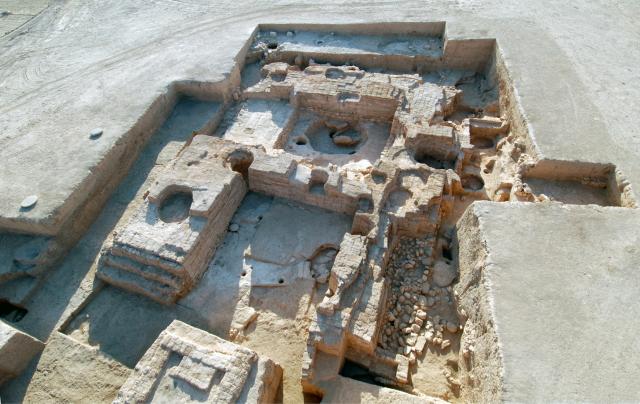
The objective of this course is to provide an overview of the culture of ancient Rome beginning about 1000 BCE and ending with the so-called "Fall of Rome". We will look at some of the key people who played a role in Rome, from the time of the kings through the Roman Republic and the Roman Empire. We will also focus on the city of Rome itself, as well as Rome's expansion through Italy, the Mediterranean, and beyond.

Aug 24th 2026
5-12 Weeks
Antisemitism: From Its Origins to the Present (Coursera) Coursera
Yad Vashem

Antisemitism: From Its Origins to the Present (Coursera)

In this course, 50 leading scholars from all over the world will explore questions and issues relating to antisemitism including: what is antisemitism? How has it changed throughout history? Why can it be found among so many diverse cultures, and even among opposing ideologies? What happened to antisemitism after the Holocaust? How is antisemitism expressed today, and what are the main spheres in which it can be found?

Aug 24th 2026
5-12 Weeks
Magna Carta and its Legacies: Freedom and protest (Coursera) Coursera
University of London

Magna Carta and its Legacies: Freedom and protest (Coursera)

This course examines the roles that Magna Carta has played historically as well as the importance of Magna Carta today. It aims to equip students with a critical understanding of Magna Carta and its significance around the globe. Students will find out what Magna Carta is, how it came about, and why many believe that it remains one of the most significant documents in history.

Aug 24th 2026
5-12 Weeks
The History of Modern Israel – Part I: From an Idea to a State (Coursera) Coursera
Tel Aviv University

The History of Modern Israel – Part I: From an Idea to a State (Coursera)

How did the State of Israel come to be? How is it that an idea, introduced in 19th century Europe, became a reality? And how does that reality prevail in the harsh complexities of the Middle East? Presented by Professor Eyal Naveh, with additional units from Professor Asher Sussers' "The Emergence of the Modern Middle East" course, This course will take you on a journey through the history of Modern Israel. In this 1st part of the course we will explore: How did the 19th century idea of a Jewish state become a reality? So the next time you hear about Israel in the news, you will be informed enough about the history of this area to comprehend the many sides and narratives that interact to shape the complex reality of Israel today.

Aug 24th 2026
3 Weeks
Introduction to Who Wrote Shakespeare (Coursera) Coursera
University of London,Goldsmiths, University of London

Introduction to Who Wrote Shakespeare (Coursera)

This free course from the University of London explores critical thinking, and the interpretation of texts, through the Shakespeare authorship question. Using doubt about Shakespeare’s authorship as our playground, we will explore the key concept of authorship attribution, while developing skills in literary analysis, interpretation, and argument. Through forensic exploration of key texts, you will learn why Shakespeare’s authorship is questioned, and what evidence is cited on both sides of the debate.

Aug 24th 2026
4 Weeks
Chinese Culture and Contemporary China (Coursera) Coursera
Nanjing University

Chinese Culture and Contemporary China (Coursera)

This course of Chinese Culture and Contemporary China will explore the foundations of Chinese civilization and the dimensions of Chinese culture. It will pay particular attention to the relationship between Chinese culture and the present-day life of the Chinese people and to the different elements of the culture which are under the present social structures, belief systems, literature, arts, customs, etc. The course aims at providing students with a deeper knowledge of Chinese culture, thus enabling them to better understand China.

Aug 24th 2026
5-12 Weeks
Introduction to Ancient Egypt and Its Civilization (Coursera) Coursera
University of Pennsylvania

Introduction to Ancient Egypt and Its Civilization (Coursera)

Colossal pyramids, imposing temples, golden treasures, enigmatic hieroglyphs, powerful pharaohs, strange gods, and mysterious mummies are features of Ancient Egyptian culture that have fascinated people over the millennia. The Bible refers to its gods, rulers, and pyramids. Neighboring cultures in the ancient Near East and Mediterranean wrote about its god-like kings and its seemingly endless supply of gold. The Greeks and Romans describe aspects of Egypt's culture and history.

Aug 24th 2026
5-12 Weeks
The Bible's Prehistory, Purpose, and Political Future (Coursera) Coursera
Emory University

The Bible's Prehistory, Purpose, and Political Future (Coursera)

With its walls razed to ground by Babylon’s armies, Jerusalem joined a long line of ancient vanquished cities—from Ur and Nineveh and Persepolis to Babylon itself. While some recovered from the destruction, others did not. But none responded to political catastrophe by fashioning the kind of elaborate and enduring monument to their own downfall that we find in the Bible. Most conquered populations viewed their subjugation as a source of shame. They consigned it to oblivion, opting instead to extol the golden ages of the past. The biblical authors in contrast reacted to loss by composing extensive writings that acknowledge collective failure, reflect deeply upon its causes, and discover thereby a ground for collective hope.

Aug 24th 2026
5-12 Weeks
The Worldview of Thomas Berry: The Flourishing of the Earth Community (Coursera) Coursera
Yale University

The Worldview of Thomas Berry: The Flourishing of the Earth Community (Coursera)

Thomas Berry (1914-2009) was a historian of world religions and an early voice awakening moral sensibilities to the environmental crisis. He is known for articulating a “new story” of the universe that explores the implications of the evolutionary sciences and cultural traditions for creating a flourishing future. This course investigates Berry’s life and thought in relation to the Journey of the Universe project.

Aug 17th 2026
5-12 Weeks