The Korean Economic Development (Coursera)

Offered by Yonsei University,
The Korean Economic Development (Coursera)

You will review the evolution of the Korean economy decade by decade since Korea’s independence from Japan in 1945. Major policies of each decade will be explained and their effect on the Korean economy will be analyzed. Also, the backgrounds and limitations of important policies will be scrutinized.

Class Deals by MOOC List - Click here and see Coursera's Active Discounts, Deals, and Promo Codes.

By doing so, you will be able to compare the Korea experience with the other developing countries.

  1. You will be able to explain how the miracle of the Korean economic development was made possible.
  2. By examining internal and external conditions behind the decision making of major policies in Korea, you will be able to draw lessons that can be applicable to today’s developing countries.
  3. You can explain how the Korean economy has interacted with the global economy in the past.
  4. You can observe how economic theories and models can be applied to the Korean case.

Syllabus

WEEK 1
Introduction: Preview and Overall Evaluation
Module 1. Introduction I: This module introduces initial conditions of the Korean economy at the time of independence from Japan in 1945. Upon describing unfavorable initial conditions, it summarizes three major achievements of the Korean economic development after the Korean War (1950-1953).
Module 2. Introduction II: In order to explain the determinant factors of the Korean economic success, this module provides two approaches. First, it introduces neoclassical growth model, and explains how each production factor has contributed to economic growth. Second, it introduces institutional approach, which emphasizes the role of the government. Also, it shows the strength and weakness of the Korean economy.
1940s and 1950s
Module 3. From independence to the War: After independence from Japan, the newly established Korean government has implemented two meaningful reforms; land reform and educational reform. Main contents and implications of these reforms are explained. This module also introduces economic impact of the Korean War.Module 4. Import Substitution Policy of the 50s: After the Korean War, the Korean government needed to stabilize the hyper-inflation from the mid-1950. Also, IS (import substitution) polices were employed to achieve industrialization and growth. This module introduces major policy tools of IS, and its results.Module 5. The Role of Economic Aid: This module introduces the size and role of economic aids on the Korean economy during the 1950s. It also compares Korea to the other developing countries in terms of aids policies. It also briefly introduces the history of ODA (official development assistance) in Korea.

WEEK 2
1960s
Module 6. Export Promotion of the 60s: From the early 1960s, Korea has changed its development strategy from IS (import substitution) to EP (export promotion). This module introduces backgrounds, major policies, and results of EP policies. Also it compares the Korean experiences of EP to those of Japan. Module 7. Five Year Development Plan and Mobilization of Capital: This module explains how the Five Year Development Plans were launched from the early 1960s. Also, it introduces efforts of the Korean government to mobile capital inside and outside Korea during the 1960s.
1970s
Module 8. Heavy and Chemical Industrialization (HCI) of the 70s: From the early 1970s, Korea has aggressively pursued HCI (heavy and chemical industrialization) policies. This module explains backgrounds, major policies, and main results of HCI policies.Module 9. Side-effects of HCI and Oil Shocks: This module introduces some side-effects of aggressive HCI (heavy and chemical industrialization) policies. It explains how these side-effects are inter-related with each other. Also, it introduces impacts of oil shocks on the Korean economy during the 1970s, and explains how the Korean economy recovered from oil shocks.

WEEK 3
1980s
Module 10. Crisis Management & Structural Reform and Trade Liberalization of the 80s: The Korean economy was close to foreign exchange crisis in the early 1980s. This module explains how Korea could avoid the crisis and stabilize the economy by the mid-1980s. It also introduces structural reforms and trade liberalization reforms. Module 11. Three Lows & Economic Boom of the 1980s: This module introduces favorable international environments called ‘three-lows’, which emerged from the mid-1980s. It introduces backgrounds of three-lows, and explains how these three-lows helped the Korean economy to enjoy the unprecedented economic boom. Also, it introduces how the democratization of the Korea society has influenced the economy.
The early 1990s
Module 12. The Early 1990s: In the early 1990s, the Korean economy has faced the end of high growth era. However, the Korean economy has failed to adapt itself to slower growth, and the problem of ‘high costs and low efficient’ economic structure emerged.

WEEK 4
1997 Asian Financial Crisis
Module 13. 1997 Asian Financial Crisis I: In the end of 1997, the Korean economy fell into foreign exchange crisis and had to be bailed out by IMF (international monetary fund). This module explains the internal and external causes of the 1997 Asian Financial Crisis.
Module 14. 1997 Asian Financial Crisis II: In order to recover from the 1997 Asian Financial Crisis, the Korean government and IMF implemented four major reforms in the area of financial sector, corporate sector, labor market, and government. This module introduces main contents of these reforms, and explains how they helped the Korean economy to recover from the crisis. Module 15. 1997 Asian Financial Crisis III: This module introduces some side-effects and controversial issues with respect to the 1997 Asian Financial Crisis. Also, it explains about implications of the 1997 crisis on the Korean economy.

WEEK 5
2008 Global Financial Crisis and Beyond
Module 16. 2008 Global Financial Crisis & Beyond: In September, 2008, the global economy fell into financial crisis after the collapse of Lehman Brothers. This module explains how the 2008 global financial crisis affected Korea, and also explains how Korea has recovered from it.
Module 17. 2008 Global Financial Crisis & Beyond: This module introduces implications of the 2008 global financial crisis on the Korean economy. Also, it shows the most recent picture of the Korean economy by introducing strength and weakness of the Korean economy.
Final Peer Review

Go to Class
MOOC List is learner-supported. When you buy through links on our site, we may earn an affiliate commission.

Related Courses

Economics of Transition and Emerging Markets (Coursera) Coursera
Higher School of Economics - HSE University

Economics of Transition and Emerging Markets (Coursera)

The course analyzes challenges faced by transition and emerging-market economies, i.e., those middle- and low-income countries, which have conducted market-oriented economic reforms and become integrated into the global economy since 1990s. It starts from a brief history of communist economic system based on central planning in the former Soviet Union and Central and Eastern Europe, its evolution and collapse at the end of 1980s/ early 1990s and subsequent transition to a market system in 1990s and 2000s.

Jul 18th 2022
5-12 Weeks
Developing economies of Latin America, Eurasia and Africa (Coursera) Coursera
National Research Tomsk State University,Financial University

Developing economies of Latin America, Eurasia and Africa (Coursera)

This course concerns mainly not developed countries of the world but still very promising. And we will start in the first module with studying the Latin American economies. And those are the biggest and the most promising Brazil or Argentina. We will try to understand why Brazil or Mexico or Argentina or Chile can catch up with other developed economies, and if they have any progress in doing so.

May 9th 2022
5-12 Weeks
Property Law in a Globalizing Economy: Diversity or Integration? (edX) EdX
Waseda University,WasedaX

Property Law in a Globalizing Economy: Diversity or Integration? (edX)

Law

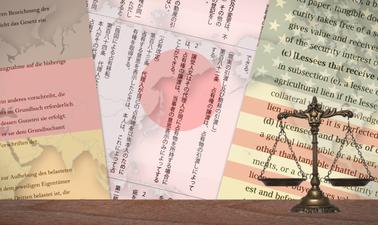
Explore international diversity of conveyance rules applicable to several transactions, including highly globalized ones, by comparing American law, German law, and Japanese law. Learn the approaches, to what extent, and how international harmonization should be achieved to take part in such an open-ended discussion in the future.

Self Paced
Self-Paced
The Korean Story: Secrets of an Economic Miracle (edX) EdX
SDGAcademyX,SDG Academy

The Korean Story: Secrets of an Economic Miracle (edX)

What can the world learn from the Korean development story? The Korean Story discusses the socio-political and historical context that has shaped the economic growth of South Korea. It probes into how South Korea, post the Second World War, was able to transform its economy within three decades to emerge as a leading innovation and technology center in the 21st century.

Self Paced
Self-Paced
Exploring Economics: Will the Next Generation Be Worse Off? (FutureLearn) FutureLearn
Griffith University

Exploring Economics: Will the Next Generation Be Worse Off? (FutureLearn)

Will the next generation be better or worse off than their parents? Look at both sides of the debate and decide for yourself. The next generation faces uncertain economic prospects. This online course explains why. You’ll get an introduction to the global economy, how it experiences spikes and dips in economic growth and how this affects prosperity worldwide.

No sessions available
3 Weeks
Understanding Korean Politics (Coursera) Coursera
Yonsei University

Understanding Korean Politics (Coursera)

This course will select six most outstanding issues in contemporary Korean politics and will engage in an in-depth, interactive inquiry of those issue. They include Korean politics in history, institutional setting of Korean politics, and dynamics of political culture in Korea, profiles of political leadership, myth and reality of the developmental state and the Korean economic miracle, and debates on Korean unification. The course will expose students to contending theories and empirical reality at first hand.

Jun 8th 2026
5-12 Weeks
Microeconomics Principles (Coursera) Coursera
University of Illinois at Urbana-Champaign

Microeconomics Principles (Coursera)

Most people make the incorrect assumption that economics is ONLY the study of money. My primary goal in this course is to shatter this belief. During this course, we will be addressing the above questions as well as many more relating to: the environment; love and marriage; crime; labor markets; education; politics; sports; business. My main goal is to show you the way economists think and how to use this analytical system to answer questions related not only to these and other important human issues but to anything you end up doing with your life after this class. After all, as you will quickly find out, I believe that everything is economics!

Jun 22nd 2026
5-12 Weeks
Risk, Return and Valuation (Coursera) Coursera
Yunus Social Business Fund Bengaluru

Risk, Return and Valuation (Coursera)

This course is part of a Specialization titled “Strategy and Finance for a Lifecycle of a Social Business”, with a follow-on project-based course on understanding and evaluating a business focused on addressing a societal issue. The beauty of a modern decision-making framework is that it can be used to understand value creation at any level – the individual or business or societal. The applications however become increasingly complex as your lens expands from the individual to the corporate/nonprofit to the global society.

Jun 24th 2026
5-12 Weeks
Global Strategy I: How The Global Economy Works (Coursera) Coursera
University of Illinois at Urbana-Champaign

Global Strategy I: How The Global Economy Works (Coursera)

This course seeks to help you understand the forces of globalization and how cross-cultural management and the relationship of a multinational organization to various host countries is becoming more and more critical in today’s global economy. This course begins with the discussion of these issues and global relationships and delves into a deeper understanding of business strategy in today’s global business marketplace.

Jun 22nd 2026
4 Weeks
Value and Individual Decision Making (Coursera) Coursera
Yunus Social Business Fund Bengaluru

Value and Individual Decision Making (Coursera)

This course is part of a Specialization titled “Strategy and Finance for a Lifecycle of a Social Business”. It is an introduction to time value of money and will help the learner understand the basics of finance with the ultimate goal of valuing a company from a societal lens. The beauty of the modern decision-making framework is that it can be used to understand value creation at any level – the individual, the corporate or nonprofit entity level and from the point of view of society. The applications however become increasingly complex as your lens expands from the individual to the corporate/nonprofit to the global society.

Jun 24th 2026
5-12 Weeks