Tratando los síntomas urinarios por HPB (Coursera)

Tratando los síntomas urinarios por HPB (Coursera)

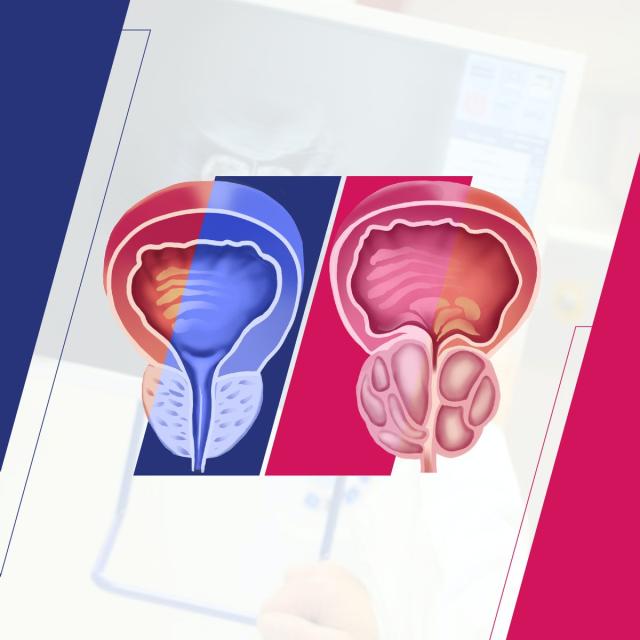
El curso Tratando los síntomas urinarios por Hiperplasia Prostática Benigna (HPB) es un curso completamente integral en donde se abordarán todos los aspectos necesarios para entender la frecuencia de los síntomas en nuestra sociedad, la necesidad que tienen los pacientes para buscar ayuda en una patología que afecta mucho la calidad de vida.

Class Deals by MOOC List - Click here and see Coursera's Active Discounts, Deals, and Promo Codes.

El curso ofrece al estudiante de una manera sencilla el conocimiento necesario sobre el impacto de los síntomas del tracto urinario bajo en los hombres, cómo se producen, la forma de hacer una aproximación diagnóstica certera y por ende realizar un tratamiento oportuno y adecuado de los mismos, evitando las complicaciones que se pueden derivar de no hacerlo. El curso se divide en cuatro módulos, en donde abarcaremos todos los aspectos que consideramos importantes en el conocimiento de esta condición, desde datos epidemiológicos a nivel mundial y local, hasta métodos diagnósticos y tratamiento tanto conservador como quirúrgico.

What You Will Learn

  • Identificar qué factores de riesgo se encuentran asociados al crecimiento prostático benigno.
  • Reconocer los estudios más útiles para el diagnóstico de los síntomas de crecimiento prostático.
  • Determinar el tratamiento ideal de acuerdo al perfil clínico de cada paciente, los mecanismos de acción y efectos secundarios.

Syllabus

WEEK 1
Introducción
Módulo 1: Aspectos generales y epidemiología
Bienvenido al primer módulo del curso “Tratando los síntomas urinarios por crecimiento prostático benigno”. El curso está dividido en cuatro módulos. Este primero es introductorio, con el fin de generar las bases necesarias para avanzar en la comprensión de los módulos siguientes. En este módulo veremos algunos aspectos generales como definiciones y datos que nos permitirá tener una compresión de la importancia de esta enfermedad. Para terminar, ahondaremos en aquellas características o circunstancias asociadas con la probabilidad de desarrollar esta condición, conocido como factor de riesgo.

WEEK 2
Módulo 2: Etiología y fisiopatología
Bienvenido al segundo módulo del curso “Tratando los síntomas por crecimiento prostático benigno”. En este módulo presentaremos las bases para entender el acto miccional en el ser humano, adicionalmente veremos por qué ocurren los síntomas por crecimiento prostático y cómo afectan el acto miccional. Tendremos tres lecciones en las que abordaremos las bases fisiológicas que nos permiten entender cómo funciona el tracto urinario en condiciones normales, así como poder entender todos aquellos cambios a nivel de la dinámica de la evacuación de la orina asociados al crecimiento prostático, pero también a eventos concomitantes como el envejecimiento en el ser humano y la aparición de comorbilidades. Te invitamos a consultar todos los recursos para entender cómo ocurre este proceso.

WEEK 3
Módulo 3: Diagnóstico
Bienvenido al tercer módulo del curso “Tratando los síntomas por crecimiento prostático benigno”, en donde veremos los métodos diagnósticos para síntomas del tracto urinario inferior relacionados con crecimiento prostático. Abarcaremos desde ayudas diagnósticas no invasivas hasta métodos avanzados, reconociendo los estudios más útiles, sus indicaciones y su interpretación en el contexto de los síntomas que el paciente manifiesta. Al finalizar el estudio de este módulo habrás mejorado tu capacidad de hacer una aproximación diagnóstica basada en la mejor evidencia disponible. Que lo disfruten.

WEEK 4
Módulo 4: Tratamiento
Bienvenido al cuarto y último módulo del curso “Tratando los síntomas por crecimiento prostático benigno”. En este módulo conocerás todas las alternativas de tratamiento que existen, desde medidas conservadoras que son importantes no solo para la mejoría de estos síntomas sino para la salud en general, pasando por tratamientos farmacológicos distintos con indicaciones específicas, terapias de mínima invasión con resultados a corto plazo muy prometedores, hasta tratamientos quirúrgicos definitivos, así como los posibles efectos adversos de cada una de estas modalidades. Es decir, involucra todo lo que usted necesita saber para eventualmente hacer una recomendación a sus pacientes.


Go to Class
MOOC List is learner-supported. When you buy through links on our site, we may earn an affiliate commission.

Related Courses

Epidemics (Coursera) Coursera
University of Hong Kong

Epidemics (Coursera)

“If history is our guide, we can assume that the battle between the intellect and will of the human species and the extraordinary adaptability of microbes will be never-ending.” Despite all the remarkable technological breakthroughs that we have made over the past few decades, the threat from infectious diseases has significantly accelerated. In this course, we will learn why this is the case by looking at the fundamental scientific principles underlying epidemics and the public health actions behind their prevention and control in the 21st century.

Jun 22nd 2026
5-12 Weeks
Introduction to the Biology of Cancer (Coursera) Coursera
Johns Hopkins University

Introduction to the Biology of Cancer (Coursera)

Over 500,000 people in the United States and over 8 million people worldwide are dying every year from cancer. As people live longer, the incidence of cancer is rising worldwide and the disease is expected to strike over 20 million people annually by 2030. This open course is designed for people who would like to develop an understanding of cancer and how it is prevented, diagnosed, and treated.

Jun 22nd 2026
5-12 Weeks
Public Involvement in Research (Coursera) Coursera
Imperial College London

Public Involvement in Research (Coursera)

This course focuses on participatory approaches in research, known as 'public involvement' in the UK. You'll specifically, consider why citizens and patients would be involved in research and explore participatory approaches across and within the research cycle in more detail, diving into questions such as: What kinds of participation can be undertaken at each of the 7 stages of the cycle? How can you utilise participation in research? What examples of using participatory approaches exist in research?

Jun 24th 2026
4 Weeks
Epidemiology: The Basic Science of Public Health (Coursera) Coursera
University of North Carolina

Epidemiology: The Basic Science of Public Health (Coursera)

Often called “the cornerstone” of public health, epidemiology is the study of the distribution and determinants of diseases, health conditions, or events among populations and the application of that study to control health problems. By applying the concepts learned in this course to current public health problems and issues, students will understand the practice of epidemiology as it relates to real life and makes for a better appreciation of public health programs and policies. This course explores public health issues like cardiovascular and infectious diseases – both locally and globally – through the lens of epidemiology.

Jun 22nd 2026
5-12 Weeks
Diabetes - a Global Challenge (Coursera) Coursera
University of Copenhagen

Diabetes - a Global Challenge (Coursera)

Diabetes and obesity are growing health problems in rich and poor countries alike. With this course you will get updated on cutting-edge diabetes and obesity research including biological, genetic and clinical aspects as well as prevention and epidemiology of diabetes and obesity. All lectures are provided by high-profile scientists from one the world's leading universities in diabetes research.

Jun 22nd 2026
5-12 Weeks
Everyday Chinese Medicine (Coursera) Coursera
The Chinese University of Hong Kong

Everyday Chinese Medicine (Coursera)

This course aims to serve as an education platform on Chinese medicine (CM) for the general public. Our primary goal is to empower healthcare choices by promoting awareness and practical application on CM diagnostic and therapeutic approaches, as well as regulation on CM services and herbal products using international examples.

Jun 22nd 2026
5-12 Weeks
Positive Psychology Specialization Project: Design Your Life for Well-hebeing (Coursera) Coursera
University of Pennsylvania

Positive Psychology Specialization Project: Design Your Life for Well-hebeing (Coursera)

You are encouraged to take the first four courses of the Foundations of Positive Psychology Specialization before starting this course and completing the Specialization Project. This course, taught by Dr. Martin E.P. Seligman brings all the key concepts from the first four courses to practice as you develop and test a new positive intervention for an audience of your choice.

Jun 22nd 2026
4 Weeks
Diabetes - the Essential Facts (Coursera) Coursera
University of Copenhagen

Diabetes - the Essential Facts (Coursera)

Across the world more than 420 million people are living with diabetes. Two thirds of these have not yet been diagnosed. When discovered late or managed incorrectly, diabetes can damage your heart, blood vessels, eyes, kidneys, and nerves, leading to disability and premature death. In fact, more people are dying of diabetes related diseases than of diseases as HIV/AIDS, malaria and tuberculosis combined. This course will provide you with an introduction to the most recent research in the field of prevention and treatment of diabetes as well as a broader understanding of the situation in different communities, rich and poor, across the world, where diabetes threatens public health.

Jun 22nd 2026
3 Weeks
The Social Context of Mental Health and Illness (Coursera) Coursera
University of Toronto

The Social Context of Mental Health and Illness (Coursera)

Learn how social factors promote mental health, influence the onset and course of mental illness, and affect how mental illnesses are diagnosed and treated. This course explores how our understanding of mental health and illness has been influenced by social attitudes and social developments in North America and around the world. The course begins by situating our contemporary mental health practices in historical context, then looks at different aspects of mental health, mental illness and mental health services and their connections to what’s going on in our social environment.

Jun 22nd 2026
5-12 Weeks
Health for All Through Primary Health Care (Coursera) Coursera
Johns Hopkins University

Health for All Through Primary Health Care (Coursera)

This course explores why primary health care is central for achieving Health for All. It provides examples of how primary health care has been instrumental in approaching this goal in selected populations and how the principles of primary health care can guide future policies and actions. Two of the most inspiring, least understood, and most often derided terms in global health discourse are “Health for All” and “Primary Health Care.”

Jun 28th 2026
5-12 Weeks