EdX

Transformative Living Labs in Mobility (edX)

Offered by MIT, MITx,
Transformative Living Labs in Mobility (edX)

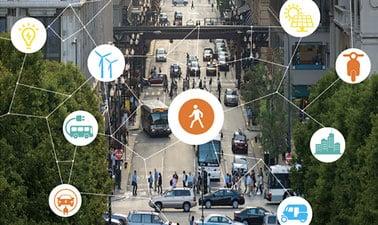
This course is an introduction to sustainable and equitable solutions in urban mobility, and to the “living labs” model: a method of co-development among public and private actors, researchers, and civil society to accelerate innovation in climate action and sustainable urban planning and development.

Class Deals by MOOC List - Click here and see EdX's Active Discounts, Deals, and Promo Codes.

“Transformative Living Labs in Mobility” introduces living laboratory model of achieving sustainable urban mobility systems. The goal of the course is to explore the ways that multiple stakeholders and agencies organize and investigate living labs to find solutions for urban mobility.
Mobility planning plays a key role in building more sustainable cities and providing equitable access to economic opportunities, education, healthcare and social activities. The living lab concept can be a helpful tool to achieve these goals. This co-development process forms coalitions that enable transformative change, addresses climate change, and supports inclusive, sustainable urban development. Urban change makers can use the living labs approach to highlight the benefits of innovations and interventions and test the validity in collaboration with authorities, academia, civil society, private sector and end-users.
This course will bring all relevant aspects of living labs together into a coherent approach for testing innovative sustainable mobility solutions in urban living labs, and will highlight interlinkages and priorities in the planning and implementation process. It features projects currently implemented through Urban Pathways and SOLUTIONSplus, and was developed with support from UN Habitat.
This course is designed for learners in:

  • international organizations
  • local or national governments
  • consultancies
  • private industry and finance
  • incubators and start-ups

Especially important are audiences in developing countries, where urbanization and transportation infrastructure are rapidly developing and outdated, inequitable, and carbon-intensive approaches may be leapfrogged.

What you'll learn

  • The role of transportation and mobility planning in climate action plans aiming to reduce greenhouse gas emissions and mitigate climate change
  • Key principles and methodologies of living labs
  • How to develop and implement a living lab, including stakeholder engagement and coalition building
  • How to integrate the living labs model with policy making, planning, and private entities to drive urban mobility solutions globally

Go to Class
MOOC List is learner-supported. When you buy through links on our site, we may earn an affiliate commission.

Related Courses

Electrification of Urban Mobility: How to Get it Right (FutureLearn) FutureLearn
EIT Urban Mobility

Electrification of Urban Mobility: How to Get it Right (FutureLearn)

Understand the challenges, solutions, and overall importance of urban mobility electrification. Gain key insights into successful electrification. To be sustainable and deal with current climate change, our future cities must become greener. For urban mobility (trips generated within a city) that means clean energy must replace fossil fuels. This two-week course from EIT Urban Mobility introduces the challenges faced by cities during that energy transition, and their possible solutions.

Jan 10th 2022
2 Weeks
Transforming Urban Mobility: Components of Transport Planning for Sustainable Cities (FutureLearn) FutureLearn
University College London,Transforming Urban Mobility Initiative - TUMI,GIZ

Transforming Urban Mobility: Components of Transport Planning for Sustainable Cities (FutureLearn)

Examine how different types of public transport can be employed to make urban transport more sustainable. Discover how urban transport can be made more sustainable. Good transport systems and projects are critical to the development of sustainable cities. On this course, you’ll consider the Avoid-Shift-Improve (ASI) framework – particularly the ‘Shift’ and ‘Improve’ dimensions – as key components of a sustainable urban mobility strategy.

Nov 13th 2023
5-12 Weeks
People, Technology and the Future of Mobility (Coursera) Coursera
University of Michigan

People, Technology and the Future of Mobility (Coursera)

Welcome to the People Technology & Future of Mobility course! This course provides a lay-person’s introduction to some of the major technological innovations currently underway in the mobility space and asks learners to apply a variety of social science concepts to understand the likely social impacts of these technologies. The course is appropriate for learners from all backgrounds and does not require prior training in engineering or social science.

Jun 22nd 2026
5-12 Weeks
Road safety in the Caribbean region: safe urban mobility (edX) EdX
Inter-American Development Bank - IDB,IDBx

Road safety in the Caribbean region: safe urban mobility (edX)

Learn about the so call “vulnerable users” and get a good understanding of some of the main challenges and effective interventions for safe urban mobility. Do you know that in most of the Latin America and the Caribbean countries more than half of the road traffic fatalities are “vulnerable users”? Studies have shown that most of the world’s traffic deaths and injuries occur in low- and middle-income countries—and the share is rising; more than half of the victims will be pedestrians and cyclists in urban areas. Low- and middle-income countries also have higher levels of traffic deaths among pedestrians, bicyclists, and motorcyclists.

Self Paced
Self-Paced
Hydrogen for Mobility (IFP School) Other Providers
IFP School

Hydrogen for Mobility (IFP School)

Hydrogen is a hot topic nowadays. Why? Because society must find solutions to reduce its impact on climate change and because there is now a political will (in Europe) to develop a hydrogen economy. The mobility sector, and in particular the heavy mobility, is concerned by this transformation. After some general information about hydrogen production and the hydrogen economy, you will gain a deep understanding of the hydrogen solution for mobility. We will explore both the fuel cells and the hydrogen thermal engine solutions as a mean to reduce the environmental footprint of heavy mobility.

Jan 16th 2023
1 Week
Éducation par la recherche : smart city à l'École (FUN) FUN
Université Sorbonne Paris Cité

Éducation par la recherche : smart city à l'École (FUN)

L’urbanisation est un phénomène qui prend de nombreuse formes. C’est aussi un processus très ancien qui se généralise pour atteindre, depuis la fin du XXe siècle, des seuils et des formes sans équivalents historiques. À quelles sociétés mène ce processus ? Quelles en sont les transformations politique, technique, économique, sociale et environnementale ? Avec le MOOC Éducation par la recherche : smart city à l’École venez explorer les évolutions des mondes urbains afin de contribuer à la formation des habitants des villes de demain.

No sessions available
5-12 Weeks
Developing Mobile Apps with SAP HANA Cloud Platform (openSAP) OpenSAP
SAP

Developing Mobile Apps with SAP HANA Cloud Platform (openSAP)

This course is aimed at developers interested in creating mobile apps with mobile features such as push notifications, lifecycle management, application security, offline use, and much more. The course will demonstrate how to quickly build, extend, integrate, and mobilize SAP Fiori Apps. Although the course will focus on extending SAP Fiori apps into mobile apps, the techniques used can be applied to native apps for both Android and iOS.

Self Paced
Self-Paced
Strong sustainability and Europe (FUN) FUN
Université Clermont Auvergne

Strong sustainability and Europe (FUN)

Sustainable development, popularized by the Brundtland Report, was defined at the end of the 1980s in three spheres (economic, environmental and social). It is this representation that continues today to be disseminated to the public and to large companies. The objective of this MOOC is to question the major challenges of development for Europe in a perspective of strong sustainability (energy, climate, biodiversity, food, mobility, agriculture, natural resources, education...) and to propose alternatives.

Sep 12th 2022
5-12 Weeks
An Introduction to Gender and Mobility in Emerging Economies (FutureLearn) FutureLearn
Transforming Urban Mobility Initiative - TUMI,GIZ,Women Mobilize Women,Punkt vor Strich,Gail Jennings

An Introduction to Gender and Mobility in Emerging Economies (FutureLearn)

Explore issues of gender and mobility, and learn how gender-sensitive planning could make the transport sector more inclusive. On this four-week course from the Transformative Urban Mobility Initiative, you’ll learn why gender matters in transport and mobility. Focusing particularly on emerging economies, you’ll explore what happens when we bring gender and mobility issues together, and how gender-sensitive planning could improve transport access for everyone.

Apr 27th 2026
4 Weeks
City Liveability: The Intersections of Place, Mobility, and Health (FutureLearn) FutureLearn
RMIT University,EIT Urban Mobility

City Liveability: The Intersections of Place, Mobility, and Health (FutureLearn)

Understand how places, urban mobility and health impact each other, and use your knowledge to design sustainable cities. Create urban spaces with maximum liveability. A key issue in a city’s liveability is the availability of mobility options. This two-week course from RMIT University and EIT Urban Mobility will explain how transport impacts the overall liveability of urban spaces. By the end, you’ll have a clear understanding of how mobility relates to the social determinants of health in a city.

Dec 20th 2021
2 Weeks