Theory of Angular Momentum (Coursera)

Theory of Angular Momentum (Coursera)

This course can also be taken for academic credit as ECEA xxxx, part of CU Boulder’s Master of Science in Electrical Engineering degree. This course introduces the quantum mechanical concept of angular momentum operator and its relationship with rotation operator. It then presents the angular momentum operators, their eigenvalues and eigenfunctions. Finally, it covers the theory of angular momentum addition.

Class Deals by MOOC List - Click here and see Coursera's Active Discounts, Deals, and Promo Codes.

At the end of this course learners will be able to:

  1. describe and analyze angular momentum states using quantum mechanically defined angular momentum operators,
  2. solve angular momentum eigenvalue equations and
  3. add angular momenta quantum mechanically.

What You Will Learn

  • Specify the quantum states of the electron in a hydrogen atom.
  • Describe spin states quantum mechanically.
  • Solve eigenvalue equations of angular momentum operators.
  • Add general angular momenta.

Course 2 of 3 in the Quantum Mechanics for Engineers Specialization

Syllabus

WEEK 1
Orbital Angular Momentum and Hydrogen Atom
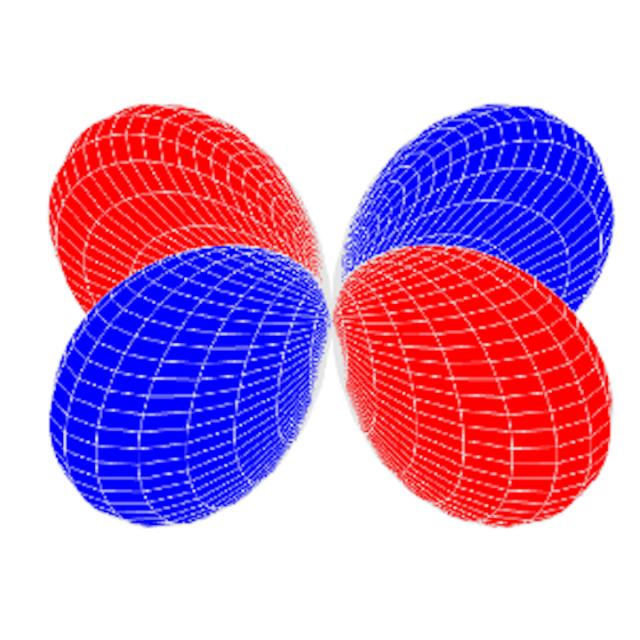
In this module we will introduce the course on the theory of angular momentum and then introduce the quantum mechanical definition of orbital momentum. We will then use the spherical harmonics to express the orbital angular momentum eigenstates and use them to describe the hydrogen atom states.

WEEK 2
Rotation and Angular Momentum
In this module, we introduce the general definition of angular momentum operator based on rotation operator. This general definition allows both orbital and spin angular momentum. We then derive the most fundamental property of angular momentum - commutation relations among their Cartesian components. Finally, we discuss the properties of spin-1/2 system.

WEEK 3
General Theory of Angular Momentum
This module covers the general theory of angular momentum. We start with the commutation relation of angular momentum and define angular momentum eigenstates. We then construct matrix representation of rotation operators using the angular momentum eigenstates as the basis set. Finally, we discuss how to quantum mechanically add angular momenta.
Go to Class
MOOC List is learner-supported. When you buy through links on our site, we may earn an affiliate commission.

Related Courses

Introduction to Quantum Science & Technology (edX) EdX
Purdue University,PurdueX

Introduction to Quantum Science & Technology (edX)

Learn about fundamental concepts and engineering challenges of quantum technologies. Emerging quantum systems are disruptive technologies redefining computing and communication. Teaching quantum physics to engineers and educating scientists on engineering solutions are critical to address fundamental and engineering challenges of the quantum technologies.

Aug 21st 2023
13-24 Weeks
Quantum Networking (edX) EdX
Purdue University,PurdueX

Quantum Networking (edX)

Learn about the science and engineering of future quantum networks whose security is guaranteed by laws of quantum physics. Applying exotic quantum properties such as entanglement to every-day applications such as communication and computation reveals new dimensions of such applications. Quantum encoding and entanglement distribution provide means to establish fundamentally secure communication links for transfer of classical and quantum data.

Mar 27th 2023
5-12 Weeks
Introduction to Physical Chemistry (Coursera) Coursera
University of Manchester

Introduction to Physical Chemistry (Coursera)

Chemical reactions underpin the production of pretty much everything in our modern world. But, what is the driving force behind reactions? Why do some reactions occur over geological time scales whilst others are so fast that we need femtosecond-pulsed lasers to study them? Ultimately, what is going on at the atomic level? Discover the answers to such fundamental questions and more on this course in introductory physical chemistry.

Jun 1st 2026
5-12 Weeks
Quantum Mechanics for Scientists and Engineers 2 (Stanford Online) Lagunita Stanford Online
Stanford University

Quantum Mechanics for Scientists and Engineers 2 (Stanford Online)

This course covers key topics in the use of quantum mechanics in many modern applications in science and technology, introduces core advanced concepts such as spin, identical particles, the quantum mechanics of light, the basics of quantum information, and the interpretation of quantum mechanics, and covers the major ways in which quantum mechanics is written and used in modern practice. It follows on directly from the QMSE-01 "Quantum Mechanics for Scientists and Engineers" course and is also accessible to others who have studied some quantum mechanics at the equivalent of a first junior or senior college-level physics quantum mechanics course.

No sessions available
5-12 Weeks
Astrophysics: The Violent Universe (edX) EdX
Australian National University - ANU,ANUx

Astrophysics: The Violent Universe (edX)

Explore the deadliest places in the universe, from black holes to supernovae. Interested in exploring the deadliest and most mysterious parts of our universe? Or, investigating black holes, which warp the very fabric of space-time around them? We will look at what we know about these objects, and also at the many unsolved mysteries that surround them. We will also study white-dwarf stars and neutron stars, where the mind-bending laws of quantum mechanics collide with relativity. And, examine dwarf novae, classical novae, supernovae and even hypernovae: the most violent explosions in the cosmos.

Self Paced
Self-Paced
Quantum Mechanics of Molecular Structures (edX) EdX
The University of Tokyo,UTokyoX

Quantum Mechanics of Molecular Structures (edX)

Learn two methods used to determine molecular structures and their properties in this introduction to Quantum Mechanics. Knowing the geometrical structure of the molecules around us is one of the most important and fundamental issues in the field of chemistry. This course introduces the two primary methods used to determine the geometrical structure of molecules: molecular spectroscopy and gas electron diffraction.

Self Paced
Self-Paced