Street Experiments for Sustainable and Resilient cities (Coursera)

Street Experiments for Sustainable and Resilient cities (Coursera)

Our streetscape, despite its feeling of permanence in our environment, is an ideal venue for experimentation. We have come to accept traffic movement as the default function for the street. Therefore, we need to rethink its design and space distribution, go back to its original and basic function and see them as public spaces - Transform them into places for social activities, where conversations can take place and places where kids can play.

Class Deals by MOOC List - Click here and see Coursera's Active Discounts, Deals, and Promo Codes.

This course shows you examples of remarkable changes and gives you a toolbox for implementing and evaluating street experiments yourself. We invite you on this journey to reimagine what is possible if we dare to use our public space differently.

What You Will Learn
You'll learn how cities implement and evaluate different types of street experiments to improve the livability of neighbourhoods.

Syllabus

WEEK 1
Streets as Placemaking and Movement (Raising Awareness)
This week, we will explore how the COVID-19 pandemic served as a catalyst to open people's thinking about using streets for more social purposes and answer the question, "can functions of mobility and public space co-exist and simultaneously increase the liveability of cities?" We will visit a brief history of the evolution of streets, both in concept and using historical examples, and see how ideology influences people's willingness to reshape the street for different functions. Surprisingly, even automakers see the limitations of cars and are taking steps to hedge against different mobility futures by investing in street experiments and shared mobility.

WEEK 2
Getting to Know Street Experiments
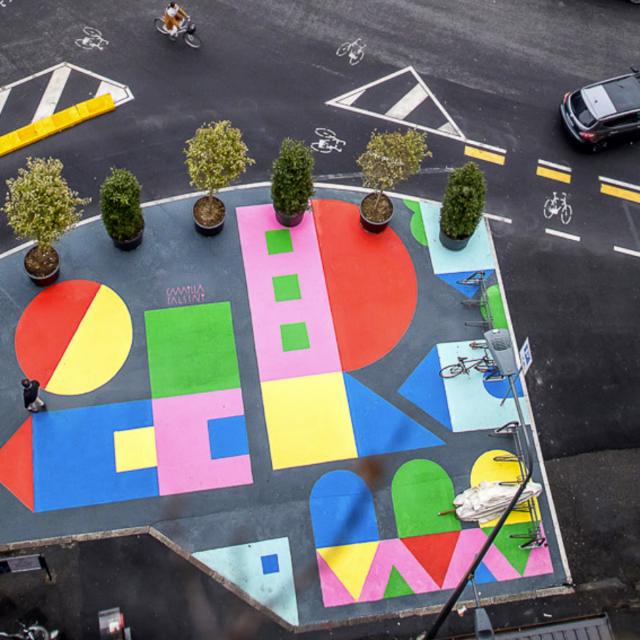
This week, we go around the world to see practical examples of street experiments in action. In doing so, we see how experiments can be categorized into 4 different typologies in ascending functional complexity: simple street re-markings, alternative uses of parking spaces, reconversion of sections of streets, and the opening of entire streets to uses other than motorized traffic. We then pose the question, "How can tactical urbanism help create healthier streets?" leading us to find that bottom-up initiatives can be powerful instigators of change.

WEEK 3
Implementing Street Experiments
This week explores how street experiments are implemented, from start to finish, and we will learn about the challenges along the way. We find that street experiments are often the starting point for the transition of public space, and these experiments give people the chance to experience, to really feel the changes immersively, rather than just seeing plans on a board. We learn how to approach strategic problems by using tactical urbanism techniques, and how colorful and eyecatching spaces can do its own marketing. Finally, we make the connection between culture and street design, framing experiments in the context of "mobility culture" and asking us how real world laboratories can explore existing culture and explore new cultures.

WEEK 4
Evaluating Street Experiments
This week, we ask "are we really challenging mobility systems with these relatively small scale experiments?" Despite all the colorful experimentation taking place around the world, not all experiments lead to permanent changes. We will explore how experiments can serve as short term actions through which alternative structure, cultures and practices are explored. We then look at the five characteristics of the city street experiments: Are they... radical, change-driven, feasible, strategic, and communicative? They are an initial step in the assessment framework since street experiments are so complex. Finally, we are challenged to involve citizens in the experimentation process, and you will learn that buy-in of the community is essential to the long-term success of making experiments permanent.
Go to Class
MOOC List is learner-supported. When you buy through links on our site, we may earn an affiliate commission.

Related Courses

Sustainable Regional Principles, Planning and Transportation (Coursera) Coursera
Johns Hopkins University

Sustainable Regional Principles, Planning and Transportation (Coursera)

This course will provide students with an introduction to sustainable regional principles, regional planning concepts and evaluate regional transportation system issues. This will be achieved through dynamic video lectures, practical case studies and the evaluation of practices for success. These will include discussions of the importance of the regional plan, how to engage community involvement, the importance of understanding a development transect and others.

Jun 15th 2026
4 Weeks
Transforming Urban Mobility: Components of Transport Planning for Sustainable Cities (FutureLearn) FutureLearn
University College London,Transforming Urban Mobility Initiative - TUMI,GIZ

Transforming Urban Mobility: Components of Transport Planning for Sustainable Cities (FutureLearn)

Examine how different types of public transport can be employed to make urban transport more sustainable. Discover how urban transport can be made more sustainable. Good transport systems and projects are critical to the development of sustainable cities. On this course, you’ll consider the Avoid-Shift-Improve (ASI) framework – particularly the ‘Shift’ and ‘Improve’ dimensions – as key components of a sustainable urban mobility strategy.

Nov 13th 2023
5-12 Weeks
Placemaking and Public Space Design: Unlocking Place Potential (FutureLearn) FutureLearn
Luleå University of Technology

Placemaking and Public Space Design: Unlocking Place Potential (FutureLearn)

Gain valuable insights into microclimate effects on urban planning, and learn to design successful tourist and residential areas. Understand and maximise place potential in urban planning. Successful placemaking means creating spaces that work for both tourists and residents, and with both the environment and the climate. This skill is increasingly important as the need to create sustainable, attractive urban areas is better understood.

Dec 13th 2021
2 Weeks
Urban Air Mobility (Coursera) Coursera
Technische Universität München - TUM

Urban Air Mobility (Coursera)

Sneak preview: The course modules will be gradually expanded over the next few weeks and new videos and quizzes will be added to further expand the existing course. // This course is primarily aimed at master students and phd-candidates interested in exploring new fields in aerospace. The course gives a first introduction into the relatively new field of Urban Air Mobility, explaining the technical background as well a giving an overview of all other necessities such as air traffic management, public acceptance or ecological sustainability.

Jun 1st 2026
5-12 Weeks
Sustainable Urban Environments (edX) EdX
Trinity College, Hartford,TrinityX

Sustainable Urban Environments (edX)

Learn how integrated systems and individual actions can shape sustainable cities, generating higher quality of life for the future. How can we strengthen sustainability? By empowering individuals and communities to transform and balance dynamic natural resources, economic prosperity, and healthy populations. In this course, you’ll explore productive and disruptive social, ecological, and economic intersections – the “triple bottom line.”

No sessions available
5-12 Weeks
Achieving Transitions to Zero Carbon Emissions and Sustainable Urban Mobility (FutureLearn) FutureLearn
University College London,Transforming Urban Mobility Initiative - TUMI,EIT Urban Mobility,ICLEI

Achieving Transitions to Zero Carbon Emissions and Sustainable Urban Mobility (FutureLearn)

Discover how cities can transform their urban mobility systems to become more sustainable and reach zero carbon emissions. Understand the steps to becoming sustainable city. Transport accounts for a large proportion of carbon emissions, so ensuring urban mobility systems are sustainable is key to helping cities to achieve zero-carbon goals. On this four-week course, you’ll discover how cities can transition their mobility systems to become sustainable, innovative, and inclusive.

Nov 14th 2022
4 Weeks
Creating Ethical and Sustainable Cities at the Local Level (FutureLearn) FutureLearn
RMIT University,EIT Community

Creating Ethical and Sustainable Cities at the Local Level (FutureLearn)

See how frameworks for ethical and sustainable cities can be localised, fostering resilient cities for the future. Learn how you can contribute to the sustainable cities of tomorrow. It’s widely accepted that, as we look towards the future, we need to actively create cities that are ethical, sustainable, inclusive, and well-governed. To do this, we need to localise frameworks and principles such as the Sustainable Development Goals (SDGs), the European Green Deal and New European Bauhaus to make tangible differences. Knowing how to start this localisation can be daunting, which is why this course from RMIT is so valuable.

Dec 20th 2021
2 Weeks
Sustainable Neighborhoods (Coursera) Coursera
Johns Hopkins University

Sustainable Neighborhoods (Coursera)

This course will provide students with an introduction to tools and concepts for a better understanding of the importance of the neighborhood as part of a sustainable city. This will include a careful look at the natural context of successful neighborhoods. An evaluation of important components and structure that create a sustainable neighborhood. Complete neighborhoods can provide their residents with pedestrian access to schools, daycare, recreational centers, and a variety of open spaces, as well as opportunities for food production.

Jun 15th 2026
3 Weeks
Climate Adaptation in Africa (Coursera) Coursera
University of Cape Town

Climate Adaptation in Africa (Coursera)

This course explores why climate change adaptation is important in the African context. Africa is considered one to be one of the most vulnerable regions to climate change. Historically, climate-related hazards such as drought, flooding, pest and disease outbreaks, coastal storms and heat waves have had devastating impacts on people and the environment in which they live.

Jun 8th 2026
5-12 Weeks
Greening the Economy: Sustainable Cities (Coursera) Coursera
Lund University

Greening the Economy: Sustainable Cities (Coursera)

How can we shape urban development towards sustainable and prosperous futures? This course will explore sustainable cities as engines for greening the economy. We place cities in the context of sustainable urban transformation and climate change. Sustainable urban transformation refers to structural transformation processes – multi-dimensional and radical change – that can effectively direct urban development towards ambitious sustainability and climate goals. We will connect the key trends of urbanization, decarbonisation and sustainability.

Jun 8th 2026
5-12 Weeks