EdX

Road safety in the Caribbean region: safe urban mobility (edX)

Road safety in the Caribbean region: safe urban mobility (edX)

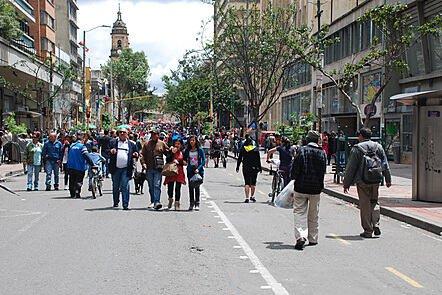
Learn about the so call “vulnerable users” and get a good understanding of some of the main challenges and effective interventions for safe urban mobility. Do you know that in most of the Latin America and the Caribbean countries more than half of the road traffic fatalities are “vulnerable users”? Studies have shown that most of the world’s traffic deaths and injuries occur in low- and middle-income countries—and the share is rising; more than half of the victims will be pedestrians and cyclists in urban areas. Low- and middle-income countries also have higher levels of traffic deaths among pedestrians, bicyclists, and motorcyclists.

Class Deals by MOOC List - Click here and see EdX's Active Discounts, Deals, and Promo Codes.

Are these enough reasons to get interested in urban mobility?
In Latin American and the Caribbean mobility patterns are changing due to its rapid urbanization. We should take this opportunity to challenge the current reality in which cities are built for cars and reshape them into cities for people; reclaiming the streets and public places, making urban mobility more inclusive, safe, and accessible for everyone, particularly for the so called “vulnerable users”.
In this course, you will learn more about the importance of speed management, safe infrastructure for active mobility such as walking and cycling, and how to effectively combine this knowledge with communication strategies, so you can be part of the task force who is working in improving road safety in Latin America and the Caribbean.
Through readings, videos, hands-on activities, and examples from different countries of the region, this course will support the learners in identifying and applying effective interventions to improve urban mobility.
Enjoy the third course from the Road Safety series and be prepared to apply these concepts towards safer mobility for all!
This course is "self-paced" so you can enroll at any time, even if the course has been open for a while. You can take it at the time that is most suitable for you inside the enrolment period of the course.
This course is part of the Road Safety in the Caribbean Region Professional Certificate.

What you'll learn
At the end of this course, you will be able to:
A. Identify the “vulnerable users” and how can you apply Vision Cero methodologies in the cities.
B. Understand the importance of subnational road safety plans and speed management.
C. Recognize safe infrastructure for active mobility.
D. Combine communication strategies with road safety interventions towards safer urban mobility.

Syllabus

Module 1: Introduction Introduction to the so-called “vulnerable users” and the concept of Vision Cero for cities.
Module 2: Speed management and child mobility This module presents the importance of subnational plans for road safety, speed management, and child safety.
Module 3: Towards a safer infrastructure for active mobility This module shows some good practices and examples of safe infrastructure for cyclists and pedestrians.
Module 4: Motorcycles, challenges, and experiences This module highlights the risk motorcyclists face and what are some of the challenges and good practices to reduce this risk.
Module 5: Road Safety Communication campaigns This module shares insights into how to design a campaign on road safety and how could this kind of intervention be sustainable.
Module 6: Key Concepts and conclusions This module summarizes some of the main ideas, gives you a chance to review the differences between the traditional/old approach and Vision Cero, and includes a final evaluation.


Go to Class
MOOC List is learner-supported. When you buy through links on our site, we may earn an affiliate commission.

Related Courses

Digital Skills: Mobile (FutureLearn) FutureLearn
Accenture

Digital Skills: Mobile (FutureLearn)

Learn about mobile design, development and creating mobile experiences, as well as bigger concepts related to mobile technology. Understand the importance of mobile in the digital world. In 2018, over half of global website traffic was generated through mobile phones. On this course, you will explore what mobile is, the growth of mobile technology and benefits associated with it.

Self Paced
2 Weeks
Road safety in the Caribbean region: institutions and data management (edX) EdX
Inter-American Development Bank - IDB,IDBx

Road safety in the Caribbean region: institutions and data management (edX)

Learn about the current state of road safety in our region, its main challenges, and areas of action. Can you imagine being able to contrast your opinions and experiences with people like Lieutenant Colonel, Enrique, from Ecuador, or other practicing public managers and representatives of Civil Society organizations from all over the region? In this course, you will have that opportunity, and also, access to videos of international specialists from various organizations (IDB, PAHO / WHO, WRI, LatinNCAP among others); readings; real cases from the region; recommendations; practical activities and discussion forums.

Self Paced
Self-Paced
Urban Air Mobility (Coursera) Coursera
Technische Universität München - TUM

Urban Air Mobility (Coursera)

Sneak preview: The course modules will be gradually expanded over the next few weeks and new videos and quizzes will be added to further expand the existing course. // This course is primarily aimed at master students and phd-candidates interested in exploring new fields in aerospace. The course gives a first introduction into the relatively new field of Urban Air Mobility, explaining the technical background as well a giving an overview of all other necessities such as air traffic management, public acceptance or ecological sustainability.

Sep 21st 2026
5-12 Weeks
People, Technology and the Future of Mobility (Coursera) Coursera
University of Michigan

People, Technology and the Future of Mobility (Coursera)

Welcome to the People Technology & Future of Mobility course! This course provides a lay-person’s introduction to some of the major technological innovations currently underway in the mobility space and asks learners to apply a variety of social science concepts to understand the likely social impacts of these technologies. The course is appropriate for learners from all backgrounds and does not require prior training in engineering or social science.

Sep 14th 2026
5-12 Weeks
History of Slavery in the British Caribbean (FutureLearn) FutureLearn
University of Glasgow,University of the West Indies - UWI

History of Slavery in the British Caribbean (FutureLearn)

Explore the history and legacy of British colonial slavery and oppression in the Caribbean through historical slave accounts. Learn about Britain’s involvement in the transatlantic slave trade. On this course, you’ll be introduced to the history of slavery and the lived experiences of enslaved people in the British Caribbean.

Self Paced
4 Weeks
AGRIMONITOR: Agricultural Policy in Latin America and the Caribbean (edX) EdX
Inter-American Development Bank - IDB,IDBx

AGRIMONITOR: Agricultural Policy in Latin America and the Caribbean (edX)

Learn the effects of agricultural policy in the Caribbean and Latin America, and analyze them using the AGRIMONITOR platform, developed by the IDB. As a consumer, you know the price of the food that you consume daily. However, do you know why your food costs this amount and why it is different from the price it’s sold for in other countries?

No sessions available
5-12 Weeks
Agua en América Latina: Abundancia en medio de la escasez mundial (edX) EdX
Inter-American Development Bank - IDB,IDBx

Agua en América Latina: Abundancia en medio de la escasez mundial (edX)

Un MOOC desarrollado en colaboración con la Universidad de los Andes (Uniandes) de Colombia, donde diferentes visiones y profesiones se unen para construir alternativas que ayudan a comprender la crisis mundial del agua. Si en el mundo existe tanta agua dulce, 35 millones de km3 para ser exactos, ¿cómo es posible que hoy más de 750 millones de personas no tengan acceso al agua? Al mismo tiempo, el continente americano cuenta con el 31% de las reservas de agua dulce del mundo. ¿Es posible que los países que conforman América Latina puedan aprovechar esta situación y transformarla en una gran oportunidad?

Self Paced
Self-Paced
Asociaciones Público-Privadas: Retos, lecciones aprendidas y soluciones innovadoras en América Latina y el Caribe (edX) EdX
Inter-American Development Bank - IDB,IDBx

Asociaciones Público-Privadas: Retos, lecciones aprendidas y soluciones innovadoras en América Latina y el Caribe (edX)

El curso analiza la concepción, selección, diseño e implementación de las Asociaciones Público-Privadas en Latinoamérica y el Caribe. Asimismo, identifica los beneficios y los riesgos que tienen para el sector público y privado, y para la gestión de proyectos de desarrollo.

Self Paced
Self-Paced