A starter’s guide to Open Science (Coursera)

A starter’s guide to Open Science (Coursera)

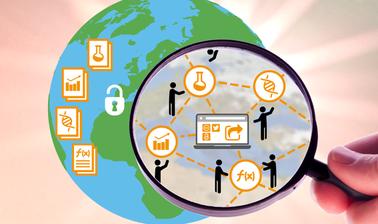
Welcome to the Erasmus University Rotterdam Open Science MOOC! This course aims to empower researchers and research support professionals with foundational knowledge to conduct, support, and disseminate research efficiently and responsibly.

Class Deals by MOOC List - Click here and see Coursera's Active Discounts, Deals, and Promo Codes.

This MOOC consists of 8 modules that cover the most common open science practices. At the end of this MOOC, you will be able to define open science and its main values, identify the main open science movements and practices, and recognize open science practices that you can incorporate in your workflow.

Syllabus

Module 1 - Introduction to Open Science
In this module, we will talk about the history and foundational ideas of open science. We will then explore similarities between open science principles and ethical standards of research. Finally, we will highlight the benefits of open science for individual researchers, research disciplines, and society.

Module 2 - Open Access
In this module, we will talk about the definition and history of open access. We will learn the most common types of open access, and we will highlight the benefits of open access for individual researchers and society.

Module 3 - Open Data 
In this module, we will talk about the definition of research data and what does open data means. We will then learn about the FAIR principles and finally we will talk about data repositories.

Module 4 - Open Materials
In this module, we will talk about the definition of research materials and what does open materials is. We will then learn about examples of materials and how can researchers share these materials.

Module 5 - Preregistration and Registered Reports 
In this module, we will introduce preregistration and highlight its usefulness by using clinical trials as an example. We will also introduce a special article format called Registered Reports and show how it can help mitigate cognitive biases and issues associated with current incentives in academic publishing.

Module 6 - Open Educational Resources 
In this module, we will introduce open educational resources, we will present a few examples and discuss the benefits and challenges of creating and using Open Educational Resources.

Module 7 - Open Engaged Research
In this module, we will explore the connection between engaged and open research, we will present ways and examples of this connection and discuss the process and challenges of Open Engaged Research.

Module 8 - Open Evaluation 
In this module, we will explore some new trends in the evaluation of research performance. We will briefly describe the current evaluation practices to highlight why open science offers a new perspective on research evaluation on three different levels: individual, institutional, and international.


Go to Class
MOOC List is learner-supported. When you buy through links on our site, we may earn an affiliate commission.

Related Courses

Chemerinsky on Constitutional Law - The Structure of Government (Coursera) Coursera
University of California, Irvine

Chemerinsky on Constitutional Law - The Structure of Government (Coursera)

This course will highlight the construction and interpretation of the U.S. Constitution through the centuries. You'll learn the history behind the Constitution, cases that formed important precedent, and how changes in interpretation have been dependent on shifts in cultural and political climate as well as the composition of the Supreme Court.

Jun 22nd 2026
5-12 Weeks
Critical Issues in Urban Education (Coursera) Coursera
University of Chicago

Critical Issues in Urban Education (Coursera)

Urban school reform in the United States is characterized by contentious, politicized debate. This course explores a set of critical issues in the education and educational reform space, with a focus on aspects of the field that have sparked controversy and polarized views. We will dig into these debates, situating them within the larger history of public education and school reform, and considering the viewpoints, the evidence, and translation of issues into educational policy.

Jun 22nd 2026
5-12 Weeks
Using Open Data for Digital Business (FutureLearn) FutureLearn
Royal Holloway, University of London

Using Open Data for Digital Business (FutureLearn)

Discover the power of Open Data and learn how you can use it to transform business. Open Data is data that anyone can access, use or share and when used well it can be extremely powerful. It enables businesses, citizens, developers and researchers to harness resources that can make crucial improvements to their communities and the economy. It can also help with the development of new products and services, improve business efficiency and create economic value.

No sessions available
3 Weeks
Open Science: Sharing Your Research with the World (edX) EdX
Delft University of Technology,DelftX

Open Science: Sharing Your Research with the World (edX)

Explore ways to apply Open Science principles to academic work - including your own. Learn how to share your research effectively and responsibly, building greater visibility and impact. You can become a more visible, effective and impactful researcher by sharing your research data and publications openly. In this course, you will learn the objectives, main concepts, and benefits of Open Science principles along with practices for open data management and open data sharing.

Oct 25th 2023
5-12 Weeks
Do-It-Yourself Geo Apps (Esri) Esri
Esri

Do-It-Yourself Geo Apps (Esri)

You don’t have to be a software developer to build valuable geo-enabled apps that make your communities smarter and businesses more successful. This course will show you how to combine location and narrative in one application to better communicate and broadcast your story, create custom web applications that solve problems in your community, and build powerful native applications for iOS and Android devices without touching a piece of code.

Jan 26th 2022
4 Weeks
Constitutional Struggles in the Muslim World (Coursera) Coursera
University of Copenhagen

Constitutional Struggles in the Muslim World (Coursera)

Learn what motivates the restive Muslim youth from Tunis to Tehran, what political positions Islamists from Mali to Chechnya are fighting for, where the seeming obsession with Islamic law comes from, where the secularists have vanished to, and whether it makes sense to speak of an Islamic state. This course is a survey of the constitutional ideas and institutions that have developed since the mid 19th century throughout predominantly Muslim countries, but its focus will lie on the actors that have dominated this discourse and shaped its outcomes. We will look at the large body of classical writings on the Islamic state only in so far as it is necessary to understand the contemporary debate, but concentrate on the legal and political developments of the 20th and 21st centuries.

Jun 22nd 2026
5-12 Weeks
Chinese Politics Part 1 - China and Political Science (Coursera) Coursera
The Hong Kong University of Science and Technology - HKUST

Chinese Politics Part 1 - China and Political Science (Coursera)

This course offers a conceptual framework for understanding China that highlights the intersection of politics and economics. It shows that rather than develop into a full blown market economy, state and party officials at all levels of the political system maintain significant influence in economic development. Such a “political” economy has had both positive and negative outcomes, which we will assess in detail.

Jun 22nd 2026
5-12 Weeks
Emotions: a Philosophical Introduction (Coursera) Coursera
Universitat Autònoma de Barcelona

Emotions: a Philosophical Introduction (Coursera)

Philosophy is like sex: sure you can get some interesting results, but that's not why we do it. Going one step beyond…why do you FEEL pain or pleasure? Do plants have emotions? How is possible that some people do not understand other’s emotions? Emotions seem to be everywhere, giving meaning to all events of our lives. They are the backbone of social activities as well as they drive the cognitive processes of several living entities. Several animals, including humans, have emotions but…what about machines?...Do machine can have emotions?

Jun 22nd 2026
5-12 Weeks
Multimodal Literacies: Communication and Learning in the Era of Digital Media (Coursera) Coursera
University of Illinois at Urbana-Champaign

Multimodal Literacies: Communication and Learning in the Era of Digital Media (Coursera)

Whereas the focus of traditional literacy pedagogy has been the written word in its standard and literary forms, this courser expands the scope of literacy learning to encompass contemporary multimodal texts and the wide range of ways of making meaning that occur in different social and cultural contexts. Another course, "Literacy Teaching and Learning: Aims, Approaches and Pedagogies" addresses pedagogical aspects of literacies. This "Multimodal Literacies" learning module does not require or expect that participants will have already completed the "Literacy Teaching and Learning" module.

Jun 22nd 2026
4 Weeks
Understanding economic policymaking (Coursera) Coursera
IE Business School

Understanding economic policymaking (Coursera)

This course will employ a non-technical approach to analyze how governments use policy to influence a country's economy. Upon completing the course you should be able to discuss national debts and deficits, examine fiscal and monetary policy and their appropriateness to the situation of an economy, and anticipate the results of fiscal and monetary policies and structural reform on a country.

Jun 22nd 2026
5-12 Weeks