America's Written Constitution (Coursera)

Offered by Yale University,
America's Written Constitution (Coursera)

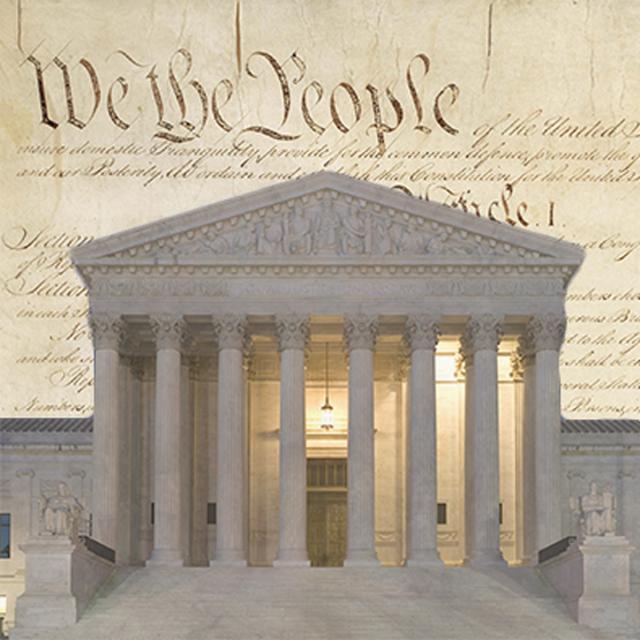
An introduction to the main themes of the American Constitution—popular sovereignty, separation of powers, federalism, and rights.

Class Deals by MOOC List - Click here and see Coursera's Active Discounts, Deals, and Promo Codes.

Syllabus

WEEK 1
Welcome!
This first module will help you get your bearings before diving into America's Written Constitution. You can watch a brief introduction to the course, learn about quizzes and writing assignments, and find out what you can look forward to learning. This section also provides you with a copy of The Document itself. There is no need to read through it right away, Our hope is that you will follow along as Prof. Amar works his ways through it over the course of the next 14 modules. Good luck, and we hope you enjoy the experience!
In the Beginning
Ready to get started? Good. In this module, you'll take a guided tour of the Preamble and learn how one sentence changed the world.
New Rules for a New World
In this module you will learn how geography, democracy, wealth, and race affected the structure of our legislative branch. Prof. Amar will explain the underlying factors behind decisions on Senatorial term limits, age qualifications, salaries and much more.

WEEK 2
Congressional Powers
This entire module is devoted to just one section of one article of the U.S. constitution. It is the longest, and arguably, most important section of The Document. Article 1, Section 8, enumerates the powers held by Congress. Join Professor Amar, as he discusses the implications of these powers, including regulation of trade, creation of an army and navy, and the levying of taxes.
America's First Officer
In this module you'll find out what about George Washington made him so uniquely qualified for the task of being our nation's first president. Learn how his actions before, during, and after his time in office set precedents which are still followed today.

WEEK 3
Presidential Powers
As the title of this module suggests, you will be hearing about the specific powers held by the President of the United States. Learn how the presidential pardon is directly related to national security and why the veto power is nearly insurmountable. Prof. Amar will also point out how in a small number of situations, the President of the United States is even more powerful than the King of England.
Judges and Juries
The judicial branch of the U.S. today only vaguely resembles what framers had in mind. In this section you'll learn you about the decisions the men behind the judicial branch's expansion in power and in scale.

WEEK 4
States and Territories
Article 4 of the Constitution outlines the interrelationship between States and territories. In order for this emerging country to succeed, the framers knew states would need to start thinking of themselves as parts of the same whole. To achieve this, rules needed to be set in place for interstate trade and travel. Prof. Amar will introduce the concept of Horizontal Federalism, looking specifically at how the Constitution accounts for the differences between state laws on slavery and voting rights. Finally you'll learn about the Taney-led Supreme Court, whose rulings on racial laws would help set America down the path to civil war.
The Law of the Land
What's the difference between a treaty and a statute? Which takes precedent? In this module Prof. Amar takes you through article 7 of the Constitution. Along the way you'll learn the difference between laws, treaties, resolutions, and statutes. Learn how each one comes into being and how the inherent democracy of each determines their place in the hierarchy.

WEEK 5
Making Amends
Anti-Federalists, rejoice! This module's lectures go over the first ten amendments to America's constitution, also known as the Bill of Rights. These amendments contain some of the most iconic language contained in The Document. Freedom of Speech, the right to keep and bare arms, the right to a fair trial, all this can be found in the Bill of Rights. Prof. Amar will go over where the framers borrowed the ideas for these amendments, and also who championed and opposed their adoption.
New Birth of Freedom
This module, as we move forward both in text and in time. After the first 12 amendments to the constitution, 50 quiescent years pass before three new amendments are ratified in rapid succession. The 13th, 14th, and 15th amendments to the U.S. Constitution brought radical change to America by abolishing slavery, redefining citizenship, and expanding voting rights. What event could possibly spur such significant legislative action? Get ready as Professor Amar guides us through a wholly singular look at America's Civil War.

WEEK 6
Progressive Reforms
You may have noticed by now that amendments to the U.S. Constitution come in waves. In module 13 Professor Amar will go over the third wave to break. Amendments 16-19 made America's version of democracy more direct and more universal than ever before. The addition of women to the voting pool forever altered America's political course. Eventually leading to the passage of socially conscious policies such as the New Deal, the Great Society, and Obamacare.
Modern Moves
The surging Civil Right's Movement of the 1960's along with wars both cold and hot, made the political environment in the U.S. ripe for change. Prof. Amar explains out how amendments 23-26 continued making the United States' brand of democracy more universal and more egalitarian. After briefly covering the 27th Amendment, a question is posed to you, the learner: What do you think the next amendment to the Constitution should be?
Bonus Content Archive
This content is not tied to the assessment materials in any way, but it is interesting, entertaining and informative nonetheless. We encourage all learners to take some time to watch these videos and post about them in the discussion forums!
Conclusion
Professor Amar hopes you will continue your journey through the U.S. Constitution by going beneath, beyond, and behind the text in AWC's sister course America's Unwritten Constitution. You'll learn of the traditions, court decisions, popular values, and precedents that compliment the text and complete The Document.
Go to Class
MOOC List is learner-supported. When you buy through links on our site, we may earn an affiliate commission.

Related Courses

Cloud Computing Law: Data Protection and Cybersecurity (Coursera) Coursera
Queen Mary University of London

Cloud Computing Law: Data Protection and Cybersecurity (Coursera)

Vast amounts of personal information are processed in the cloud. But who is legally responsible for such ‘personal data’ in cloud environments? What duties do cloud providers like Amazon, Microsoft, and Google have? And what rights can you, as an individual, exercise under data protection law? If you’d like to find out, then this course is for you!

Jul 27th 2026
3 Weeks
El Abogado del Futuro: Legaltech y la Transformación Digital del Derecho (Coursera) Coursera
Universidad Austral

El Abogado del Futuro: Legaltech y la Transformación Digital del Derecho (Coursera)

La revolución digital cambió nuestra manera de comunicarnos, de comerciar y de relacionarnos. Ahora, está llegando al mundo del derecho. Este programa te ofrecerá una visión amplia de las principales tendencias que están afectando a la industria legal: - El nacimiento del mercado de legaltech y la aplicación de tecnología en el derecho. - El rol de la inteligencia artificial en la automatización del trabajo de los abogados. - La tecnología de blockchain y su impacto en la forma en que firmamos y ejecutamos contratos. - Las iniciativas para asegurar el acceso a la justicia a través de cortes virtuales y jueces robot.

Aug 10th 2026
5-12 Weeks
Introduction to International Criminal Law (Coursera) Coursera
Case Western Reserve University

Introduction to International Criminal Law (Coursera)

From the Nuremberg trial to the case against Saddam Hussein, from the prosecution of Al-Qaeda terrorists to the trial of Somali pirates – no area of law is as important to world peace and security as international criminal law. Taught by one of the world’s leading experts in the field, this course will educate students about the fundamentals of international criminal law and policy. We will explore the contours of international crimes such as genocide, war crimes, terrorism, and piracy. We will examine unique modes of international criminal liability and specialized defenses. And we will delve into the challenges of obtaining custody of the accused and maintaining control of the courtroom.

Jul 27th 2026
5-12 Weeks
An Introduction to American Law (Coursera) Coursera
University of Pennsylvania

An Introduction to American Law (Coursera)

This course will give you a glimpse into six different areas of American law: Tort Law, Contract Law, Property, Constitutional Law, Criminal Law, and Civil Procedure. You will gain insight into the complexities and dilemmas that arise from the application of law in different settings, and what is distinctive about American approaches.

Aug 3rd 2026
5-12 Weeks
Linguistic Diversity, What for? (Coursera) Coursera
Universitat Autònoma de Barcelona

Linguistic Diversity, What for? (Coursera)

What is linguistic diversity? What are its implications and opportunities? How is diversity around the world? How is it experienced, understood and managed in different contexts? What is your knowledge and experience about languages and diversity? In this course we approach linguistic diversity and multilingualism not only from a theoretical point of view, but also from a perspective oriented to help understand and manage various contexts that emerge from diversity in different environments of social interaction.

Aug 3rd 2026
5-12 Weeks
European Business Law: Understanding the Fundamentals (Coursera) Coursera
Lund University

European Business Law: Understanding the Fundamentals (Coursera)

The European Union is one of the world’s largest and most important economies. This five week course is the first in a series of three that will provide students with an insight into European Business Law. The series ranges from considering the basic structures and principles of the European Union to focusing on various specialized areas of law. Each course will give the students an understanding of the laws and policies that regulate the internal market of European Union, as well as relevant case law and useful inputs from leading practitioners in the field.

Aug 10th 2026
5-12 Weeks
Employment Law: The Gig Economy (Coursera) Coursera
University of Pennsylvania

Employment Law: The Gig Economy (Coursera)

Gig work, a type of work that is done on a short-term or freelance basis, has exploded in popularity in recent years. The term gig work is commonly used to discuss work for businesses that facilitate peer-to-peer transactions. People usually think of ridesharing apps such as Uber and Lyft, but the categories of gig work have expanded rapidly. Although people are quick to identify gig work, the newness of the concept has left many gaps in the legal definitions of what gig work is and how gig workers should be protected. This course seeks to clear up misconceptions about gig workers through an examination of various legal cases, examining grey areas of the law and also providing possible alternatives.

Aug 10th 2026
4 Weeks
刑法学总论 Criminal Law (Coursera) Coursera
Peking University

刑法学总论 Criminal Law (Coursera)

刑法是规定犯罪与刑罚的法律。刑法学是研究刑法的科学,主要研究犯罪的成立条件以及刑罚的种类与适用刑法的制度等问题。本课程的主要目的是简明完整地说明现代刑法学总论的基本概念、基本理论与基本方法,包括的主要内容有刑法与刑法学的基本概念,刑罚的正当性,罪刑法定原则,刑法解释,刑法的适用范围,犯罪与犯罪构成的概念,犯罪构成的主要内容,排除犯罪的根据,犯罪的未完成状态,共同犯罪,刑罚的概念与体系,量刑制度,数罪并罚,缓刑、减刑与假释。本课程通过理论说明与案例分析对有关问题进行讲解,鼓励同学们通过刑法发展来认识刑法的生命,通过刑法比较来认识刑法的国际标准,通过确立刑法理想来追求社会的公平正义。

Jul 27th 2026
13-24 Weeks
Citizenship and the Rule of Law (Coursera) Coursera
University of London

Citizenship and the Rule of Law (Coursera)

"Be you so high, the law is above you." This principle, part of the Rule of Law, has come to represent the powerful idea that even politicians and monarchs are bound by the law. However in an age of powerful corporations, international cyber-crime and popular support for authoritarian leaders, the Rule of Law is under threat worldwide.

Aug 10th 2026
5-12 Weeks
Introduction to Environmental Law and Policy (Coursera) Coursera
University of North Carolina

Introduction to Environmental Law and Policy (Coursera)

Environmental law may be the one institution standing between us and planetary exhaustion. It is also an institution that needs to be reconciled with human liberty and economic aspirations. This course considers these issues and provides a tour though existing legal regimes governing pollution, water law, endangered species, toxic substances, environmental impact analyses, and environmental risk.

Aug 7th 2026
5-12 Weeks