EdX

Six Sigma: Define and Measure (edX)

Six Sigma: Define and Measure (edX)

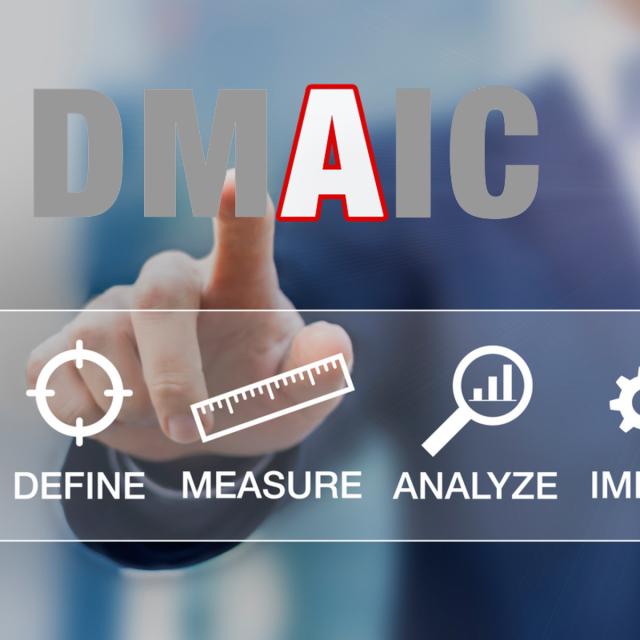
An introduction to the Six Sigma methodology and DMAIC cycle for process improvement with a focus on the Define and Measure phases. In this course, you will start by gaining an understanding of the background and meaning of Six Sigma and the five steps of the DMAIC process improvement flow: Define, Measure, Analyse, Improve and Control.

Class Deals by MOOC List - Click here and see EdX's Active Discounts, Deals, and Promo Codes.

In this course we will start with the Define phase, where you will discuss what "Quality" means and how to identify the Voice of the Customer. You will learn how to set an improvement project goal, calculate process yield, and identify Critical-to-Quality parameters.

We continue with the Measure phase, where you will learn how to map a process and to use the necessary statistical techniques to establish the baseline performance of a process. You will also learn the basics of a Measurement System Analysis and to calculate the process capability. We will cover topics such as Tolerance design and Failure Mode and Effects Analysis (FMEA) as well as review the entire Six Sigma Roadmap as preparation for the second course in this series.
To complement the lectures, we provide interactive exercises, which allow learners to see the statistics "in action." Learners then master the statistical concepts by completing practice problems. These are then reinforced using interactive case-studies, which illustrate the application of the statistics in quality improvement situations.
Upon successful completion of this program, learners will earn the Technical University of Munich Lean Six Sigma Yellow Belt Certification, confirming mastery of the fundamentals of Lean Six Sigma to a Yellow Belt level, based on the American Society of Quality's Body of Knowledge for the Certified Six Sigma Yellow Belt.
This course is part of the Lean Six Sigma Yellow Belt: Quantitative Tools for Quality and Productivity Professional Certificate and Lean Six Sigma Green Belt Certification Professional Certificate.

What you'll learn

  • To understand the background and meaning of the Six Sigma methodology and the role of the DMAIC process improvement cycle.
  • To identify the Voice of the Customer and translate into Critical-to-Quality parameters.
  • To calculate process yield and process capability.
  • How to apply the Define and Measure phases of the DMAIC cycle in your work or research, to identify problems and quantitatively assess the impact of process changes using statistical analysis.seare then reinforced using interactive case-studies, which illustrate the application of the statistics in quality improvement situations.

Course Syllabus

Week 1: Six Sigma Introduction
Introduction to the SIx Sigma Methodology and the DMAIC process improvement cycle. We learn about cost of quality and how to calculate process yield.

Week 2: Define - Defining the Problem
We discuss how to understand customer expectations, using the Kano Model to categorize quality characteristics. We start the first and difficult task of a Six Sigma project, Defining the Problem, and review the key content in a Project Charter.

Week 3: Measure - Statistics Review
Review of random variables and probability distributions used commonly in quality engineering, such as Binomial, Poisson and Exponential. We cover descriptive statistics, emphasizing the importance of clearly communicating our results of our project.

Week 4: Measure - Normal Distribution
Learn the characteristics of the Normal Distribution and how to use the Standard Normal to calculate probabilities related to normally distributed variables. Cover the Central Limit Theorem, and how it relates to sampling theory.

Week 5: Measure - Process Mapping
We introduce process mapping, including SIPOC and Value Stream Mapping. We identify the Critical-to-Quality characteristic for a Six Sigma project

Week 6: Measure - Measurement System Analysis
Learn the basics of Measurement Theory and Sampling Plans, including
Precision, Accuracy, Linearity, Bias, Stability, Gage Repeatability & Reproducibility

Week 7: Measure - Process Capability
Introduction to Process Capability and the metrics CP/CPK for establishing our baseline process performance.

Week 8: Course Summary and Review.

Go to Class
MOOC List is learner-supported. When you buy through links on our site, we may earn an affiliate commission.

Related Courses

Improvement Techniques and Control Tools (Coursera) Coursera
SkillUp EdTech

Improvement Techniques and Control Tools (Coursera)

This course introduces you to the processes and tools to implement the improvement strategies and then sustain them by controlling your process as per the implemented solutions. Based on the analysis from the previous phases of the define, measure, analyze, improve, and control (DMAIC) framework, you will learn to evaluate the potential solutions and select the most effective ones to bring improvement to your process.

Jun 29th 2026
5-12 Weeks
Six Sigma Advanced Analyze Phase (Coursera) Coursera
University System of Georgia

Six Sigma Advanced Analyze Phase (Coursera)

This course is for you if you are looking to dive deeper into Six Sigma or strengthen and expand your knowledge of the basic components of green belt level of Six Sigma and Lean. Six Sigma skills are widely sought by employers both nationally and internationally. These skills have been proven to help improve business processes and performance. This course will take you deeper into the principles and tools associated with the "Analyze" phase of the DMAIC structure of Six Sigma.

Jun 22nd 2026
3 Weeks
Lean Production (edX) EdX
Technische Universität München - TUM,TUMx

Lean Production (edX)

Learn how to apply key elements of lean manufacturing, such as 5S and Kaizen, to organizational processes to improve quality and productivity. Learn about lean management, a customer-centric methodology that improves processes by eliminating waste and focusing on value-added tasks. This course will introduce the main tenets of the Toyota Production System, which includes Just-in-Time manufacturing, quality management tools, and the critical concept of Kaizen, the Japanese practice of continuous improvement.

Self Paced
Self-Paced
Introduction to Lean Six Sigma for Sustainable and Resilient Supply Chains (edX) EdX
ISCEA

Introduction to Lean Six Sigma for Sustainable and Resilient Supply Chains (edX)

Become a Lean Six Sigma Yellow Belt, well versed in the techniques of Six Sigma, its metrics, and methodologies including but not limited to DMAIC (Define, Measure, Analyze, Improve, and Control), RCA (Root Cause Analysis), SIPOC (Suppliers, Inputs, Processes, Outputs, and Customers), and applications of Lean Six Sigma in Supply Chain Process Improvement.

Self Paced
Self-Paced
Apply Lean Six Sigma - Fundamentals Skills & Knowledge (OpenLearning) OpenLearning
InteGlobal GSBP

Apply Lean Six Sigma - Fundamentals Skills & Knowledge (OpenLearning)

One of the coolest characters in the world of investigations is Sir Arthur Conan Doyle’s Sherlock Holmes… You can learn to be a super sleuth in business productivity improvement, by learning to be a ‘process-scene investigator.’ In this first free course, you will be taken beyond a basic understanding of the world’s most sought after business skill set (Lean Six Sigma). Open your eyes to the everyday processes that surround you and explore how time, quality and pragmatic thinking each impact process efficiency.

Self Paced
Self-Paced
Introduction to Business Improvement: Lean Six Sigma, Kaizen, and Problem Solving (FutureLearn) FutureLearn
Lean 6 Services

Introduction to Business Improvement: Lean Six Sigma, Kaizen, and Problem Solving (FutureLearn)

Explore key business improvement techniques, and start working towards Lean Six Sigma Yellow Belt. Discover business improvement methods that can help identify and eliminate waste. Being able to minimise waste and maximise efficiency is crucial for any business, be it manufacturing or office-based. On this course, you’ll explore some of the most commonly used tools and techniques in business today, including Lean Six Sigma, Kaizen, Continuous Improvement, and Problem Solving. You’ll learn how you can practically improve your work processes, and successfully eliminate waste in your business.

Jun 28th 2021
3 Weeks
The DMAIC Framework: Analyze, Improve, and Control Phase (Coursera) Coursera
SkillUp EdTech

The DMAIC Framework: Analyze, Improve, and Control Phase (Coursera)

The course will teach you the competencies and essential skills required to pass the American Society for Quality (ASQ) Certified Six Sigma Green Belt (CSSGB) exam. This course focuses specifically on the last three phases of the define, measure, analyze, improve, and control (DMAIC) framework and will enable you to analyze the root causes of existing issues, implement solutions, and ensure the process's sustainability. You will gain insight into data analysis techniques such as hypothesis testing and regression analysis and be able to develop control plans for process improvement.

Jun 22nd 2026
5-12 Weeks
Supply Chain Operations (Coursera) Coursera
Rutgers University

Supply Chain Operations (Coursera)

Have you ever wondered how products and services are created exactly the same thousands of times over? And how companies are able to smooth out operations to manufacture efficiently, effectively, and without any waste? How is such precision possible? The answer lies at the heart of operations. In the Supply Chain Operations course, we introduce and apply essential process improvement tools to achieve perfection. After completing this course, you will be able to apply the Six Sigma methodology for process improvement.

Jun 29th 2026
4 Weeks
Applied Analytics and Data for Decision Making (Coursera) Coursera
University at Buffalo,The State University of New York

Applied Analytics and Data for Decision Making (Coursera)

By the end of this course, learners are prepared to identify and test the best solutions for improving performance and integrating concepts from operational excellence methodologies for optimum data-driven decision making. The course begins with a focus on deciphering the root cause of problems through a variety of tools before determining and assessing best-fit solutions. Learners discover how to apply ISO, Lean and Six Sigma in the pursuit of aligning organizational operations data with performance standards. Hospitality, manufacturing and e-commerce case studies help illustrate how to build data literacy while ensuring privacy and data ethics measures are in place.

Jun 22nd 2026
4 Weeks
Six Sigma Advanced Improve and Control Phases (Coursera) Coursera
University System of Georgia

Six Sigma Advanced Improve and Control Phases (Coursera)

This course is for you if you are looking to dive deeper into Six Sigma or strengthen and expand your knowledge of the basic components of green belt level of Six Sigma and Lean. Six Sigma skills are widely sought by employers both nationally and internationally. These skills have been proven to help improve business processes and performance. This course will take you deeper into the principles and tools associated with the "Improve" and "Control" phases of the DMAIC structure of Six Sigma.

Jun 22nd 2026
5-12 Weeks
Intro to Lean Six Sigma and Project Identification Methods (Coursera) Coursera
SkillUp EdTech

Intro to Lean Six Sigma and Project Identification Methods (Coursera)

The course will equip you with the competencies and essential skills required to excel in the American Society for Quality (ASQ) Certified Six Sigma Yellow Belt (CSSYB) exam and contribute effectively to process improvement initiatives. The course provides an overview of Lean Six Sigma as a powerful methodology for process improvement, the define, measure, analyze, improve, and control (DMAIC) framework, measurement systems analysis (MSA), and various data collection methods.

Jun 29th 2026
4 Weeks