Advanced Statistical Analysis and Tools (Coursera)

Offered by SkillUp EdTech,
Advanced Statistical Analysis and Tools (Coursera)

This course is designed to guide you on how to prepare for the American Society for Quality Certified Six Sigma Black Belt (ASQ CSSBB) certification, a mark of quality excellence across industries. The course offers insights into the statistical tools for drawing valid conclusions, depicting relationships, analyzing measurement systems, testing hypotheses, designing experiments, applying statistical process control, and leading advanced Six Sigma projects across the enterprise.

Class Deals by MOOC List - Click here and see Coursera's Active Discounts, Deals, and Promo Codes.

By the end of this course, you will be able to:

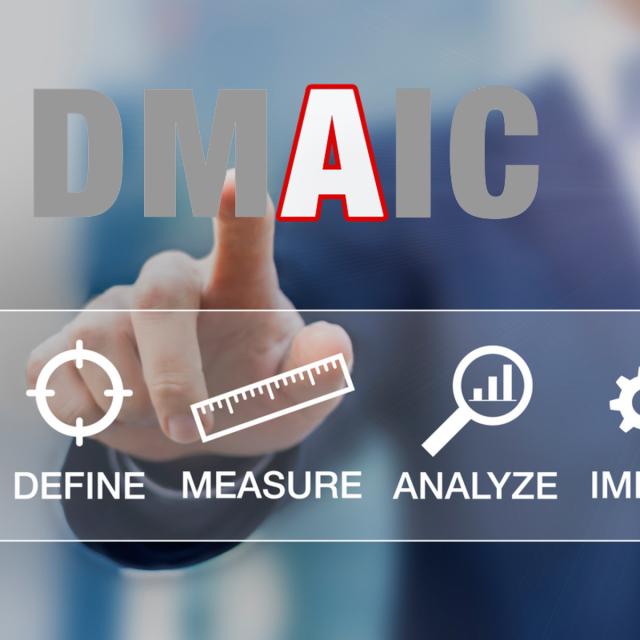
  • Identify the statistical analysis tools required for quality and process improvement in each phase of the DMAIC methodology.
  • Describe the statistical processes of each phase of the DMAIC methodology used for operational efficiency.
  • Apply statistical analysis tools for representing relationships, analyzing systems, and testing hypotheses.
  • Implement design experiments and apply statistical process control to streamline business processes.

This course is best suited for employees working in process improvement teams, including individuals with significant experience leading and executing Six Sigma, lean, or other quality improvement projects.
This course is part of the ASQ-Certified Six Sigma Black Belt (CSSBB) Exam Prep Specialization.

What you'll learn

  • Identify the statistical analysis tools required for quality and process improvement in each phase of the DMAIC methodology.
  • Describe the statistical processes of each phase of the DMAIC methodology used for operational efficiency.
  • Apply statistical analysis tools for representing relationships, analyzing systems, and testing hypotheses.
  • Implement design experiments and apply statistical process control to streamline business processes.

Syllabus

Statistical analysis and tools in the measure phase
In this module, you will learn about the various statistical tools you can use for process analysis and data collection. The module delves into the statistical technique of measurement system analysis (MSA). You will also learn how to use graphical tools to construct and interpret diagrams and charts. You will be equipped with how the results of statistical studies are used to draw valid conclusions, the distribution methods relevant to probability, and the techniques used for process capability. Finally, you will learn to interpret the difference between short-term and long-term capabilities.

Statistical analysis and tools in the analyze phase
In this module, you will learn how to measure and model relationships between variables. You will explore the correlation coefficient, linear regression, and multivariate tools. The module also delves into applying the key concepts of hypothesis testing, such as the significance of testing, calculating sample size, and analyzing waste. You will become acquainted with techniques such as point and interval estimates and tests for means, variances, and proportions. Additionally, you will learn the analysis of variance (ANOVA) and goodness-of-fit (chi-square) tests and the techniques for analyzing and managing risk.

Statistical analysis and tools in the improve and control phase
In this module, you will explore the key concepts of the design of experiments (DOE). You will also learn how to apply the principles of DOE, such as power, sample size, balance, repetition, replication, order, efficiency, randomization, blocking, interaction, confounding, and resolution. The module will take you through planning and evaluating different types of experiments in DOE and various types of Lean methods you can use for process improvement, like waste elimination, cycle-time reduction, Kaizen, and others. Additionally, the module focuses on statistical process control (SPC) and other controls that help to streamline business processes. Finally, you will learn how to sustain process improvements using methods like documentation, training, and evaluation.

Peer review assignment
This is a peer-review assignment based on the concepts taught in the Advanced Statistical Analysis and Tools course. In this assignment, you have been provided with a real-life scenario. You must explain how you can use process capabilities and their related metrics in process improvement.

Go to Class
MOOC List is learner-supported. When you buy through links on our site, we may earn an affiliate commission.

Related Courses

Basic Data Descriptors, Statistical Distributions, and Application to Business Decisions (Coursera) Coursera
Rice University

Basic Data Descriptors, Statistical Distributions, and Application to Business Decisions (Coursera)

The abilities to understand and apply Business Statistics are becoming increasingly important in the industry. A good understanding of Business Statistics is a requirement to make correct and relevant interpretations of data. Lack of knowledge could lead to erroneous decisions which could potentially have negative consequences for a firm. This course is designed to introduce you to Business Statistics. We begin with the notion of descriptive statistics, which is summarizing data using a few numbers.

Jun 15th 2026
4 Weeks
Quantifying Relationships with Regression Models (Coursera) Coursera
Johns Hopkins University

Quantifying Relationships with Regression Models (Coursera)

This course will introduce you to the linear regression model, which is a powerful tool that researchers can use to measure the relationship between multiple variables. We’ll begin by exploring the components of a bivariate regression model, which estimates the relationship between an independent and dependent variable. Building on this foundation, we’ll then discuss how to create and interpret a multivariate model, binary dependent variable model and interactive model. We’ll also consider how different types of variables, such as categorical and dummy variables, can be appropriately incorporated into a model.

Jun 15th 2026
4 Weeks
The Improve Phase for the 6 σ Black Belt (Coursera) Coursera
University System of Georgia

The Improve Phase for the 6 σ Black Belt (Coursera)

This course is designed for professionals interested in learning the principles of Lean Sigma, the DMAIC process and DFSS. This course is number 6 of 8 in this specialization dealing with topics in the Improve Phase of Six Sigma. Professionals with some completed coursework in statistics and a desire to drive continuous improvement within their organizations would find this course and the others in this specialization appealing. Method of assessment consists of several formative and summative quizzes and a multi-part peer reviewed project completion regiment.

Jun 15th 2026
5-12 Weeks
Six Sigma and the Organization (Advanced) (Coursera) Coursera
University System of Georgia

Six Sigma and the Organization (Advanced) (Coursera)

This course is for you if you are looking to dive deeper into Six Sigma or strengthen and expand your knowledge of the basic components of green belt level of Six Sigma and Lean. Six Sigma skills are widely sought by employers both nationally and internationally. These skills have been proven to help improve business processes and performance. This course will introduce you to the purpose of Six Sigma and its value to an organization. You will learn about the basic principles of Six Sigma and Lean. Your instructors will introduce you to, and have you apply, some of the tools and metrics that are critical components of Six Sigma.

Jun 22nd 2026
5-12 Weeks
Inferential and Predictive Statistics for Business (Coursera) Coursera
University of Illinois at Urbana-Champaign

Inferential and Predictive Statistics for Business (Coursera)

This course provides an analytical framework to help you evaluate key problems in a structured fashion and will equip you with tools to better manage the uncertainties that pervade and complicate business processes. The course aim to cover statistical ideas that apply to managers. We will consider two basic themes: first, is recognizing and describing variations present in everything around us, and then modeling and making decisions in the presence of these variations.

Jun 22nd 2026
4 Weeks
Stability and Capability in Quality Improvement (Coursera) Coursera
University of Colorado Boulder

Stability and Capability in Quality Improvement (Coursera)

In this course, you will learn to analyze data in terms of process stability and statistical control and why having a stable process is imperative prior to perform statistical hypothesis testing. You will create statistical process control charts for both continuous and discrete data using R software. You will analyze data sets for statistical control using control rules based on probability.

Jun 22nd 2026
5-12 Weeks
Six Sigma Advanced Analyze Phase (Coursera) Coursera
University System of Georgia

Six Sigma Advanced Analyze Phase (Coursera)

This course is for you if you are looking to dive deeper into Six Sigma or strengthen and expand your knowledge of the basic components of green belt level of Six Sigma and Lean. Six Sigma skills are widely sought by employers both nationally and internationally. These skills have been proven to help improve business processes and performance. This course will take you deeper into the principles and tools associated with the "Analyze" phase of the DMAIC structure of Six Sigma.

Jun 22nd 2026
3 Weeks
Six Sigma Tools for Analyze (Coursera) Coursera
University System of Georgia

Six Sigma Tools for Analyze (Coursera)

This course will cover the Measure phase and portions of the Analyze phase of the Six Sigma DMAIC (Define, Measure, Analyze, Improve, and Control) process. You will learn about lean tools for process analysis, failure mode and effects analysis (FMEA), measurement system analysis (MSA) and gauge repeatability and reproducibility (GR&R), and you will be introduced to basic statistics. This course will outline useful measure and analysis phase tools and will give you an overview of statistics as they are related to the Six Sigma process.

Jun 22nd 2026
4 Weeks
Six Sigma Advanced Improve and Control Phases (Coursera) Coursera
University System of Georgia

Six Sigma Advanced Improve and Control Phases (Coursera)

This course is for you if you are looking to dive deeper into Six Sigma or strengthen and expand your knowledge of the basic components of green belt level of Six Sigma and Lean. Six Sigma skills are widely sought by employers both nationally and internationally. These skills have been proven to help improve business processes and performance. This course will take you deeper into the principles and tools associated with the "Improve" and "Control" phases of the DMAIC structure of Six Sigma.

Jun 22nd 2026
5-12 Weeks
Data Analysis with Tableau (Coursera) Coursera
Tableau Learning Partner

Data Analysis with Tableau (Coursera)

The Data Analysis with Tableau Course will teach you how to manipulate and prepare data for analysis and reporting. You will also learn how to use the analytics features in Tableau to more effectively calculate analytics versus manual calculations. In this course, you will perform exploratory data analysis as well as create reports using descriptive statistics and visualizations.

Jun 22nd 2026
4 Weeks
Measurement – Turning Concepts into Data (Coursera) Coursera
Johns Hopkins University

Measurement – Turning Concepts into Data (Coursera)

This course provides a framework for how analysts can create and evaluate quantitative measures. Consider the many tricky concepts that are often of interest to analysts, such as health, educational attainment and trust in government. This course will explore various approaches for quantifying these concepts. The course begins with an overview of the different levels of measurement and ways to transform variables. We’ll then discuss how to construct and build a measurement model. We’ll next examine surveys, as they are one of the most frequently used measurement tools.

Jun 15th 2026
4 Weeks