Operations Excellence (Coursera)

Offered by Rutgers University,
Operations Excellence (Coursera)

Supply Chains are made up of a network of companies from the initial raw materials to the ultimate consumer of the finished product. Within this network of companies, there are three ongoing flows: products, information, and finances. To properly understand and manage the supply chain, you need to understand all the flows. If you do not consider all of the flows, you will miss opportunities or sub-optimize parts of the supply chain.

Class Deals by MOOC List - Click here and see Coursera's Active Discounts, Deals, and Promo Codes.

The third of five courses in this specialization will focus on Operations Excellence. You will learn how the internal flow of products, information, and finances into the company facilitates the supply chain. It will consist of four modules, which will cover the following topics: internal product flow; internal information flow; internal financial performance; and finally the capstone case study.
You will have lectures, readings, and discussions with your peers for each topic, as well as a practice quiz in each lesson. At the end of each module, you can put your knowledge to the test and take a graded quiz. The Capstone Analysis module contains a real-life case analysis, as well as a supply chain management project that will enable you to be an expert on a company of your choosing.
This course is part of the Supply Chain Excellence Specialization.

Syllabus

Module 3: Core Manufacturing Elements
Manufacturing Excellence facilitates the transformation of products through the manufacturing system of the firm. To achieve manufacturing excellence, the firm must be able to produce items efficiently and effectively to the highest specifications at the lowest possible cost. The module is made up of the following two lessons: 1. Manufacturing Efficiency, 2. Contract Manufacturers

Module 2: Internal Information Flow
This module will focus on internal data and mostly highlight how companies can use data within the manufacturing environment. Specifically, we will introduce the Industry 4.0 concept. Afterwards, we have one more forecasting topic to cover. It will involve trends and seasonality.

Module 3: Internal Financial Performance
This module focuses on how Supply Chain Management can contribute to the internal financial performance of the company. Specifically, the concept of Supply Chain Capital is explored, which is often the cheapest form of funding that a company can use. In addition, we discuss the importance of inventory to the financial standing of a company, but we also view it from the perspective of customer service.

Module 4: Operations Excellence Capstone
Now that we have reached the end of this course, it is time to put all of your new knowledge to the test. Not only will you be able to take a second attempt at your SCM project by improving your original submission and adding a new section on information flow. Finally, you will perform a quantitative analysis of a real-life business case and suggest improvements.
Go to Class
MOOC List is learner-supported. When you buy through links on our site, we may earn an affiliate commission.

Related Courses

Key Success Factors in Supply Chain Finance (Coursera) Coursera
New York Institute of Finance

Key Success Factors in Supply Chain Finance (Coursera)

Implement and manage a successful financing program for a corporate buying organization by learning about the key success factors in Supply Chain Finance. In this course, you'll learn about the challenges and bottlenecks in Supply Chain Finance and understand their impact on Supply Chain Finance programs. This course will help you understand who the ideal customer is for a Supply Chain Finance program and understand how revenue is generated and such programs are priced.

Aug 31st 2026
5-12 Weeks
Six Sigma Tools for Analyze (Coursera) Coursera
University System of Georgia

Six Sigma Tools for Analyze (Coursera)

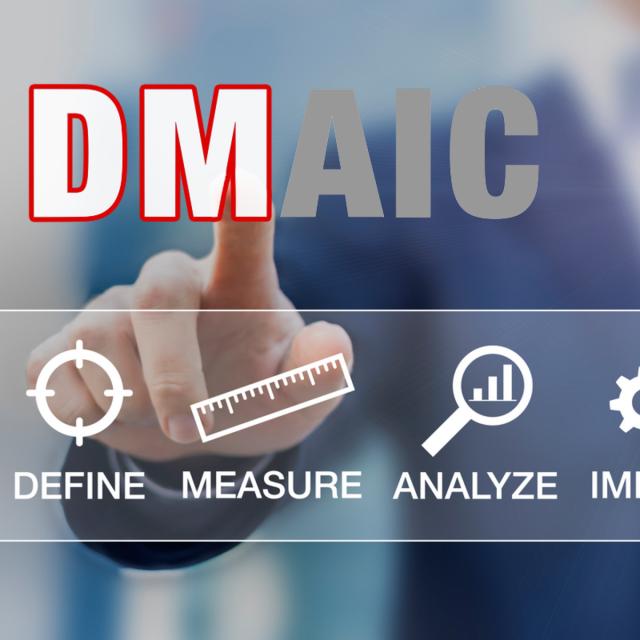
This course will cover the Measure phase and portions of the Analyze phase of the Six Sigma DMAIC (Define, Measure, Analyze, Improve, and Control) process. You will learn about lean tools for process analysis, failure mode and effects analysis (FMEA), measurement system analysis (MSA) and gauge repeatability and reproducibility (GR&R), and you will be introduced to basic statistics. This course will outline useful measure and analysis phase tools and will give you an overview of statistics as they are related to the Six Sigma process.

Aug 31st 2026
4 Weeks
Analytics, Law, and Athlete Representation (Coursera) Coursera
The State University of New York

Analytics, Law, and Athlete Representation (Coursera)

In this course, we will discuss the interplay of law, data analysis, and athlete representation using the athlete's career path trajectory as the focus. The intent is to introduce data analytical tools, laws, & regulations applicable to athlete representation throughout various stages of an athlete’s career. The primary focus is on athlete development and representation within the regulatory frameworks of federal and state laws and other pertinent rulemaking authorities, including pro sports unions.

Aug 31st 2026
5-12 Weeks
Supply Chain Management for E-commerce (Coursera) Coursera
Starweaver

Supply Chain Management for E-commerce (Coursera)

Immerse yourself in the dynamic realm of e-commerce supply chains with our course, "Supply Chain Management for E-commerce." Designed for emerging entrepreneurs, small business owners, and career switchers, this immersive journey equips learners with comprehensive insights. From foundational supply chain components to the strategic integration of technology and sustainability, participants will gain practical knowledge to navigate challenges and optimize operations in the e-commerce realm.

Aug 31st 2026
1 Week
Six Sigma and the Organization (Advanced) (Coursera) Coursera
University System of Georgia

Six Sigma and the Organization (Advanced) (Coursera)

This course is for you if you are looking to dive deeper into Six Sigma or strengthen and expand your knowledge of the basic components of green belt level of Six Sigma and Lean. Six Sigma skills are widely sought by employers both nationally and internationally. These skills have been proven to help improve business processes and performance. This course will introduce you to the purpose of Six Sigma and its value to an organization. You will learn about the basic principles of Six Sigma and Lean. Your instructors will introduce you to, and have you apply, some of the tools and metrics that are critical components of Six Sigma.

Aug 31st 2026
5-12 Weeks
Conceitos Básicos de Logística e Supply Chain (Coursera) Coursera
Universidade Estadual de Campinas - UNICAMP

Conceitos Básicos de Logística e Supply Chain (Coursera)

Neste curso o aluno irá desenvolver habilidades que permitam criar soluções para problema operacionais típicos usando conceitos básicos da Logística e do Supply Chain: Transporte, Estoques, Informação e Nível de serviço. Transporte e Distribuição: O aluno irá analisar a demanda e oferta de transporte, os custos e modais disponíveis e desenvolver uma solução de distribuição integrada ao demais componentes da cadeia de suprimentos.

Sep 7th 2026
5-12 Weeks
Six Sigma Tools for Define and Measure (Coursera) Coursera
University System of Georgia

Six Sigma Tools for Define and Measure (Coursera)

This course is for you if you are looking to learn more about Six Sigma or refresh your knowledge of the basic components of Six Sigma and Lean. Six Sigma skills are widely sought by employers both nationally and internationally. These skills have been proven to help improve business processes and performance. This course will cover the Define phase and introduce you to the Measure phase of the DMAIC (Define, Measure, Analyze, Improve, and Control) process. You will learn about Six Sigma project development and implementation, you will become familiar with project management tools, you will be introduced to statistics and understand its significance to Six Sigma, and finally you will learn about data collection and its importance to an organization.

Aug 31st 2026
4 Weeks
Six Sigma Advanced Define and Measure Phases (Coursera) Coursera
University System of Georgia

Six Sigma Advanced Define and Measure Phases (Coursera)

This course is for you if you are looking to dive deeper into Six Sigma or strengthen and expand your knowledge of the basic components of green belt level of Six Sigma and Lean. Six Sigma skills are widely sought by employers both nationally and internationally. These skills have been proven to help improve business processes and performance. This course will take you deeper into the principles and tools associated with the "Design" and "Measure" phases of the DMAIC structure of Six Sigma.

Aug 31st 2026
5-12 Weeks
Introducción a la Gestión de Operaciones (Coursera) Coursera
Wharton School of the University of Pennsylvania

Introducción a la Gestión de Operaciones (Coursera)

Aprende a analizar y a mejorar los procesos empresariales en servicios o en la industria. Aprende cómo incrementar la productividad y a ofrecer niveles de calidad mayores. Después de que finalices con éxito este curso, podrás aplicar estas habilidades en un reto empresarial del mundo real como parte de la Programa Especializado de Fundamentos Empresariales de Wharton.

Sep 7th 2026
4 Weeks
Future Development in Supply Chain Finance and Blockchain Technology (Coursera) Coursera
New York Institute of Finance

Future Development in Supply Chain Finance and Blockchain Technology (Coursera)

This course focuses on future developments in Supply Chain Finance such as Artificial Intelligence (AI) and Application Programming Interfaces (APIs). This course covers the basic concepts of Distributed Ledger Technology (DLT), the key features as well as the benefits the solution represents for Supply Chain Finance.

Aug 31st 2026
3 Weeks
Operations and Process Management (Coursera) Coursera
Illinois Tech

Operations and Process Management (Coursera)

The course focuses on teaching students how to successfully analyze a business process, research methods of improving a process, and adapt/integrate the improvement. methods into the business process in a prioritized and actionable manner. The goal of the course is to expose students to a universal set of business processes and provide them with a formal approach to improving and monitoring the health of those processes that they can apply in a current or future opportunity.

Sep 14th 2026
5-12 Weeks