Sensor Manufacturing and Process Control (Coursera)

Sensor Manufacturing and Process Control (Coursera)

This is our fourth course in our specialization on Embedding Sensor and Motors. To get the most out of this course, you should first take our first course entitled "Sensors and Sensor Circuits", our second course entitled "Motor and Motor Control Circuits", and our third course entitled "Pressure, Force, Motion, and Humidity Sensors". Our first course gives you a tutorial on how to use the hardware and software development kit we have chosen for the lab exercises. Our second and third courses give you three hands-on lab experiments using the kit. This third course assumes that you already know how to use the kit.

Class Deals by MOOC List - Click here and see Coursera's Active Discounts, Deals, and Promo Codes.

You will learn about sensor signal characterization and manufacturing techniques and how to optimize the accuracy of sensors. You will also learn about more advanced sensors, proportional-integral-derivative (PID) control, and how this method is used to give you a closed loop sensor feedback system.
After taking this course, you will be able to:

  • Understand how sensor manufacturers characterize and calibrate their sensors.
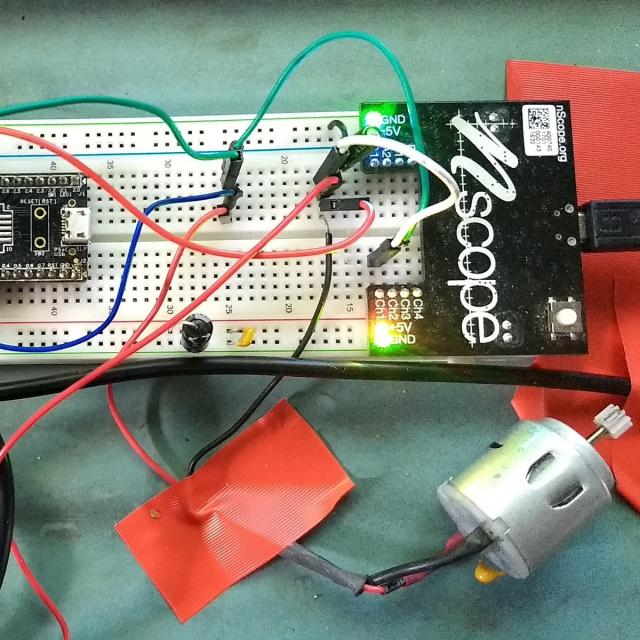
  • Tune a PID control loop and access the PID control function of the Cypress PSoC development kit for a motor control application.
  • Understand manufacturing methods used to build electro-mechanical and micro-machined sensors.

Course 4 of 4 in the Embedding Sensors and Motors Specialization.

Syllabus

WEEK 1
Process Control
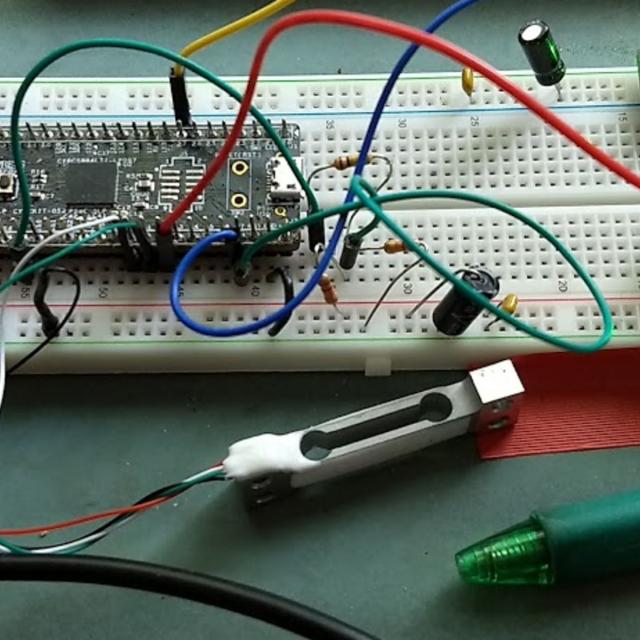
In module 1 you will learn how companies perform process control in their factories. First, you will review how 2nd order transfer functions work, which is the theoretical basis for much of process control. Then you will learn how plant-wide control systems are implemented and details about the software protocols used to communicate between plant controllers and sensors. Then you will perform a lab for PID control with your PSoC system, which will get you some hands-on experience with this type of control system.

WEEK 2
Sensor Characterization
In module 2 you will learn how sensor software is adjusted for optimal performance in the field. First, you will review how non-linear sensor response curves are linearized for more predictable performance. Then you will learn how sensor output is automatically adjusted to account for wide ranges of ambient temperature. Next, you will review how sensors are calibrated, and the certification procedures that companies follow to demonstrate calibration capability. Afterwards, you will study how linearization, compensation, and calibration play into sensor accuracy specs. Finally, you will perform a lab for closed loop motor control with your PSoC system, which will get you some hands-on experience with closed loop systems.

WEEK 3
Advanced Sensors
In module 3 you will first learn how radar level transmitters work, and how they are used to provide accurate readings in all types of process tank conditions. Then you will learn about components and design issues for LIDAR systems used in self driving vehicles. Afterwards, we will teach you about how sensors are customized for medical applications. This includes pressure and temperature sensors that are implanted during surgical procedures, as well as pressure and flow sensors used in patient care equipment.

WEEK 4
Sensor Manufacturing
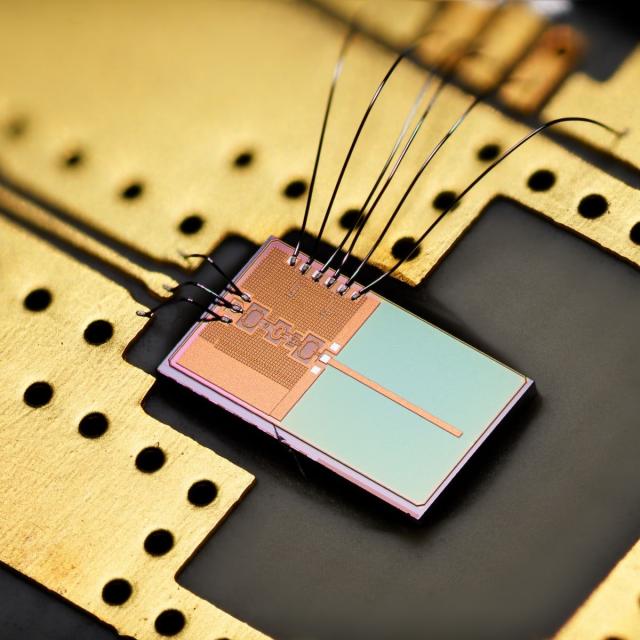
In module 4 you will learn how sensors are manufactured. First you will learn how MEMS construction is used to make miniature flow, pressure, and temperature sensors. Afterwards, we will teach you how micro-electronic connections attach the MEMS sensors to connections within plastic encapsulated chips. Then we will discuss how sensor chips are enclosed within sensor housings, and how different designs of housings are used for different applications. Then you will learn how sensors are tested for high reliability in the field.

WEEK 5
Course Projects
This module contains the materials you need to complete the PID Control and Closed Loop DC Motor control lab assignments.
Go to Class
MOOC List is learner-supported. When you buy through links on our site, we may earn an affiliate commission.

Related Courses

Diode - pn Junction and Metal Semiconductor Contact (Coursera) Coursera
University of Colorado Boulder

Diode - pn Junction and Metal Semiconductor Contact (Coursera)

This course presents in-depth discussion and analysis of pn junction and metal-semiconductor contacts including equilibrium behavior, current and capacitance responses under bias, breakdown, non-rectifying behavior, and surface effect. You'll work through sophisticated analysis and application to electronic devices.

Jun 28th 2026
4 Weeks
Artificial Intelligence for Robotics (Udacity) Udacity
Udacity

Artificial Intelligence for Robotics (Udacity)

Learn how to program all the major systems of a robotic car. Topics include planning, search, localization, tracking, and control. Learn how to program all the major systems of a robotic car from the leader of Google and Stanford's autonomous driving teams. This class will teach you basic methods in Artificial Intelligence, including: probabilistic inference, planning and search, localization, tracking and control, all with a focus on robotics. Extensive programming examples and assignments will apply these methods in the context of building self-driving cars.

Self Paced
Self-Paced
Manufacturing Process Control II (edX) EdX
MIT,MITx

Manufacturing Process Control II (edX)

Learn how to control process variation, including methods to design experiments that capture process behavior and understand means to control variability. As part of the Principles of Manufacturing MicroMasters program, this course will build on statistical process control foundations to add process modeling and optimization.Building on formal methods of designed experiments, the course develops highly applicable methods for creating robust processes with optimal quality.

Oct 17th 2023
5-12 Weeks
Six Sigma Advanced Improve and Control Phases (Coursera) Coursera
University System of Georgia

Six Sigma Advanced Improve and Control Phases (Coursera)

This course is for you if you are looking to dive deeper into Six Sigma or strengthen and expand your knowledge of the basic components of green belt level of Six Sigma and Lean. Six Sigma skills are widely sought by employers both nationally and internationally. These skills have been proven to help improve business processes and performance. This course will take you deeper into the principles and tools associated with the "Improve" and "Control" phases of the DMAIC structure of Six Sigma.

Jun 22nd 2026
5-12 Weeks
Manufacturing Process Control I (edX) EdX
MIT,MITx

Manufacturing Process Control I (edX)

Learn how to model variations in manufacturing processes and develop methods to reduce and control deterministic variations to achieve consistent process quality. Randomness is inherent in all processes including manufacturing. The fundamental concepts taught in this course will help learners develop powerful statistical process control methods that are the foundation of world-class manufacturing quality.

Aug 22nd 2023
5-12 Weeks
Quantitative Methods (Coursera) Coursera
University of Amsterdam

Quantitative Methods (Coursera)

Discover the principles of solid scientific methods in the behavioral and social sciences. Join us and learn to separate sloppy science from solid research! This course will cover the fundamental principles of science, some history and philosophy of science, research designs, measurement, sampling and ethics. The course is comparable to a university level introductory course on quantitative research methods in the social sciences, but has a strong focus on research integrity. We will use examples from sociology, political sciences, educational sciences, communication sciences and psychology.

Jun 22nd 2026
5-12 Weeks
Interfacing with the Arduino (Coursera) Coursera
University of California, Irvine

Interfacing with the Arduino (Coursera)

Arduino senses the environment by receiving inputs from add-on devices such as sensors, and can control the world around it by adjusting lights, motors, and other actuators. In this class you will learn how and when to use the different types of sensors and how to connect them to the Arduino. Since the external world uses continuous or analog signals and the hardware is digital you will learn how these signals are converted back-and-forth and how this must be considered as you program your device. You'll also learn about the use of Arduino-specific shields and the shields software libraries to interface with the real world.

Jun 22nd 2026
4 Weeks
Converter Circuits (Coursera) Coursera
University of Colorado Boulder

Converter Circuits (Coursera)

This course introduces more advanced concepts of switched-mode converter circuits. Realization of the power semiconductors in inverters or in converters having bidirectional power flow is explained. Power diodes, power MOSFETs, and IGBTs are explained, along with the origins of their switching times. Equivalent circuit models are refined to include the effects of switching loss. The discontinuous conduction mode is described and analyzed. A number of well-known converter circuit topologies are explored, including those with transformer isolation.

Jun 22nd 2026
4 Weeks
Sensors and Sensor Circuit Design (Coursera) Coursera
University of Colorado Boulder

Sensors and Sensor Circuit Design (Coursera)

After taking this course, you will be able to: understand how to specify the proper thermal, flow, or rotary sensor for taking real-time process data; implement thermal sensors into an embedded system in both hardware and software; add the sensor and sensor interface into a microprocessor based development kit; create hardware and firmware to process sensor signals and feed data to a microprocessor for further evaluation; study sensor signal noise and apply proper hardware techniques to reduce it to acceptable levels.

Jun 15th 2026
5-12 Weeks
Planning for Climate Change in African Cities (Coursera) Coursera
Erasmus University Rotterdam,United Cities and Local Governments of Africa,African Local Government Academy,Institute for Housing and Urban Development

Planning for Climate Change in African Cities (Coursera)

Climate change poses a threat to economic growth and long-term prosperity of many countries around the world. Africa is not an exception, considering the actual and potential impacts of climate change and climate variability that will threaten its vulnerable sectors and human populations. African countries are projected to experience changing rainfall patterns, rising sea levels, and higher temperatures that will affect food security, agricultural production, water availability, and public health, among others. These climate change impacts and climate variability can further produce social and political problems, such as rural-urban migration and water resource disputes.

Jun 22nd 2026
5-12 Weeks
Pressure, Force, Motion, and Humidity Sensors (Coursera) Coursera
University of Colorado Boulder

Pressure, Force, Motion, and Humidity Sensors (Coursera)

This is our third course in our specialization on Embedding Sensor and Motors. To get the most out of this course, you should first take our first course entitled Sensors and Sensor Circuits. Our first course gives you a tutorial on how to use the hardware and software development kit we have chosen for the lab exercises. This third course assumes that you already know how to use the kit.

Jun 15th 2026
5-12 Weeks
Cómo autoconstruir tu vivienda (Coursera) Coursera
Universidad Nacional Autónoma de México

Cómo autoconstruir tu vivienda (Coursera)

Aprenderás las bases y los procedimientos precisos paso a paso para que puedas llevar a cabo la autoconstrucción de una vivienda básica, segura y económica para ti y tu familia; también te será de gran utilidad si estás buscando aprender a reparar, mejorar la estructura de tu vivienda e incluso si buscas autoemplearte.

Jun 22nd 2026
4 Weeks