Artificial Intelligence for Robotics (Udacity)

Offered by Udacity,
Artificial Intelligence for Robotics (Udacity)

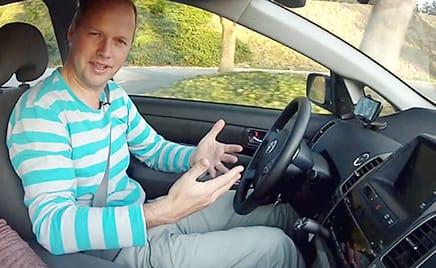
Learn how to program all the major systems of a robotic car. Topics include planning, search, localization, tracking, and control. Learn how to program all the major systems of a robotic car from the leader of Google and Stanford's autonomous driving teams. This class will teach you basic methods in Artificial Intelligence, including: probabilistic inference, planning and search, localization, tracking and control, all with a focus on robotics. Extensive programming examples and assignments will apply these methods in the context of building self-driving cars.

Class Deals by MOOC List - Click here and see Udacity's Active Discounts, Deals, and Promo Codes.

This course is offered as part of the Georgia Tech Masters in Computer Science. The updated course includes a final project, where you must chase a runaway robot that is trying to escape!

Syllabus

Lesson 1
Localization

  • Localization
  • Total Probability
  • Uniform Distribution
  • Probability After Sense
  • Normalize Distribution
  • Phit and Pmiss
  • Sum of Probabilities
  • Sense Function
  • Exact Motion
  • Move Function
  • Bayes Rule
  • Theorem of Total Probability

Lesson 2
Kalman Filters

  • Gaussian Intro
  • Variance Comparison
  • Maximize Gaussian
  • Measurement and Motion
  • Parameter Update
  • New Mean Variance
  • Gaussian Motion
  • Kalman Filter Code
  • Kalman Prediction
  • Kalman Filter Design
  • Kalman Matrices

Lesson 3
Particle Filters

  • Slate Space
  • Belief Modality
  • Particle Filters
  • Using Robot Class
  • Robot World
  • Robot Particles

Lesson 4
Search

  • Motion Planning
  • Compute Cost
  • Optimal Path
  • First Search Program
  • Expansion Grid
  • Dynamic Programming
  • Computing Value
  • Optimal Policy

Lesson 5
PID Control

  • Robot Motion
  • Smoothing Algorithm
  • Path Smoothing
  • Zero Data Weight
  • Pid Control
  • Proportional Control
  • Implement P Controller
  • Oscillations
  • Pd Controller
  • Systematic Bias
  • Pid Implementation
  • Parameter Optimization

Lesson 6
SLAM (Simultaneous Localization and Mapping)

  • Localization
  • Planning
  • Segmented Ste
  • Fun with Parameters
  • SLAM
  • Graph SLAM
  • Implementing Constraints
  • Adding Landmarks
  • Matrix Modification
  • Untouched Fields
  • Landmark Position
  • Confident Measurements
  • Implementing SLAM

Lesson 7
Runaway Robot Final Project

  • FEATU
Go to Class
MOOC List is learner-supported. When you buy through links on our site, we may earn an affiliate commission.

Related Courses

Scalable Machine Learning on Big Data using Apache Spark (Coursera) Coursera
IBM

Scalable Machine Learning on Big Data using Apache Spark (Coursera)

This course will empower you with the skills to scale data science and machine learning (ML) tasks on Big Data sets using Apache Spark. Most real world machine learning work involves very large data sets that go beyond the CPU, memory and storage limitations of a single computer. Apache Spark is an open source framework that leverages cluster computing and distributed storage to process extremely large data sets in an efficient and cost effective manner. Therefore an applied knowledge of working with Apache Spark is a great asset and potential differentiator for a Machine Learning engineer.

Jun 8th 2026
4 Weeks
Fundamentals of Reinforcement Learning (Coursera) Coursera
University of Alberta,Alberta Machine Intelligence Institute

Fundamentals of Reinforcement Learning (Coursera)

Reinforcement Learning is a subfield of Machine Learning, but is also a general purpose formalism for automated decision-making and AI. This course introduces you to statistical learning techniques where an agent explicitly takes actions and interacts with the world. Understanding the importance and challenges of learning agents that make decisions is of vital importance today, with more and more companies interested in interactive agents and intelligent decision-making.

Jun 8th 2026
4 Weeks
Encoder-Decoder Architecture with Google Cloud (Udacity) Udacity
Udacity,Google Cloud

Encoder-Decoder Architecture with Google Cloud (Udacity)

Learn about the main components of the encoder-decoder architecture and how to train and serve these models. This course gives you a synopsis of the encoder-decoder architecture, which is a powerful and prevalent machine learning architecture for sequence-to-sequence tasks such as machine translation, text summarization, and question answering.

Self Paced
Self-Paced
Secure and Private AI (Udacity) Udacity
Udacity,Facebook

Secure and Private AI (Udacity)

Learn how to extend PyTorch with the tools necessary to train AI models that preserve user privacy. This free course will introduce you to three cutting-edge technologies for privacy-preserving AI: Federated Learning, Differential Privacy, and Encrypted Computation. You will learn how to use the newest privacy-preserving technologies, such as OpenMined's PySyft. PySyft extends Deep Learning tools—such as PyTorch—with the cryptographic and distributed technologies necessary to safely and securely train AI models on distributed private data.

Self Paced
Self-Paced
AI Workflow: Business Priorities and Data Ingestion (Coursera) Coursera
IBM

AI Workflow: Business Priorities and Data Ingestion (Coursera)

This is the first course of a six part specialization. You are STRONGLY encouraged to complete these courses in order as they are not individual independent courses, but part of a workflow where each course builds on the previous ones. This first course in the IBM AI Enterprise Workflow Certification specialization introduces you to the scope of the specialization and prerequisites.

Jun 8th 2026
2 Weeks
Fundamentals of Machine Learning for Healthcare (Coursera) Coursera
Stanford University

Fundamentals of Machine Learning for Healthcare (Coursera)

Machine learning and artificial intelligence hold the potential to transform healthcare and open up a world of incredible promise. But we will never realize the potential of these technologies unless all stakeholders have basic competencies in both healthcare and machine learning concepts and principles. This course will introduce the fundamental concepts and principles of machine learning as it applies to medicine and healthcare.

Jun 8th 2026
5-12 Weeks
Generative AI Essentials: Overview and Impact (Coursera) Coursera
University of Michigan

Generative AI Essentials: Overview and Impact (Coursera)

With the rise of generative artificial intelligence, there has been a growing demand to explore how to use these powerful tools not only in our work but also in our day-to-day lives. Generative AI Essentials: Overview and Impact introduces learners to large language models and generative AI tools, like ChatGPT. In this course, you’ll explore generative AI essentials, how to ethically use artificial intelligence, its implications for authorship, and what regulations for generative AI could look like.

Jun 12th 2026
1 Week
New Technologies for Business Leaders (Coursera) Coursera
Rutgers University

New Technologies for Business Leaders (Coursera)

This introductory course is developed for high-level business people (and those on their way) who want a broad understanding of new Information Technologies and understand their potential for business functions (e.g. marketing, supply change management, finance). This is not a course for people looking for guidance on how to become a deep technical expert or implement these technologies.

Jun 8th 2026
5-12 Weeks
AI for Medical Diagnosis (Coursera) Coursera
DeepLearning.AI

AI for Medical Diagnosis (Coursera)

AI is transforming the practice of medicine. It’s helping doctors diagnose patients more accurately, make predictions about patients’ future health, and recommend better treatments. As an AI practitioner, you have the opportunity to join in this transformation of modern medicine. If you're already familiar with some of the math and coding behind AI algorithms, and are eager to develop your skills further to tackle challenges in the healthcare industry, then this specialization is for you. No prior medical expertise is required!

Jun 8th 2026
3 Weeks
Python for Data Science, AI & Development (Coursera) Coursera
IBM

Python for Data Science, AI & Development (Coursera)

Kickstart your learning of Python for data science, as well as programming in general, with this beginner-friendly introduction to Python. Python is one of the world’s most popular programming languages, and there has never been greater demand for professionals with the ability to apply Python fundamentals to drive business solutions across industries.

Jun 9th 2026
5-12 Weeks
AI Workflow: Feature Engineering and Bias Detection (Coursera) Coursera
IBM

AI Workflow: Feature Engineering and Bias Detection (Coursera)

This is the third course in the IBM AI Enterprise Workflow Certification specialization. You are STRONGLY encouraged to complete these courses in order as they are not individual independent courses, but part of a workflow where each course builds on the previous ones. Course 3 introduces you to the next stage of the workflow for our hypothetical media company. In this stage of work you will learn best practices for feature engineering, handling class imbalances and detecting bias in the data.

Jun 8th 2026
2 Weeks