Seismic tomography: look inside the Earth (Coursera)

Seismic tomography: look inside the Earth (Coursera)

Welcome to the course “Seismic tomography: Look inside the Earth”. We will speak about the use of seismic tomography and its mathematical base, we’ll learn about earthquakes and find out how they start, also we’ll conduct some experiments and go on an expedition to Kamchatka. By the end of the course you’ll know the basics of seismology and how to use the technical instruments and programs in practice. So it doesn't matter what level you’re on. Complex things are explained with simple and accessible language.

Class Deals by MOOC List - Click here and see Coursera's Active Discounts, Deals, and Promo Codes.

Geophysists, mathematicians, geologists, geochemists, petrologists, engineers and everyone interested will find a lot of new information and get the access to the author's research methods and scientific algorithms that are used by seismologists all over the world. The adventure begins!

Syllabus

WEEK 1: Tomography as a tool to look inside the Earth
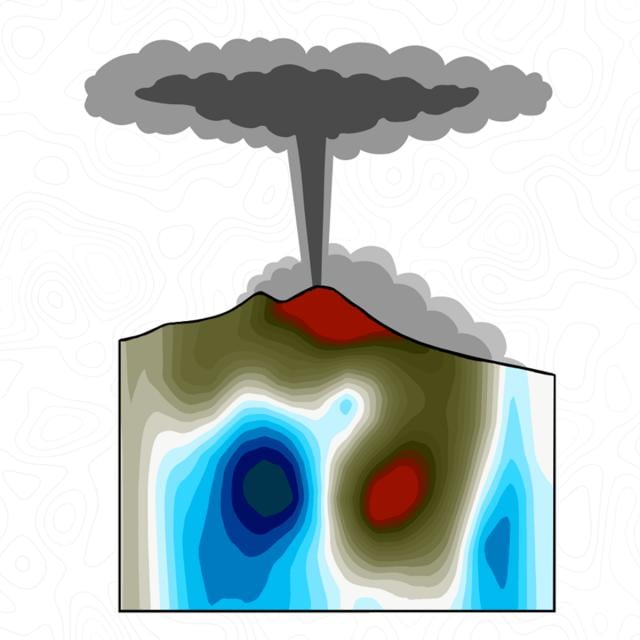
WEEK 2: Look inside a volcano
WEEK 3: Tomography: the must-know things
WEEK 4: Doing tomography with natural sources
Go to Class
MOOC List is learner-supported. When you buy through links on our site, we may earn an affiliate commission.

Related Courses

Greening the Economy: Lessons from Scandinavia (Coursera) Coursera
Lund University

Greening the Economy: Lessons from Scandinavia (Coursera)

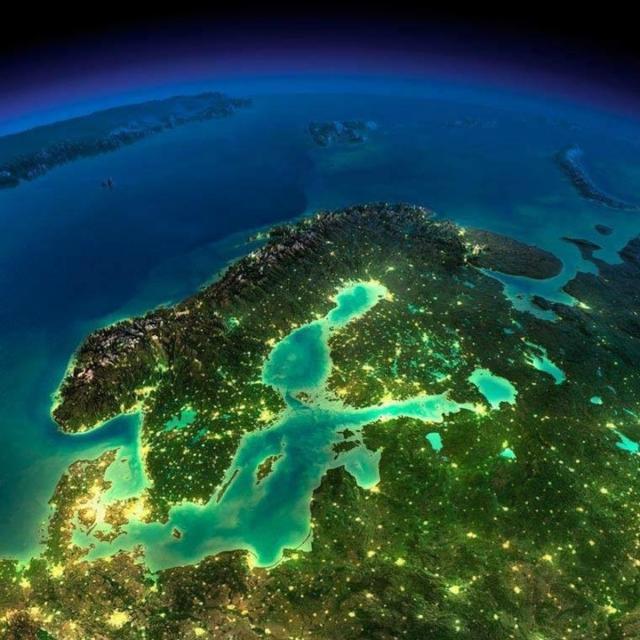
How can we live a good life on one planet with over seven billion people? This course will explore greening the economy on four levels – individual, business, city, and nation. We will look at the relationships between these levels and give many practical examples of the complexities and solutions across the levels. Scandinavia, a pioneering place advancing sustainability and combating climate change, is a unique starting point for learning about greening the economy. We will learn from many initiatives attempted in Scandinavia since the 1970s, which are all potentially helpful and useful for other countries and contexts.

Jun 15th 2026
5-12 Weeks
Global Postharvest Loss Prevention: Fundamentals, Technologies, and Actors (Coursera) Coursera
University of Illinois at Urbana-Champaign

Global Postharvest Loss Prevention: Fundamentals, Technologies, and Actors (Coursera)

This course provides an overview of the issue of postharvest loss of grains by exploring essential physical, technical, and social dimensions of postharvest supply chains and loss prevention methods globally. Each year, estimates suggest that 1/3 of all food produced is lost or wasted, making postharvest loss a critical global food security and sustainability issue of today. Key knowledge areas are presented including: an overview of postharvest loss; supply chain activities such as harvesting, drying, and storage; economics and markets; an introduction to the network of actors working in this field.

Jun 29th 2026
4 Weeks
Arctic Development (Coursera) Coursera
University of Alberta

Arctic Development (Coursera)

Welcome to Arctic: Development! In this third in a series of Arctic MOOCs, brought to you by a unique partnership between the University of Alberta and UiT The Arctic University of Norway, we will be exploring regional development in a changing arctic. In this 4-week course, you will investigate the role that natural resources play across the Indigenous, Nordic, Russian and North American Arctics, different strategies for resource management in different regions, and how these affect community planning and development efforts in an increasingly populated part of the world.

Jun 15th 2026
4 Weeks
Renewable Energy: Fundamentals and Job Opportunities (Coursera) Coursera
University at Buffalo

Renewable Energy: Fundamentals and Job Opportunities (Coursera)

This course prepares you to recognize the complexities and nuances of different renewable energy solutions, as well as relevant career opportunities (both technical occupations and roles not typically associated with clean energy). Learners are immersed in discussions about green energy technologies, the impact of sustainability on society, energy consumption in the United States and conservation. Topics include: tenets of green building design and construction, solar energy conversion through photovoltaic cells, wind turbine site selection and design, and nanotechnology applications in clean energy.

Jun 15th 2026
5-12 Weeks
Introduction to Sustainability (Coursera) Coursera
University of Illinois at Urbana-Champaign

Introduction to Sustainability (Coursera)

This course introduces the academic approach of Sustainability and explores how today’s human societies can endure in the face of global change, ecosystem degradation and resource limitations. The course focuses on key knowledge areas of sustainability theory and practice, including population, ecosystems, global change, energy, agriculture, water, environmental economics and policy, ethics, and cultural history.

Jun 8th 2026
5-12 Weeks
Global Warming I: The Science and Modeling of Climate Change (Coursera) Coursera
University of Chicago

Global Warming I: The Science and Modeling of Climate Change (Coursera)

This class describes the science of global warming and the forecast for humans’ impact on Earth’s climate. Intended for an audience without much scientific background but a healthy sense of curiosity, the class brings together insights and perspectives from physics, chemistry, biology, earth and atmospheric sciences, and even some economics—all based on a foundation of simple mathematics (algebra).

Jun 29th 2026
5-12 Weeks
Our Earth's Future (Coursera) Coursera
American Museum of Natural History

Our Earth's Future (Coursera)

Our Earth’s Future is about the science of climate change and how to talk about it. You will learn from scientists in the fields of climatology, oceanography, Earth science, and anthropology who study how climate change is affecting people, populations, and ways of life. Explore the multiple lines of evidence for the human-induced climate change that is happening today, and consider what that means for the future of our planet. At the end of this course you will be able to understand key scientific principles, identify and address misconceptions, and contribute confidently to conversations about climate change.

Jun 15th 2026
5-12 Weeks
Natural Attenuation of Groundwater Contaminants: New Paradigms, Technologies, and Applications (Coursera) Coursera
Rice University

Natural Attenuation of Groundwater Contaminants: New Paradigms, Technologies, and Applications (Coursera)

Cleaning up the large number of groundwater contamination sites is a significant and complex environmental challenge. The environmental industry is continuously looking for remediation methods that are both effective and cost-efficient. Over the past 10 years there have been amazing, important developments in our understanding of key attenuation processes and technologies for evaluating natural attenuation processes, and a changing institutional perspective on when and where Monitored Natural Attenuation (MNA) may be applied.

Jun 8th 2026
5-12 Weeks
Global Warming II: Create Your Own Models in Python (Coursera) Coursera
University of Chicago

Global Warming II: Create Your Own Models in Python (Coursera)

This class provides a series of Python programming exercises intended to explore the use of numerical modeling in the Earth system and climate sciences. The scientific background for these models is presented in a companion class, Global Warming I: The Science and Modeling of Climate Change. This class assumes that you are new to Python programming (and this is indeed a great way to learn Python!), but that you will be able to pick up an elementary knowledge of Python syntax from another class or from on-line tutorials.

Jun 15th 2026
5-12 Weeks
Journey Conversations: Weaving Knowledge and Action (Coursera) Coursera
Yale University

Journey Conversations: Weaving Knowledge and Action (Coursera)

Journey of the Universe weaves together the discoveries of the evolutionary sciences together with humanities such as history, philosophy, art, and religion. This course draws on the Journey of the Universe Conversations, a series of 20 interviews with scientists and environmentalists. The first 10 interviews are with scientists and historians who deepen our understanding of the evolutionary process of universe, Earth, and humans.

Jun 22nd 2026
5-12 Weeks