Science and Technology in the Silla Cultural Heritage (Coursera)

Science and Technology in the Silla Cultural Heritage (Coursera)

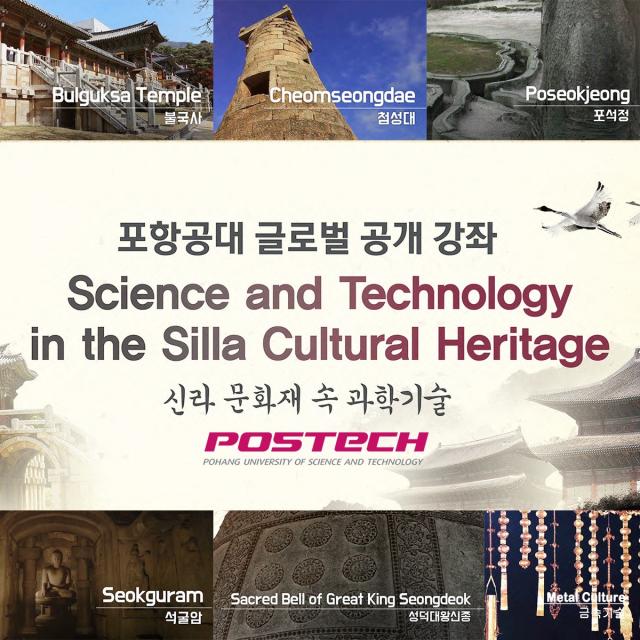
Science and Technology in the Silla Heritage. The course explores the scientific and technological aspects of the cultural heritage of Silla, an ancient dynasty in Korea, and its relationship with other ancient civilizations in the world. The lecture series will cover major cultural heritage of Silla: Bulguksa, Seokguram, Cheomseongdae, Poseokjeong, the Sacred Bell of Great King Seongdeok, and metallurgy.

Class Deals by MOOC List - Click here and see Coursera's Active Discounts, Deals, and Promo Codes.

Modern development in science and technology occurred mostly in the West. But during ancient times,various developments were madein science and technology in many countries outside of the West. In that sense, this series of lectures aims to obtain better understanding of the development in science and technology in the Silla dynasty through scientific and technological analysis of Silla cultural properties.

Syllabus

WEEK 1: Bulguksa
WEEK 2: Sci-Tech in the Silla Cultural Heritage: Cheomseongdae
WEEK 3: Poseokjeong
WEEK 4: Seokguram Grotto
WEEK 5: The Sacred Bell of Great King Seongdeok
WEEK 6: The Metalcrafts in Silla

Go to Class
MOOC List is learner-supported. When you buy through links on our site, we may earn an affiliate commission.

Related Courses

面向对象技术高级课程 (The Advanced Object-Oriented Technology) (Coursera) Coursera
Peking University

面向对象技术高级课程 (The Advanced Object-Oriented Technology) (Coursera)

如果将软件开发人员看作行走江湖的武侠,那么各种软件开发技术就是武侠赖以傍身的武术秘籍。有的秘籍以易学灵巧见长,练习者很快掌握,并有立竿见影的功效,但失之厚重持久;有的秘籍初学乍练顿显困难,虽冥思苦解仍不得要领,需坚持不断的内功修炼方成正果,却是成为武林大侠必备的至宝。本课程有些类似于后者。

Aug 17th 2026
13-24 Weeks
e-Learning Ecologies: Innovative Approaches to Teaching and Learning for the Digital Age (Coursera) Coursera
University of Illinois at Urbana-Champaign

e-Learning Ecologies: Innovative Approaches to Teaching and Learning for the Digital Age (Coursera)

For three decades and longer we have heard educators and technologists making a case for the transformative power of technology in learning. However, despite the rhetoric, in many ways and at most institutional sites, education is still relatively untouched by technology. Even when technologies are introduced, the changes sometimes seem insignificant and the results seem disappointing. If the print textbook is replaced by an e-book, do the social relations of knowledge and learning necessarily change at all or for the better?

Aug 10th 2026
4 Weeks
Bioinformatics: Introduction and Methods 生物信息学: 导论与方法 (Coursera) Coursera
Peking University

Bioinformatics: Introduction and Methods 生物信息学: 导论与方法 (Coursera)

A big welcome to “Bioinformatics: Introduction and Methods” from Peking University! In this MOOC you will become familiar with the concepts and computational methods in the exciting interdisciplinary field of bioinformatics and their applications in biology, the knowledge and skills in bioinformatics you acquired will help you in your future study and research.

Aug 17th 2026
13-24 Weeks
Promote your Scientific Results (Coursera) Coursera
Institut Mines-Telecom

Promote your Scientific Results (Coursera)

Whether you are a member of the natural or human science community, if you are a PhD student, professor, part of an academic department or international research team, or self-employed and you wish to showcase your work to a wider audience then this is the perfect course for you. You will learn how to promote your work to professional peers, the general public, as well as the media.

Aug 10th 2026
5-12 Weeks
Bugs 101: Insect-Human Interactions (Coursera) Coursera
University of Alberta

Bugs 101: Insect-Human Interactions (Coursera)

Of all the animals on earth, which are the strongest for their size? What about the fastest? Who were the first animals to evolve flight? Insects take all of these titles and more! As the most abundant animals on the planet, insects and other arthropods affect our lives in so many ways. From beneficial interactions like pollination and biological pest control, to the transmission of life threatening diseases; this course will teach you about the big ways that these little arthropods impact our lives.

Aug 17th 2026
13-24 Weeks
Intellectual Humility: Science (Coursera) Coursera
University of Edinburgh

Intellectual Humility: Science (Coursera)

It’s clear that the world needs more intellectual humility. But how do we develop this virtue? And why do so many people still end up so arrogant? Do our own biases hold us back from becoming as intellectually humble as we could be—and are there some biases that actually make us more likely to be humble? Which cognitive dispositions and personality traits give people an edge at being more intellectually humble - and are they stable from birth, learned habits, or something in between? And what can contemporary research on the emotions tell us about encouraging intellectual humility in ourselves and others?

Aug 17th 2026
4 Weeks
In Search for the Origins of Korean Philosophy (Coursera) Coursera
Sungkyunkwan University - SKKU

In Search for the Origins of Korean Philosophy (Coursera)

This course will give you an insight into the formative years of “Korean” culture and thought and uncover together who were the earliest people we could describe as being “Korean.” Korea is unique, but not of a single origin. Through this course, you will rediscover “Korea” today as a unique linguistic-cultural continuum. And from this, you may gain a deeper understanding of yourself by acknowledging the various factors that have influenced you to form your mature identity.

Aug 10th 2026
5-12 Weeks
Philosophy, Science and Religion: Philosophy and Religion (Coursera) Coursera
University of Edinburgh

Philosophy, Science and Religion: Philosophy and Religion (Coursera)

Philosophy, Science and Religion mark three of the most fundamental modes of thinking about the world and our place in it. Are these modes incompatible? Put another way: is the intellectually responsible thing to do to ‘pick sides’ and identify with one of these approaches at the exclusion of others? Or, are they complementary or mutually supportive? As is typical of questions of such magnitude, the devil is in the details. For example, it is important to work out what is really distinctive about each of these ways of inquiring about the world. In order to gain some clarity here, we’ll be investigating what some of the current leading thinkers in philosophy, science and religion are actually doing.

Aug 17th 2026
5-12 Weeks
The Science of Stem Cells (Coursera) Coursera
American Museum of Natural History

The Science of Stem Cells (Coursera)

What promise do stem cells hold for the treatment of medical conditions? In this five-part online course you will explore the history and basic biology of stem cells, learn about new research techniques, and find out how stem cells could lead to cures for diseases and to individualized medicine.

Aug 10th 2026
5-12 Weeks
A Bridge to the World: Korean Language for Beginners Ⅰ (Coursera) Coursera
Sungkyunkwan University - SKKU

A Bridge to the World: Korean Language for Beginners Ⅰ (Coursera)

This course is an introductory course to Korean language that aims to cultivate basic communication skill for those that are interested in learning Korean language. The course is composed of essential expressions that are often used in everyday life, and designed to teach grammars using basic dialogues which reflect colloquial characteristics of Korean language so by end of this course, a student will be able to express him/herself on ordinary topics.

Aug 17th 2026
5-12 Weeks
Philosophy, Science and Religion: Religion and Science (Coursera) Coursera
University of Edinburgh

Philosophy, Science and Religion: Religion and Science (Coursera)

Philosophy, Science and Religion mark three of the most fundamental modes of thinking about the world and our place in it. Are these modes incompatible? Put another way: is the intellectually responsible thing to do to ‘pick sides’ and identify with one of these approaches at the exclusion of others? Or, are they complementary or mutually supportive? As is typical of questions of such magnitude, the devil is in the details. For example, it is important to work out what is really distinctive about each of these ways of inquiring about the world. In order to gain some clarity here, we’ll be investigating what some of the current leading thinkers in philosophy, science and religion are actually doing.

Aug 11th 2026
5-12 Weeks