Organising an Empire: The Assyrian Way (Coursera)

Organising an Empire: The Assyrian Way (Coursera)

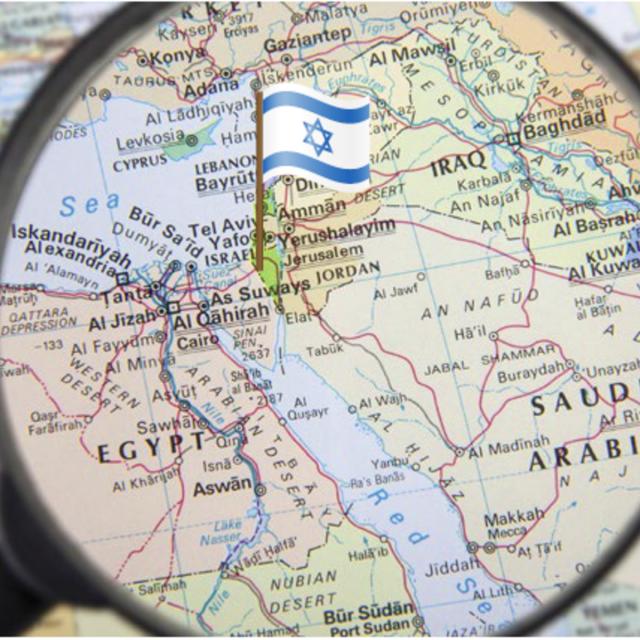
Discover the mighty kingdom of Assyria, which came to be the world’s first great empire three thousand years ago. From the 9th to the 7th centuries BC, during the imperial phase of Assyria’s long history, modern day northern Iraq was the central region of a state reaching from the Mediterranean Sea to the Persian Gulf, and incorporating what is now Iraq, Syria, and Lebanon, as well as half of Israel, and wide parts of south-eastern Turkey, and Western Iran.

Class Deals by MOOC List - Click here and see Coursera's Active Discounts, Deals, and Promo Codes.

In its geographical extent, this state was unprecedentedly large, and the distinct geography of the Middle East, with deserts and high mountain ranges, posed challenges to communication and cohesion. What were the mechanisms that kept the Empire running? This course explores the methods the Assyrian government employed to ensure unity and maintain loyalty across vast distances, using traditional as well as innovative strategies. Some of these imperial techniques have marked parallels in the ways modern multi-national corporations are operating, others will strike you as profoundly alien.
This course focusses on how the Assyrians organised their empire by analysing key aspects, namely:
· The CEO – the king, a religious, political and military leader, who is charged to govern by his master, the god Assur;
· Home Office – the royal palace in the central region and the royal court that form the administrative centre of the state;
· The Regional Managers – the governors and client-rulers to whom local power is delegated;
· Human Resources – the Empire’s people are its most precious assets, its consumers and its key product, as the goal of the imperial project was to create “Assyrians”; an approach with lasting repercussions that still reverberate in the Middle East today; and finally
· The Fruits of Empire – it takes a lot of effort, so what are the rewards?
When we explore these topics we will contextualise them with information about the lives led by ordinary Assyrian families.
Taking this course will provide you with an overview of the political, social, religious, and military history of the world’s first superpower. It will give you insight into the geography and climatic conditions of the Middle East and contribute to your understanding of the opportunities and challenges of that region. It will present you with a vision of the Middle East at a time when its political and religious structures were very different from today.

Syllabus

WEEK 1: Introducing Ancient Assyria
WEEK 2: Meet the CEO: The Assyrian King
WEEK 3: A Visit to the Head Office: The Royal Capital and Court
WEEK 4: Regional Managers: Outsourcing Power
WEEK 5: Human Resources: Commodities, Consumers, and Product
WEEK 6: The Fruits of Empire: Expenses and Revenue
Go to Class
MOOC List is learner-supported. When you buy through links on our site, we may earn an affiliate commission.

Related Courses

The Mediterranean, a Space of Exchange (from the Renaissance to Enlightenment) (Coursera) Coursera
University of Barcelona

The Mediterranean, a Space of Exchange (from the Renaissance to Enlightenment) (Coursera)

The course The Mediterranean, a Space of Exchange (from Renaissance to Enlightenment) aims to explain the Mediterranean, using history and the analysis of the past, as a space generated by routes and circulation. We consider it crucial to disclose mobility as a historical factor: a mobility comprised of four major elements, namely people, objects, ideas and practices.

Jun 19th 2026
5-12 Weeks
The Fundamentals of Revenue Management: The Cornerstone of Revenue Strategy (Coursera) Coursera
ESSEC Business School

The Fundamentals of Revenue Management: The Cornerstone of Revenue Strategy (Coursera)

With a fixed capacity, a highly disposable product and high fixed costs, hotels are a natural candidate for the application of revenue management. Originally developed by the airlines in the 1970s, these analytics-based techniques help predict consumer behavior at the hotel’s market level so that the hotel can sell each room each night at the optimum price. With modern-day rising acquisition costs and distribution complexities, revenue management techniques have increasingly been adopted by both small and large hotel companies, making a comprehensive understanding of segmentation, forecasting and pricing an essential requirement for today’s hospitality professionals. The purpose of this course is to provide a core understanding of the fundamentals of revenue management, which ties into the larger picture of revenue strategy.

Jun 15th 2026
4 Weeks
What Is Contemporary Art? (Coursera) Coursera
The Museum of Modern Art

What Is Contemporary Art? (Coursera)

What is contemporary art? In this course, you’ll consider this question through more than 70 works of art made between 1980 and the present, with a focus on art from the past decade. You’ll hear directly from artists, architects, and designers from around the globe about their creative processes, materials, and inspiration.

Jun 22nd 2026
5-12 Weeks
Cultural Competence - Aboriginal Sydney (Coursera) Coursera
The University of Sydney

Cultural Competence - Aboriginal Sydney (Coursera)

This course explores some of the key themes and capabilities of cultural competence by exploring Aboriginal experiences and narratives of Sydney. Australia was ‘claimed’ for the British Crown in 1770, by Captain James Cook, but the invasion began in earnest when the First Fleet of British arrived in 1788 and established a penal colony in Sydney.

Jun 22nd 2026
5-12 Weeks
Magic in the Middle Ages (Coursera) Coursera
University of Barcelona

Magic in the Middle Ages (Coursera)

Magical thought has always attracted human imagination. In this course we will introduce you to the Middle Ages through a wide conception of magic. Students will have an approach to medieval culture, beliefs and practices from the perspective of History and History of Science. Popular magic, as well as learned magic (alchemy, geomancy and necromancy) will be addressed. Moreover, we will also deal with how eastern practices and texts influenced western culture. In July 2016, the course will contain a brand-new module devoted to astrology. Magic in the Middle Ages offers a captivating overview of medieval society and promotes reflection about certain stereotypes associated with this period.

Jun 22nd 2026
5-12 Weeks
Introduction to Typography (Coursera) Coursera
California Institute of the Arts

Introduction to Typography (Coursera)

Typography is the art of manipulating the visual form of language to enrich and control its meaning. It’s an essential area of skill and knowledge for graphic designers. Typography predates modern graphic design by around 500 years; it is rich in rules, conventions, and esoteric terminology—but it remains an exciting space for invention and expression.

Jun 15th 2026
4 Weeks
The Modern and the Postmodern (Part 2) (Coursera) Coursera
Wesleyan University

The Modern and the Postmodern (Part 2) (Coursera)

This course examines how the idea of "the modern" develops at the end of the 18th century in European philosophy and literature, and how being modern (or progressive, or hip) became one of the crucial criteria for understanding and evaluating cultural change. Are we still in modernity, or have we moved beyond the modern to the postmodern?

Jun 15th 2026
5-12 Weeks
Accounting Analysis I: The Role of Accounting as an Information System (Coursera) Coursera
University of Illinois at Urbana-Champaign

Accounting Analysis I: The Role of Accounting as an Information System (Coursera)

This course is the first course in a five-course Financial Reporting Specialization that covers the collection, processing, and communication of accounting information (via financial reports) about economic entities to interested parties (i.e., managers and external stakeholders such as stockholders and creditors).

Jun 22nd 2026
5-12 Weeks
Terrorism and Counterterrorism: Comparing Theory and Practice (Coursera) Coursera
Leiden University

Terrorism and Counterterrorism: Comparing Theory and Practice (Coursera)

Terrorism has arguably been one of the defining factors of our age. It frequently makes headlines, threatening or attacking governments, private business and ordinary citizens. And in many parts of the world, it has been one of the most important threats to peace, security and stability. But what does this exactly mean? What is the nature of this threat? Who or what is threatened, how, by whom and why? What can be done about it or how can we at least limit the impact of terrorism and make sure that terrorists do not make headlines and manage to scare us? These are just a handful of questions that will be addressed in this course that consists of three parts.

Jun 15th 2026
5-12 Weeks
Film, Images & Historical Interpretation in the 20th Century: The Camera Never Lies (Coursera) Coursera
University of London,Royal Holloway, University of London

Film, Images & Historical Interpretation in the 20th Century: The Camera Never Lies (Coursera)

This course is a short taster on the topic of the use of Images, Film, and their use in historical interpretation in the 20th century. It is primarily provided for those who have a general interest in history that draws on photojournalism as primary evidence, and films based on historical events.

Jun 15th 2026
5-12 Weeks