SAS Macro Language (Coursera)

Offered by SAS,
SAS Macro Language (Coursera)

In this course, you learn advanced techniques within the DATA step and procedures to manipulate data.

Class Deals by MOOC List - Click here and see Coursera's Active Discounts, Deals, and Promo Codes.

Course Learning Objectives: (3+ per course)
“By the end of this course, a learner will be able to…”
● Perform text substitution in SAS code.
● Use macro variables and macro functions.
● Automate and customize the production of SAS code.
● Conditionally or iteratively construct SAS code.
● Write self-modifying, data-driven programs.
Course 2 of 3 in the SAS Advanced Programmer Professional Certificate

Syllabus

WEEK 1
Introduction
In this module you'll get an overview of this course and set up your practice files. Then you'll explore macro programming and learn what the macro facility will enable you to do and why it can make your job as a SAS programmer easier.

WEEK 2
SAS Macro Facility
In this module, you learn how SAS processes code behind the scenes. This is important because mastering the SAS macro facility is only possible if you understand how macro language elements impact this processing. You also learn how to create and use macro variables to dynamically modify text in a program.

WEEK 3
Storing and Processing Text
In this module, you learn more about storing and processing text. You learn to use macro functions to manipulate text, and how to use both PROC SQL and the DATA step to create macro variables based on values read from your data. You also learn how to use indirect referencing to look up a macro variable's value based on another macro variable.

WEEK 4
Working with Macro Programs
In this module, you learn to write and call macro programs to generate SAS code based on input values. You also learn about macro variable scope - where macro variables are stored and how long they are available. Finally you learn about conditionally generating and processing code using macro IF/THEN statements, and iterative processing with macro DO loops.

WEEK 5
Developing Macro Applications
In this module you learn how to store and retrieve macros so they are available in any SAS session. You also learn to build data-driven macro applications that dynamically generate SAS code based on values in your data. Finally, you learn to build safety precautions and documentation into your macro applications so that they correct themselves if problems occur, or provide helpful messages to direct the user to a resolution.

WEEK 6
Case Study (Optional - Honors)
In this case study, you solve a real-world business problem by applying concepts that you learned in this course.
Go to Class
MOOC List is learner-supported. When you buy through links on our site, we may earn an affiliate commission.

Related Courses

Software Design Methods and Tools (Coursera) Coursera
University of Colorado System

Software Design Methods and Tools (Coursera)

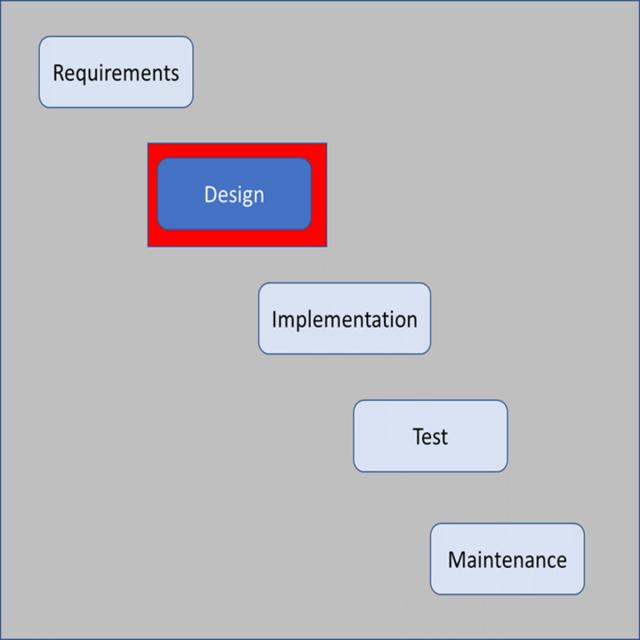
Since many software developers are compulsive coders, they have created software over the years to help them do their job. There are tools which make design and its associated tasks easier. The course introduces some basic tools and techniques to help you with design. Tools aren’t always tangible, however. The last two lessons of this course discuss questions of Ethics in software development. The purpose here is, as with tools, to equip you to better carry our your responsibilities as a designer. Students will be required to have a prior knowledge of writing and delivering software and some programming knowledge in java.

Jun 22nd 2026
5-12 Weeks
Software Design Threats and Mitigations (Coursera) Coursera
University of Colorado System

Software Design Threats and Mitigations (Coursera)

The design step in developing software has some unique characteristics. First of all, it’s the only step where drawing pictures of things is the norm. Why is that? What do pictures do that other representations cannot do? Pictures have varying levels of detail; pictures have context. Pictures…paint a picture. Why are these things important? In this course, too, we begin looking at other disciplines (building architecture is a favorite one) for lessons on design.

Jun 22nd 2026
5-12 Weeks
Getting Started with Go (Coursera) Coursera
University of California, Irvine

Getting Started with Go (Coursera)

Learn the basics of Go, an open source programming language originally developed by a team at Google and enhanced by many contributors from the open source community. This course is designed for individuals with previous programming experience using such languages as C, Python, or Java, and covers the fundamental elements of Go.

Jun 22nd 2026
4 Weeks
The Raspberry Pi Platform and Python Programming for the Raspberry Pi (Coursera) Coursera
University of California, Irvine

The Raspberry Pi Platform and Python Programming for the Raspberry Pi (Coursera)

The Raspberry Pi is a small, affordable single-board computer that you will use to design and develop fun and practical IoT devices while learning programming and computer hardware. In addition, you will learn how to set up up the Raspberry Pi environment, get a Linux operating system running, and write and execute some basic Python code on the Raspberry Pi. You will also learn how to use Python-based IDE (integrated development environments) for the Raspberry Pi and how to trace and debug Python code on the device.

Jun 22nd 2026
4 Weeks
Engineering Practices for Building Quality Software (Coursera) Coursera
University of Minnesota

Engineering Practices for Building Quality Software (Coursera)

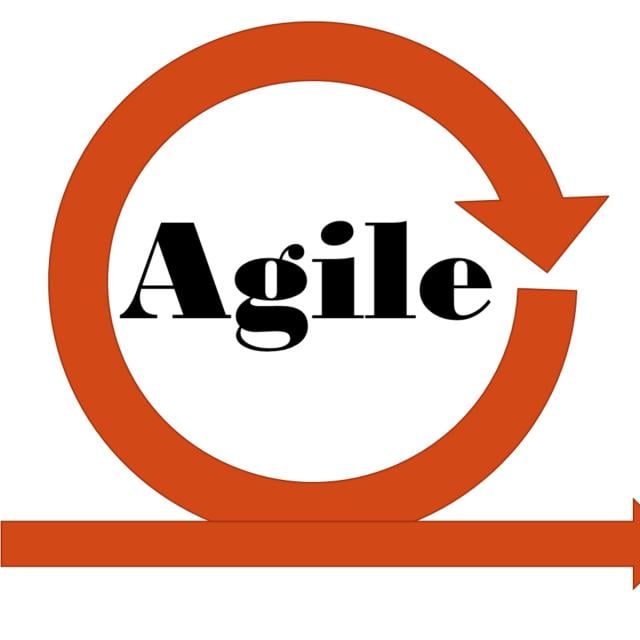
Agile embraces change which means that team should be able to effectively make changes to the system as team learns about users and market. To be good at effectively making changes to the system, teams need to have engineering rigor and excellence else embracing change becomes very painful and expensive. In this course, you will learn about engineering practices and processes that agile and traditional teams use to make sure the team is prepared for change. In additional, you will also learn about practices, techniques and processes that can help team build high quality software. You will also learn how to calculate a variety of quantitative metrics related to software quality.

Jun 22nd 2026
4 Weeks
Cortex-M Software Development Fundamentals (Coursera) Coursera
Arm

Cortex-M Software Development Fundamentals (Coursera)

This course delves into software development topics such as working with Arm C/C++ compilers and Arm debug tools to optimize your software, whether it's for performance or code size. This course also looks more closely at the Common Microcontroller Software Interface Standard and how it helps ensure that software targeted at Cortex-M devices can be written using a consistent approach.

Jun 22nd 2026
4 Weeks
Object Oriented Programming in Java (Coursera) Coursera
University of California, San Diego

Object Oriented Programming in Java (Coursera)

Welcome to our course on Object Oriented Programming in Java using data visualization. People come to this course with many different goals -- and we are really excited to work with all of you! Some of you want to be professional software developers, others want to improve your programming skills to implement that cool personal project that you’ve been thinking about, while others of you might not yet know why you’re here and are trying to figure out what this course is all about.

Jun 22nd 2026
5-12 Weeks