Avatar Psychology for Designers (Coursera)

Avatar Psychology for Designers (Coursera)

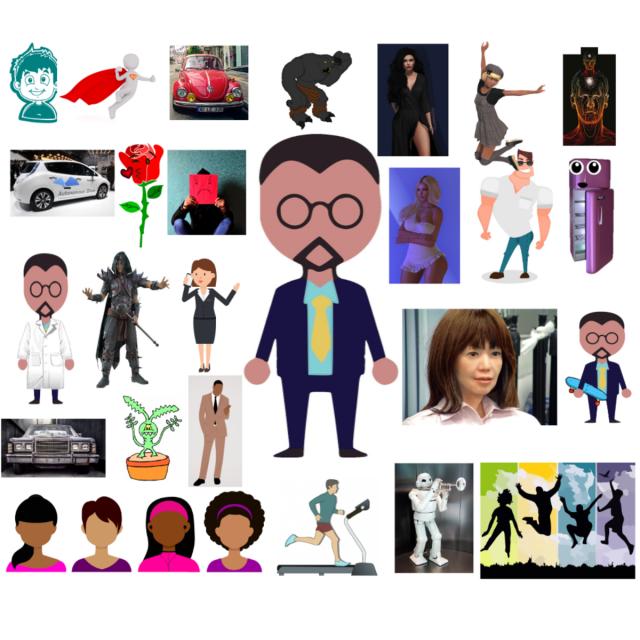
This course covers the latest and greatest psychological research on avatars and is relevant to current and future designers of any medium that includes user self-representations (e.g., video games, virtual worlds, robots, automobiles, social media, etc.). By taking this course, you will be able to define digital and non-digital avatars and identify how they are applicable in everyday life.

Class Deals by MOOC List - Click here and see Coursera's Active Discounts, Deals, and Promo Codes.

You will be able to differentiate between the types of relationships people have with their avatars and motivations for using avatars that are more or less similar to the self. The course will help you discern the importance different avatar attributes (e.g., gender, race/ethnicity, attractiveness, personality, humanity, body type, hair, controllability) and avoid common harmful stereotypes in your designs. Finally, you will gain the ability to design avatars that harness their psychological power to influence users toward specific (hopefully non-evil) outcomes, even beyond avatar use.
Dr. Ratan, the instructor of this one-of-a-kind course, is an internationally recognized scholar who actively publishes research on avatar psychology. He is also known for his jovial and engaging lecture style and believes that you learn and produce more when you are having fun. Hope you enjoy the course.

Syllabus

WEEK 1
Avastart Here!
Introduction to the course, avatars, and attributes of avatars

WEEK 2
Connections to Avatars
How do players connect with their avatars? How do players explore their identity through their avatar?

WEEK 3
Gender, Race, and Other Traits
An avatar's physical features, including their race or gender, can feed into stereotypes or unfortunate implications. How can we design avatars to avoid common pitfalls?

WEEK 4
Got any Change? Effects of Avatars
How do avatars influence their users even after the context of avatar use? How can you, as a designer, harness this power (for good, not evil)?


Go to Class
MOOC List is learner-supported. When you buy through links on our site, we may earn an affiliate commission.

Related Courses

Build a Modern Computer from First Principles: Nand to Tetris Part II (project-centered course) (Coursera) Coursera
Hebrew University of Jerusalem

Build a Modern Computer from First Principles: Nand to Tetris Part II (project-centered course) (Coursera)

In this project-centered course you will build a modern software hierarchy, designed to enable the translation and execution of object-based, high-level languages on a bare-bone computer hardware platform. In particular, you will implement a virtual machine and a compiler for a simple, Java-like programming language, and you will develop a basic operating system that closes gaps between the high-level language and the underlying hardware platform.

Sep 14th 2026
5-12 Weeks
Motion Planning for Self-Driving Cars (Coursera) Coursera
University of Toronto

Motion Planning for Self-Driving Cars (Coursera)

Welcome to Motion Planning for Self-Driving Cars, the fourth course in University of Toronto’s Self-Driving Cars Specialization. This course will introduce you to the main planning tasks in autonomous driving, including mission planning, behavior planning and local planning. By the end of this course, you will be able to find the shortest path over a graph or road network using Dijkstra's and the A* algorithm, use finite state machines to select safe behaviors to execute, and design optimal, smooth paths and velocity profiles to navigate safely around obstacles while obeying traffic laws.

Sep 7th 2026
5-12 Weeks
Introduction to Self-Driving Cars (Coursera) Coursera
University of Toronto

Introduction to Self-Driving Cars (Coursera)

Welcome to Introduction to Self-Driving Cars, the first course in University of Toronto’s Self-Driving Cars Specialization. This course will introduce you to the terminology, design considerations and safety assessment of self-driving cars. By the end of this course, you will be able to: Understand commonly used hardware used for self-driving cars; Identify the main components of the self-driving software stack; Program vehicle modelling and control; Analyze the safety frameworks and current industry practices for vehicle development

Sep 7th 2026
5-12 Weeks
Object-Oriented Design (Coursera) Coursera
University of Alberta

Object-Oriented Design (Coursera)

This course takes Java beginners to the next level by covering object-oriented analysis and design. You will discover how to create modular, flexible, and reusable software, by applying object-oriented design principles and guidelines. And, you will be able to communicate these designs in a visual notation known as Unified Modelling Language (UML). You will be challenged in the Capstone Project to apply your knowledge of object-oriented design by evolving and documenting the Java codebase for an Android application with corresponding UML documentation.

Sep 7th 2026
4 Weeks
Python Data Representations (Coursera) Coursera
Rice University

Python Data Representations (Coursera)

This course will continue the introduction to Python programming that started with Python Programming Essentials. We'll learn about different data representations, including strings, lists, and tuples, that form the core of all Python programs. We will also teach you how to access files, which will allow you to store and retrieve data within your programs. These concepts and skills will help you to manipulate data and write more complex Python programs.

Sep 7th 2026
4 Weeks
COBOL Programming with VSCode (Coursera) Coursera
IBM

COBOL Programming with VSCode (Coursera)

Professor Tak Auyeung of American River College, said it beautifully, “A programming language is not a fashion statement” it is used for a purpose. Whether it is to add new features, modify logic, create APIs to integrate it into other applications, or implement modern development practices, businesses around the world need application developers who know COBOL.

Sep 14th 2026
3 Weeks
Solving Algorithms for Discrete Optimization (Coursera) Coursera
University of Melbourne,The Chinese University of Hong Kong

Solving Algorithms for Discrete Optimization (Coursera)

Discrete Optimization aims to make good decisions when we have many possibilities to choose from. Its applications are ubiquitous throughout our society. Its applications range from solving Sudoku puzzles to arranging seating in a wedding banquet. The same technology can schedule planes and their crews, coordinate the production of steel, and organize the transportation of iron ore from the mines to the ports.

Sep 7th 2026
4 Weeks
Software Architecture (Coursera) Coursera
University of Alberta

Software Architecture (Coursera)

The way that software components — subroutines, classes, functions, etc. — are arranged, and the interactions between them, is called architecture. In this course you will study the ways these architectures are represented, both in UML and other visual tools. We will introduce the most common architectures, their qualities, and tradeoffs. We will talk about how architectures are evaluated, what makes a good architecture, and an architecture can be improved. We'll also talk about how the architecture touches on the process of software development.

Sep 7th 2026
4 Weeks
System Validation (2): Model process behaviour (Coursera) Coursera
EIT Digital

System Validation (2): Model process behaviour (Coursera)

System Validation is the field that studies the fundamentals of system communication and information processing. It is the next logical step in computer science and improving software development in general. It allows automated analysis based on behavioural models of a system to see if a system works correctly. We want to guarantee that the systems does exactly what it is supposed to do.

Sep 14th 2026
3 Weeks
Continuous Integration (Coursera) Coursera
University of California, Davis

Continuous Integration (Coursera)

In today's world, software development is highly complex and often has large teams of developers working on small pieces of a larger software project. This course will go over the basic principles of using a continuous integration system effectively to constantly improve software. We're going to describe the different stations of continuous test, build, integration and deploy processes required for DevOps practices and apply best practices for quality software management, and tooling to accomplish iterative software build & test processes.

Sep 21st 2026
4 Weeks