Data Structures and Design Patterns for Game Developers (Coursera)

Data Structures and Design Patterns for Game Developers (Coursera)

This course is the fourth course in the specialization about learning how to develop video games using the C# programming language and the Unity game engine on Windows or Mac. Why use C# and Unity instead of some other language and game engine? Well, C# is a really good language for learning how to program and then programming professionally. Also, the Unity game engine is very popular with indie game developers; Unity games were downloaded 16,000,000,000 times in 2016! Finally, C# is one of the programming languages you can use in the Unity environment.

Class Deals by MOOC List - Click here and see Coursera's Active Discounts, Deals, and Promo Codes.

This course assumes you have the prerequisite knowledge from the previous three courses in the specialization. You should make sure you have that knowledge, either by taking those previous courses or from personal experience, before tackling this course. Throughout this course you'll build on your foundational C# and Unity knowledge by developing more robust games with better object-oriented designs using various data structures and design patterns.
Data structures and design patterns are both general programming and software architecture topics that span all software, not just games. Although we'll discuss these ideas in the game domain, they also apply if you're writing a web app in ASP.NET, building a tool using WinForms, or any other software you decide to build.
Module 1: Explore a Dynamic Array data structure and learn the basics of algorithm analysis
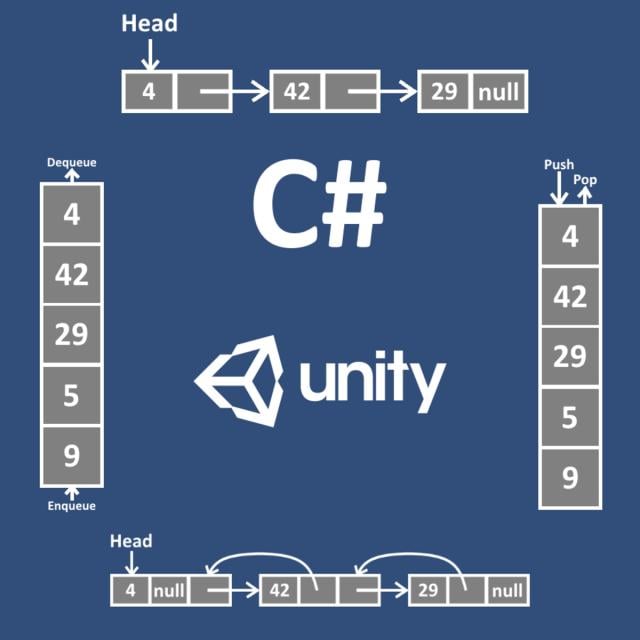
Module 2: Learn about and use the common Linked List and Graph data structures
Module 3: Learn about and use several additional data structures: Stacks, Queues, and Trees
Module 4: Learn why design patterns are so useful and discover a number of design patterns useful in game development
Module 5: Complete final peer review
Course 4 of 4 in the C# Programming for Unity Game Development Specialization.

Syllabus

WEEK 1
Dynamic Arrays and Algorithm Analysis

WEEK 2
Linked Lists and Graphs

WEEK 3
Stacks, Queues, and Trees

WEEK 4
Design Patterns

Go to Class
MOOC List is learner-supported. When you buy through links on our site, we may earn an affiliate commission.

Related Courses

Introduction to CSS3 (Coursera) Coursera
University of Michigan

Introduction to CSS3 (Coursera)

The web today is almost unrecognizable from the early days of white pages with lists of blue links. Now, sites are designed with complex layouts, unique fonts, and customized color schemes. This course will show you the basics of Cascading Style Sheets (CSS3). The emphasis will be on learning how to write CSS rules, how to test code, and how to establish good programming habits.

Jun 1st 2026
4 Weeks
Java Programming: Arrays, Lists, and Structured Data (Coursera) Coursera
Duke University

Java Programming: Arrays, Lists, and Structured Data (Coursera)

Build on the software engineering skills you learned in “Java Programming: Solving Problems with Software” by learning new data structures. Use these data structures to build more complex programs that use Java’s object-oriented features. At the end of the course you will write an encryption program and a program to break your encryption algorithm.

Jun 1st 2026
4 Weeks
Object Oriented Programming in Java (Coursera) Coursera
University of California, San Diego

Object Oriented Programming in Java (Coursera)

Welcome to our course on Object Oriented Programming in Java using data visualization. People come to this course with many different goals -- and we are really excited to work with all of you! Some of you want to be professional software developers, others want to improve your programming skills to implement that cool personal project that you’ve been thinking about, while others of you might not yet know why you’re here and are trying to figure out what this course is all about.

Jun 1st 2026
5-12 Weeks
Introduction to Web Development (Coursera) Coursera
University of California, Davis

Introduction to Web Development (Coursera)

This course is designed to start you on a path toward future studies in web development and design, no matter how little experience or technical knowledge you currently have. The web is a very big place, and if you are the typical internet user, you probably visit several websites every day, whether for business, entertainment or education. But have you ever wondered how these websites actually work? How are they built? How do browsers, computers, and mobile devices interact with the web? What skills are necessary to build a website? With almost 1 billion websites now on the internet, the answers to these questions could be your first step toward a better understanding of the internet and developing a new set of internet skills.

Jun 1st 2026
5-12 Weeks
Learn to code with AI (Coursera) Coursera
Scrimba

Learn to code with AI (Coursera)

Imagine waking up tomorrow as a web developer. What would you want to build? With AI tools like ChatGPT, you're already a developer, regardless of your experience, if you know how to work with them. So in this course, you'll build functional, interactive front-end projects while learning how to write effective prompts and debug and refine your code with the help of AI.

Jun 3rd 2026
2 Weeks
Principles of fMRI 2 (Coursera) Coursera
Johns Hopkins University,University of Colorado Boulder

Principles of fMRI 2 (Coursera)

Functional Magnetic Resonance Imaging (fMRI) is the most widely used technique for investigating the living, functioning human brain as people perform tasks and experience mental states. It is a convergence point for multidisciplinary work from many disciplines. Psychologists, statisticians, physicists, computer scientists, neuroscientists, medical researchers, behavioral scientists, engineers, public health researchers, biologists, and others are coming together to advance our understanding of the human mind and brain. This course covers the analysis of Functional Magnetic Resonance Imaging (fMRI) data.

Jun 1st 2026
4 Weeks
Algorithms, Part I (Coursera) Coursera
Princeton University

Algorithms, Part I (Coursera)

This course covers the essential information that every serious programmer needs to know about algorithms and data structures, with emphasis on applications and scientific performance analysis of Java implementations. Part I covers elementary data structures, sorting, and searching algorithms. Part II focuses on graph- and string-processing algorithms.

Jun 1st 2026
5-12 Weeks
Development of Real-Time Systems (Coursera) Coursera
EIT Digital

Development of Real-Time Systems (Coursera)

This course is intended for the Master's student and computer engineer who likes practical programming and problem solving! After completing this course, you will have the knowledge to plan and set-up a real-time system both on paper and in practice. The course centers around the problem of achieving timing correctness in embedded systems, which means to guarantee that the system reacts within the real-time requirements.

Jun 1st 2026
5-12 Weeks
Mastering the Software Engineering Interview (Coursera) Coursera
University of California, San Diego

Mastering the Software Engineering Interview (Coursera)

You’ve hit a major milestone as a computer scientist and are becoming a capable programmer. You now know how to solve problems, write algorithms, and analyze solutions; and you have a wealth of tools (like data structures) at your disposal. You may now be ready for an internship or (possibly) an entry-level software engineering job. But can you land the internship/job? It depends in part on how well you can solve new technical problems and communicate during interviews. How can you get better at this? Practice!

Jun 1st 2026
4 Weeks
Advanced Data Structures in Java (Coursera) Coursera
University of California, San Diego

Advanced Data Structures in Java (Coursera)

How does Google Maps plan the best route for getting around town given current traffic conditions? How does an internet router forward packets of network traffic to minimize delay? How does an aid group allocate resources to its affiliated local partners? To solve such problems, we first represent the key pieces of data in a complex data structure. In this course, you’ll learn about data structures, like graphs, that are fundamental for working with structured real world data.

Jun 1st 2026
5-12 Weeks
Videojuegos: ¿de qué hablamos? (Coursera) Coursera
Universitat Autònoma de Barcelona

Videojuegos: ¿de qué hablamos? (Coursera)

Probablemente, todos hemos jugado a algún videojuego, pero ¿qué hay detrás de él? Podemos decir que - con independencia del videojuego - hay un árduo trabajo multidisciplinar que incluye desde aspectos de diseño hasta la programación como tal del videojuego. Este curso pretende ser un curso introductorio que muestre qué aspectos hay que considerar en el videojuego, y que permita con posterioridad abordar individualmente los temas que se consideran nucleares: diseño, arte, motor del videojuego y 'game play'.

Jun 1st 2026
5-12 Weeks