Roman Architecture (saylor.org)

Offered by Saylor.org,
Roman Architecture (saylor.org)

In this course, we will study the architecture of Ancient Rome, beginning with its origins in the eighth century BC, and continuing through the fourth century AD with the move of the Roman capital to Constantinople.

The course of lectures and readings outlined below will familiarize you with the major building methods and styles used in Roman architecture. In addition, interior decoration (including the very important topic of Roman wall painting) will be addressed. By the end of the course, you will be able to identify some of the most important works of Roman architecture and discuss the historical and cultural conditions that informed their production.
An important theme throughout the first half of the course is the relationship between Ancient Rome and Greek and Etruscan cultures, which were highly influential in the formation of a distinctive Roman architecture. Understanding the role that Roman architecture played in the eastern and western Roman provinces is also significant to this course, as it draws Roman architecture into a broader geographical and cultural context. Roman art and culture were tremendously important for Western culture after the fall of the Roman Empire; by completing this course, you will be well-prepared for study of later Western architecture.

Requirements: have completed Art Appreciation and Techniques, Introduction to Western Art History—Pre-historic to High Gothic, Introduction to Western Art History—Proto-Renaissance to Contemporary Art, and four 200-level ARTH courses.

Go to Class
MOOC List is learner-supported. When you buy through links on our site, we may earn an affiliate commission.

Related Courses

Art & Ideas: Teaching with Themes (Coursera) Coursera
The Museum of Modern Art

Art & Ideas: Teaching with Themes (Coursera)

This course is designed to help build critical skills that support theme-based teaching practices and build confidence in incorporating modern and contemporary art into interdisciplinary lesson plans. By addressing themes and questions that arise in relation to modern and contemporary art, the course will help you to think creatively about links to your curriculum and the ways that you can tap into students’ knowledge and life experience.

Jun 15th 2026
5-12 Weeks
Photography Techniques: Light, Content, and Sharing (Coursera) Coursera
Michigan State University

Photography Techniques: Light, Content, and Sharing (Coursera)

Welcome to Course FOUR! In Modules 1-4 you will cover the final elements of the Specialization necessary to round out this introduction to the fundamentals of Photography, and prepare you for creating your own exciting project in the Capstone! You have come a long way since the beginning of this journey from Smartphone Basics to DSLR and Beyond. Just think of all the information you have absorbed and put to use in your assignments and quizzes, and the confidence you have gained that you CAN control the camera to make pictures you are proud to share.

Jun 15th 2026
4 Weeks
Archaeology of Portus: Exploring the Lost Harbour of Ancient Rome (FutureLearn) FutureLearn
University of Southampton

Archaeology of Portus: Exploring the Lost Harbour of Ancient Rome (FutureLearn)

Learn how ancient artefacts, written evidence, excavation and digital technologies are transforming understanding of this harbour. The Roman harbour city of Portus lay at the heart of an empire that extended from Scotland to Iraq. Established by Claudius and enlarged by the emperor Trajan with spoils of the Dacian wars, the port was the conduit for everything the city of Rome required from its Mediterranean provinces: the food and, particularly grain, that fed the largest urban population of the ancient world, as well as luxuries of all kinds, building materials, people and wild animals for the arena.

No sessions available
5-12 Weeks
Christianisme et philosophie dans l’Antiquité (edX) EdX
Sorbonne University

Christianisme et philosophie dans l’Antiquité (edX)

Présentation des relations entre le christianisme et la philosophie dans l’Antiquité grecque et romaine. Le christianisme s’oppose-t-il à la raison philosophique ? Ce questionnement d’ordre général peut trouver une première réponse dans l’étude historique de la confrontation entre christianisme et philosophie dans l’Antiquité. Cette confrontation a joué un rôle très important dans la constitution de la doctrine chrétienne.

No sessions available
5-12 Weeks
A Global History of Architecture (edX) EdX
MIT,MITx

A Global History of Architecture (edX)

Learn about humanity’s rich architectural history on this journey around the globe – from 100,000 BCE to ca. 1,600 CE. How do we understand architecture? One way of answering this question is by looking through the lens of history, beginning with First Societies and extending to the 16th century. This course in architectural history is not intended as a linear narrative, but rather aims to provide a more global view, by focusing on different architectural "moments."

Oct 18th 2023
5-12 Weeks
Rome: a Virtual Tour of the Ancient City (FutureLearn) FutureLearn
University of Reading

Rome: a Virtual Tour of the Ancient City (FutureLearn)

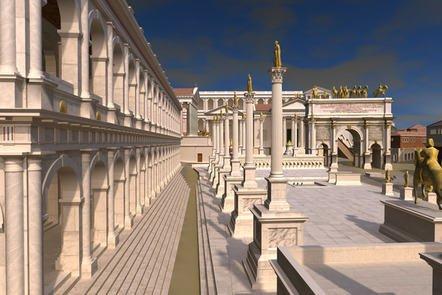
Explore the architecture and history of Rome, walking around a 3D digital model of the ancient city, with this free online course. Explore ancient Rome through a unique, historically accurate 3D model. Take a guided tour around ancient Rome with expert Professor Matthew Nicholls, using his detailed and award-winning 3D digital model of the city.

Mar 27th 2023
5-12 Weeks