Muslims in Britain: Changes and Challenges (FutureLearn)

Offered by Cardiff University,
Muslims in Britain: Changes and Challenges (FutureLearn)

Develop your understanding of Muslims and their faith through an exploration of communities in Britain. Islam is the second largest religion in the world today and dominates much of the current geopolitical discourse. People are increasingly bombarded by dramatic and at times disturbing headlines. Yet general knowledge of Muslims and their faith can be poor. There is consequently a need for a balanced and well-informed understanding of the current debates around this internationally significant topic.

Class Deals by MOOC List - Click here and see FutureLearn's Active Discounts, Deals, and Promo Codes.

This course uses Britain as a case study to shed light on wider issues relating to the growth of Islamic communities across the culturally Christian and increasingly secularised Western World. This MOOC reflects the work of the Islam-UK Centre at Cardiff University, and the research that we have conducted over the last decade. This means that we focus in this course upon the everyday lives of Muslims in Britain, as opposed to the activities of the very small minority of Muslims who engage in terrorist activities. Later in the course, we will help you to access material on this topic if you are interested.

Topics include:

  • Islamic Practice An outline of Islamic practices and beliefs plus an introduction to the different viewpoints within Islam.
  • History of Islam in Britain An exploration of the longstanding associations between Islam and Britain, including Islamic influences on British society and the well-established connections between Britain and the countries from which many British Muslims originally hailed.
  • Settlement Patterns The origins and makeup of today’s British Muslim communities.
  • Cultural Diversity Confronting the ‘myth’ of a homogenous Muslim community through an exploration of the various religious and cultural influences that characterise and inform Muslim communities in Britain today.
  • Contemporary Debates An examination of how the above topics feed into the contemporary debates and what the future might hold.

Given current debates about multiculturalism, integration, and the spectre of fundamentalism, this course will appeal to a wide audience not only in Britain but far beyond.
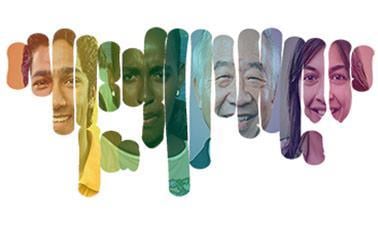
Go to Class
MOOC List is learner-supported. When you buy through links on our site, we may earn an affiliate commission.

Related Courses

Science & Religion 101 (Coursera) Coursera
University of Alberta

Science & Religion 101 (Coursera)

This course examines the nature of both science and religion and attempts to explore the possible relationships between them. The primary purpose is to dispel the popular myth that science and religion are entrenched in a never-ending conflict. As a result, this course argues that if the limits of both science and religion are respected, then their relationship can be complementary.

Aug 3rd 2026
5-12 Weeks
Religious Transformation in Early China: the Period of Division (Coursera) Coursera
The Chinese University of Hong Kong

Religious Transformation in Early China: the Period of Division (Coursera)

This sequence of four courses will propose a multi-disciplinary approach to the study of Chinese cultural history conceived of as a succession of modes of rationality (philosophical, bureaucratic, and economic). The focus will be on the moments of paradigm shift from one mode of rationality to another. For each of these moments, cultural facts and artifacts—thought, literature, ritual—will be examined in relationship to changing social, political, and economic systems.

Aug 10th 2026
5-12 Weeks
Governing Religion: European Challenges and Asian Approaches (FutureLearn) FutureLearn
European University Institute - EUI

Governing Religion: European Challenges and Asian Approaches (FutureLearn)

Explore the relationship between religions and governments and learn how religions have come to be governed across the world. Explore ways of governing religion and religious diversity today. On this course you will consider different models of state-religion relations, reviewing examples from both European and non-European countries. You will learn how different models have emerged out of historical processes of nation formation (including post-colonial independence, redrawing of state boundaries after a major political transition or through an evolutionary process of institutional and value change).

Feb 6th 2023
3 Weeks
Religions From The Inside: Improving Interreligious Dialogue (FutureLearn) FutureLearn
Università della Svizzera italiana

Religions From The Inside: Improving Interreligious Dialogue (FutureLearn)

Explore the value of cooperation between faiths and learn how the five main world religions’ core beliefs relate to each other. Learn how to encourage and benefit from respectful interfaith dialogue. This short course, led by the Faculty of Theology of Lugano in collaboration with USI, will develop your knowledge of what interfaith dialogue means from a philosophical and epistemological point of view, and teach how to enjoy productive interfaith dialogue.

Oct 4th 2021
5-12 Weeks
Religious Literacy: Traditions and Scriptures (edX) EdX
HarvardX,Harvard University

Religious Literacy: Traditions and Scriptures (edX)

Learn how to better understand the rich and complex ways that religions function in historic and contemporary contexts. The study of religion is the study of a rich and fascinating dimension of human experience that includes but goes well beyond beliefs and ritual practices. In this religion course, learners explore case studies about how religions are internally diverse, how they evolve and change through time, and how religions are embedded in all dimensions of human experience.

Self Paced
Self-Paced
Découvrir l'anthropologie (edX) EdX
LouvainX,Université Catholique de Louvain - UCL

Découvrir l'anthropologie (edX)

Expérimentez un autre regard sur les sociétés humaines avec des chercheurs en anthropologie prospective. Comment les humains s’organisent-ils en sociétés ? Qu’appelle-t-on « familles » et comment se constituent-elles ? Quel regard et quels types d’analyse l’anthropologie propose-t-elle sur les systèmes de parenté, symboliques, politiques, religieux ?

Self Paced
Self-Paced
Intellectual Humility: Science (Coursera) Coursera
University of Edinburgh

Intellectual Humility: Science (Coursera)

It’s clear that the world needs more intellectual humility. But how do we develop this virtue? And why do so many people still end up so arrogant? Do our own biases hold us back from becoming as intellectually humble as we could be—and are there some biases that actually make us more likely to be humble? Which cognitive dispositions and personality traits give people an edge at being more intellectually humble - and are they stable from birth, learned habits, or something in between? And what can contemporary research on the emotions tell us about encouraging intellectual humility in ourselves and others?

Aug 17th 2026
4 Weeks
The Worldview of Thomas Berry: The Flourishing of the Earth Community (Coursera) Coursera
Yale University

The Worldview of Thomas Berry: The Flourishing of the Earth Community (Coursera)

Thomas Berry (1914-2009) was a historian of world religions and an early voice awakening moral sensibilities to the environmental crisis. He is known for articulating a “new story” of the universe that explores the implications of the evolutionary sciences and cultural traditions for creating a flourishing future. This course investigates Berry’s life and thought in relation to the Journey of the Universe project.

Aug 17th 2026
5-12 Weeks
Understanding Muslim Mental Health (FutureLearn) FutureLearn
Cardiff University

Understanding Muslim Mental Health (FutureLearn)

Explore the distinctive mental health experiences of Muslims and how mental health support can be improved in Muslim communities. Investigate how faith affects access to mental health services. Research shows that Muslims in Britain are under-referred to mainstream services for mental health problems. When they are accessed, their rates of improvement are lower. On this four-week course you’ll explore Muslim experiences of mental health and how to provide support for Muslim communities.

May 16th 2022
4 Weeks
Philosophy, Science and Religion: Philosophy and Religion (Coursera) Coursera
University of Edinburgh

Philosophy, Science and Religion: Philosophy and Religion (Coursera)

Philosophy, Science and Religion mark three of the most fundamental modes of thinking about the world and our place in it. Are these modes incompatible? Put another way: is the intellectually responsible thing to do to ‘pick sides’ and identify with one of these approaches at the exclusion of others? Or, are they complementary or mutually supportive? As is typical of questions of such magnitude, the devil is in the details. For example, it is important to work out what is really distinctive about each of these ways of inquiring about the world. In order to gain some clarity here, we’ll be investigating what some of the current leading thinkers in philosophy, science and religion are actually doing.

Aug 17th 2026
5-12 Weeks