Religion and Conflict (FutureLearn)

Religion and Conflict (FutureLearn)

Understand and analyze the role of religion in conflicts and peacebuilding in present-day societies, with this free online course. Many conflicts in the world today are framed in terms of religion, but there is much discussion and confusion concerning the precise role religion plays in these conflicts. According to some, conflict and violence are inherent to religion. Others claim that religion is only the guise under which social, economic or political conflicts are fought out. The first step to solving religiously framed conflicts is understanding the role of religion in them, and that is what this free online course is about.

Class Deals by MOOC List - Click here and see FutureLearn's Active Discounts, Deals, and Promo Codes.

Our point of departure is that religion means different things in different circumstances and to different (groups of) people. Therefore, the aim of this course is to show how a religiously framed conflict can be studied in the wider cultural and political contexts of these conflicts. In the course material, we will refer to various religious, cultural and political settings. In addition, we invite you to engage in some modest research activities in your own environment and compare your own findings with those of fellow students.
In the first two weeks, we will discuss how the concepts of religion, conflict and violence have been understood historically and cross-culturally, and address the question of how they are linked. This will enable you to move beyond thinking about religion as either an unavoidable cause for conflicts or merely an excuse to mask more mundane conflicts of interest.
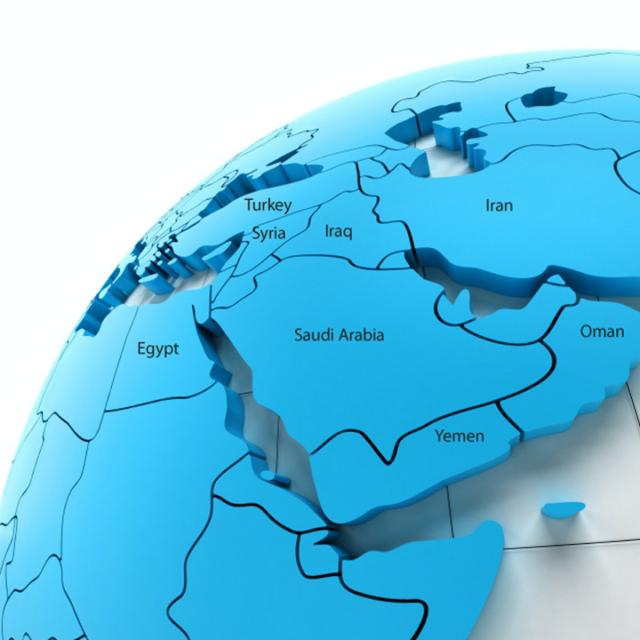
The third week focuses on the question of why religious conflicts have appeared to increase in the late 20th and early 21st centuries. During the fourth week, we will analyze case studies like conflicts over abortion policies in the United States and the rise of IS in the Middle East. In week five, we will shift our attention to the role of religion in peace building and reconciliation.
The course concludes with an assignment in which you will apply your newly acquired analytical tools to write a briefing paper on the role of religion in a specific conflict situation of your own choice.
After completing this course, you will have acquired the knowledge and analytical skills to develop critical insights into one of the most urgent issues of today’s world: the various roles of religion in conflicts.

Syllabus

Week 1: Definitions and history
Week 2: The link between religion and conflict
Week 3: Bigger role for religion in conflict
Week 4: Case studies
Week 5: Looking forward: peacebuilding
Week 6: Give it your best

What will you achieve?
By the end of the course, you‘ll be able to...

  • Describe the historical development of definitions of religion
  • Identify the various factors that contribute to religiously framed conflicts
  • Assess present-day religiously framed conflicts in their historical, socio-cultural and political contexts
  • Identify core texts in the study of religion and conflict
  • Critical reading skills for analysing complex scholarly texts
  • Explain complex ideas to a general audience
Go to Class
MOOC List is learner-supported. When you buy through links on our site, we may earn an affiliate commission.

Related Courses

Conflict Resolution Skills (Coursera) Coursera
University of California, Irvine

Conflict Resolution Skills (Coursera)

Resolving conflict in a positive manner is a skill that can be developed and practiced. Being heard can be one of the most important goals of someone engaged in conflict. Knowing how to listen and deploy appropriate communication tactics is determinative of whether a conflict will have a positive or negative resolution. Examine listening skills, appropriate and strategic verbal and non-verbal communication skills, and how to assemble a conflict management plan likely to yield positive resolutions.

Jun 22nd 2026
3 Weeks
William Shakespeare's Twelfth Night: Comedy, Conflict, and Community (Coursera) Coursera
University of Colorado Boulder

William Shakespeare's Twelfth Night: Comedy, Conflict, and Community (Coursera)

This course introduces and explores William Shakespeare’s classic comedy, Twelfth Night. Interviews with actors who appeared in the Colorado Shakespeare Festival’s 2019 production of Twelfth Night, as well as lectures by scholars and theater professionals who work and teach at the University of Colorado Boulder, offer students insight into Shakespeare’s artistic vision and its applications.

Jun 22nd 2026
5-12 Weeks
Christian-Muslim Relations (FutureLearn) FutureLearn
University of Edinburgh

Christian-Muslim Relations (FutureLearn)

Uncover important themes in the history of Christian-Muslim relations and understand the politics that continue to shape it. Gain an insight into the academic study of Christian-Muslim Relations. On this innovative four-week course, you’ll be introduced to the academic study of Christian-Muslim Relations with the School of Divinity at the University of Edinburgh.

Oct 3rd 2022
4 Weeks
Muslims in Britain: Changes and Challenges (FutureLearn) FutureLearn
Cardiff University

Muslims in Britain: Changes and Challenges (FutureLearn)

Develop your understanding of Muslims and their faith through an exploration of communities in Britain. Islam is the second largest religion in the world today and dominates much of the current geopolitical discourse. People are increasingly bombarded by dramatic and at times disturbing headlines. Yet general knowledge of Muslims and their faith can be poor. There is consequently a need for a balanced and well-informed understanding of the current debates around this internationally significant topic.

No sessions available
4 Weeks
Firearm Purchaser Licensing Teach-Out: The Background Check Policy Not Enough People Are Talking About (Coursera) Coursera
Johns Hopkins University

Firearm Purchaser Licensing Teach-Out: The Background Check Policy Not Enough People Are Talking About (Coursera)

The best available evidence shows that comprehensive background checks by themselves are insufficient at reducing gun violence, but strong bodies of research demonstrate that states with comprehensive background checks coupled with firearm purchaser licensing, or permit-to-purchase laws, have significantly fewer firearm-involved homicides, fatal mass shootings, and suicides. Additionally, public opinion polling research consistently finds that 75% or more of U.S. adults support firearm purchaser licensing laws and 60% or more of gun owners support these policies.

Jun 22nd 2026
4 Weeks
Philosophy, Science and Religion: Philosophy and Religion (Coursera) Coursera
University of Edinburgh

Philosophy, Science and Religion: Philosophy and Religion (Coursera)

Philosophy, Science and Religion mark three of the most fundamental modes of thinking about the world and our place in it. Are these modes incompatible? Put another way: is the intellectually responsible thing to do to ‘pick sides’ and identify with one of these approaches at the exclusion of others? Or, are they complementary or mutually supportive? As is typical of questions of such magnitude, the devil is in the details. For example, it is important to work out what is really distinctive about each of these ways of inquiring about the world. In order to gain some clarity here, we’ll be investigating what some of the current leading thinkers in philosophy, science and religion are actually doing.

Jun 22nd 2026
5-12 Weeks
Philosophy, Science and Religion: Science and Philosophy (Coursera) Coursera
University of Edinburgh

Philosophy, Science and Religion: Science and Philosophy (Coursera)

Philosophy, Science and Religion mark three of the most fundamental modes of thinking about the world and our place in it. Are these modes incompatible? Put another way: is the intellectually responsible thing to do to ‘pick sides’ and identify with one of these approaches at the exclusion of others? Or, are they complementary or mutually supportive? As is typical of questions of such magnitude, the devil is in the details. For example, it is important to work out what is really distinctive about each of these ways of inquiring about the world. In order to gain some clarity here, we’ll be investigating what some of the current leading thinkers in philosophy, science and religion are actually doing.

Jun 22nd 2026
5-12 Weeks
Drugs, Peace, and Development: Rethinking Policy (FutureLearn) FutureLearn
SOAS University of London

Drugs, Peace, and Development: Rethinking Policy (FutureLearn)

Gain insights into the relationships between illicit drug economies, peacebuilding, and development in borderland regions. Explore new ways to tackle drugs, development, and peacebuilding challenges. There is growing awareness that the ‘war on drugs’ has failed and that there is a need for reformed drug policies. But what does this mean in practice? On this five-week course from SOAS University of London, you’ll delve into the latest debates in global drug policy and the current efforts to integrate drugs, development, and peacebuilding policies.

Jun 6th 2022
5-12 Weeks
New Zealand History, Culture and Conflict: A Museum Perspective (FutureLearn) FutureLearn
Museum of New Zealand Te Papa Tongarewa

New Zealand History, Culture and Conflict: A Museum Perspective (FutureLearn)

Discover the social history of Aotearoa New Zealand, learning how the country’s bicultural national consciousness was formed. Identify the factors that have contributed to New Zealand’s cultural identity. New Zealand’s social history is built on a foundation of exploration and colonial conflict. On this three-week course, you’ll access artefacts, treasures, and exhibitions within Te Papa Tongarewa’s collections to discover how New Zealand culture has evolved over time, identifying key historical moments that have impacted the formation of a national identity.

Nov 27th 2023
3 Weeks
Maqasid Al-Shariah and Sustainable Development (FutureLearn) FutureLearn
University of Malaya

Maqasid Al-Shariah and Sustainable Development (FutureLearn)

Discover how religion, particularly Islamic teachings, and scientific knowledge can work together towards sustainable solutions. Use a blend of religion and science to explore sustainability. Sustainable Development is one of the most comprehensive worldwide concepts today in the quest to safeguard the environment. This principle of sustainability has been discovered to be intrinsically linked to the concept of Shariah, which emphasises the importance of continuity not just in this world, but also in the afterlife.

Mar 21st 2022
3 Weeks
Terrorism and Counterterrorism: Comparing Theory and Practice (FutureLearn) FutureLearn
Leiden University

Terrorism and Counterterrorism: Comparing Theory and Practice (FutureLearn)

Delve into the research behind terrorism as you unpack the assumptions and impacts of both terrorism and counterterrorism. Explore terrorism and counterterrorism studies. Terrorism has arguably been one of the defining factors of our age. It frequently makes headlines, threatening or attacking governments, private businesses, and ordinary citizens. In many parts of the world, it has been one of the most important threats to peace, security, and stability – but what does this mean exactly? On this six-week course from Leiden University, you’ll explore the essence of terrorism and discover why it is so difficult to define.

Apr 25th 2022
5-12 Weeks
Why Religion Matters: Religious Literacy, Culture and Diversity (FutureLearn) FutureLearn
The Open University

Why Religion Matters: Religious Literacy, Culture and Diversity (FutureLearn)

Discover why religion is important for understanding and engaging with global challenges. Consider the ways religion affects personal and political decision-making. Religion not only influences personal behaviours and ethics, but it’s also relevant to international conflicts and domestic policy decisions. On this course, you will gain a broader understanding of why religion matters in society and in different cultures.

Available Now
4 Weeks