Race and Cultural Diversity in American Life and History (Coursera)

Race and Cultural Diversity in American Life and History (Coursera)

Learners will deepen their understanding and appreciation of ways in which race, ethnicity and cultural diversity have shaped American institutions, ideology, law, and social relationships from the colonial era to the present. Race and ethnicity are ideological and cultural categories that include all groups and individuals. Hence, this course is designed in significant part to take a broad look at the ideology of race and cultural diversity in America’s past and present.

Class Deals by MOOC List - Click here and see Coursera's Active Discounts, Deals, and Promo Codes.

The primary focus is on the historical and social relationships among European Americans, Native Americans, African Americans, Latino/as, and Asian/Pacific Americans. Issues of race and ethnicity are examined across different ethno-cultural traditions in order to interweave diverse experiences into a larger synthesis of the meaning of race and ethnicity in American life. In this course, we conceive of “race” and “diversity” as references to the entire American population, even as we recognize that different groups have unique historical experiences resulting in distinctive and even fundamental cultural differences. We treat race and ethnicity as dynamic, complex ideological and cultural processes that shape all social institutions, belief systems, inter-group relationships, and individual experiences.

Syllabus

WEEK 1
Introduction to Concepts of Race and Identity
This module introduces the concept of "race," and begins to address the use of the concept in the United States. It also explores both fears and opportunities raised by the realities of racial and ethnic diversity.

WEEK 2
Historical Legacies of Race in the United States
This module begins to address in greater detail a number of specific issues in the context of the United States: the legacy of slavery in the case of African Americans, the position of native Americans post colonization, and the particular circumstances of Asian American immigrants. These examples raise further complexity in the understanding of race and ethnicity.

WEEK 3
Legacies of Race and Racism Today
The course now turns in this third module to the complex lived realities of race and ethnic diversity in contemporary American society. Among the issued explored include geographical segregation and racial bias.

WEEK 4
Race and Ethnicity in American Social Institutions
The course concludes in this fourth module with an investigation of institutional racism, systemic social inequalities, and patterns of discrimination.

Go to Class
MOOC List is learner-supported. When you buy through links on our site, we may earn an affiliate commission.

Related Courses

Queering Identities: LGBTQ+ Sexuality and Gender Identity (Coursera) Coursera
University of Colorado System

Queering Identities: LGBTQ+ Sexuality and Gender Identity (Coursera)

In this course, you will explore the history of LGBTQ identities, experiences, and activism. We’ll study major events in global LGBTQ history, investigate local histories of queer and transgender people and communities, and consider how LGBTQ histories have helped shape broader conversations about civil rights, equality, and justice.

Aug 24th 2026
5-12 Weeks
Modern Art & Ideas (Coursera) Coursera
The Museum of Modern Art

Modern Art & Ideas (Coursera)

Welcome to Modern Art & Ideas! This course is designed for anyone interested in learning more about modern and contemporary art. Over the next five weeks, you will look at art through a variety of themes: Places & Spaces, Art & Identity, Transforming Everyday Objects, and Art & Society. Each week kicks off with a video that connects works of art from The Museum of Modern Art’s collection to the theme. You will hear audio interviews with artists, designers, and curators and learn more about selected works in the additional readings and resources.

Aug 24th 2026
5-12 Weeks
Patrick Henry: Forgotten Founder (Coursera) Coursera
University of Virginia,UVA Lifetime Learning, Patrick Henry Memorial Foundation

Patrick Henry: Forgotten Founder (Coursera)

“Give me liberty, or give me death:” Remembering Patrick Henry, the Forgotten Founder. Patrick Henry was enormously popular during the American Revolution. Even Thomas Jefferson, who over time developed a deep loathing of Henry (some would say jealousy), had to admit that “it is not now easy to say what we should have done without Patrick Henry.” Edmund Randolph, a patriot leader in his own right, explained that “It was Patrick Henry … awakening the genius of his country, and binding a band of patriots together to hurl defiance at the tyranny of so formidable a nation as Great Britain.”

Aug 24th 2026
5-12 Weeks
American Politics, Society, and History (Coursera) Coursera
O.P. Jindal Global University

American Politics, Society, and History (Coursera)

Welcome to the American Politics, Society, and History course! This course seeks to provide learners with a comprehensive understanding of American history, politics, society, and culture. The United States has been a beacon in the international community as a constitutional liberal democracy. Through this course, you will gain insight into the historical evolution of the US from a constitutional perspective and provide an overview of the government in the US.

Aug 24th 2026
5-12 Weeks
Comprender las dimensiones interculturales en la cotidianidad (Coursera) Coursera
Universidad de los Andes

Comprender las dimensiones interculturales en la cotidianidad (Coursera)

Este MOOC es el resultado de una co-construcción e investigación de profesoras de la Universidad Sorbonne-Nouvelle Paris 3 y la Universidad de los Andes (Colombia). Su objetivo principal es brindar herramientas para desarrollar dimensiones interculturales en la vida cotidianda. El curso está dirigido a estudiantes y profesionales de diferentes campos más allá de la enseñanza de idiomas (humanidades y ciencias sociales, educación, clínica intercultural, estudios de arte y gestión) que tienen que enfrentar situaciones de la vida cotidiana y de las relaciones con los demás donde las herramientas de reflexión son necesarias para tener un enfoque intercultural.

Sep 7th 2026
4 Weeks
Anti-Racism I (Coursera) Coursera
University of Colorado Boulder

Anti-Racism I (Coursera)

Anti-Racism I is an introduction to the topic of race and racism in the United States. The primary audience for this course is anyone who is interested in learning about race/racism in the US who has never taken a course in critical race or ethnic studies or affiliated fields (indeed, who may not know what the fields of critical race studies or ethnic studies are), who has never read a book about race/racism, or attended any race equity or diversity trainings on the topic of race/racism.

Aug 17th 2026
3 Weeks
The Making of US Foreign Policy (Coursera) Coursera
O.P. Jindal Global University

The Making of US Foreign Policy (Coursera)

Welcome to The Making of US Foreign Policy course! This course seeks to provide you with a comprehensive understanding of the United States’ Foreign Policy (USFP). Through this course, you will look at the evolution of USFP from its founding to the present. You will analyze the role of the institutions which play a role in defining USFP. You will also explore how the USFP relies on trade and economic interdependence to define global economic relations.

Aug 24th 2026
5-12 Weeks
Structural Racism: Causes of Health Inequities in the U.S. (Coursera) Coursera
University of Michigan

Structural Racism: Causes of Health Inequities in the U.S. (Coursera)

Racial health disparities - differences in health outcomes based on race - are rampant in the U.S., and many incorrectly assume these are due to differences in behavior or genetics. To understand these differences, and ultimately identify solutions to eliminate these disparities, we need to dig deeper and look at the root causes. We need to examine how our socio-political institutions have racial inequities embedded within their policies and practices. We need to re-examine history to learn how and why race was created and how it was used to advance the interests of whites. We need to examine how state violence is selectively used to reinforce racial inequities.

Aug 31st 2026
3 Weeks
Corporate Sustainability. Understanding and Seizing the Strategic Opportunity (Coursera) Coursera
Università Bocconi

Corporate Sustainability. Understanding and Seizing the Strategic Opportunity (Coursera)

In this course, thought leaders in a wide variety of management and economics fields illustrate how to assess and seize the opportunities offered by these global emergencies. They will offer new ways to understand the purpose and the logic of success of the business enterprise in this new context, providing ideas and examples on how to manage the transition process to realize the value creation potential from corporate sustainability for all involved stakeholders.

Sep 7th 2026
5-12 Weeks
Race, Gender, and Culture (Coursera) Coursera
University of Colorado Boulder

Race, Gender, and Culture (Coursera)

This course will explore baseball through the lenses of race, gender, and culture. For good and for ill, baseball has been at the forefront of how the United States has dealt with these issues. Does baseball leading the way with desegregation negate that the sport was at the forefront of segregation with its Gentlemen’s Agreements? What is the historical legacy of baseball providing opportunities for women during wartime, in a way that other North American professional sports leagues did not? These are some of the ideas that this course will explore as it shows baseball’s virtues and flaws.

Aug 24th 2026
4 Weeks
Global Health Diplomacy (Coursera) Coursera
The State University of New York

Global Health Diplomacy (Coursera)

The field of global health is often thought of purely in medical or public health terms, but there are important geopolitical and policy dimensions of global health that underlie programmatic responses to global health challenges. By completing this course, learners will be able to explain the specific institutions and initiatives that are fundamental to current global health diplomacy activities and functions, and how these influence global health outcomes. Learners will further be able to summarize real-world examples where global health diplomacy either helped or limited global health outcomes, and explain the reasons for those outcomes.

Aug 24th 2026
5-12 Weeks
Black Lives Matter (Coursera) Coursera
Johns Hopkins University

Black Lives Matter (Coursera)

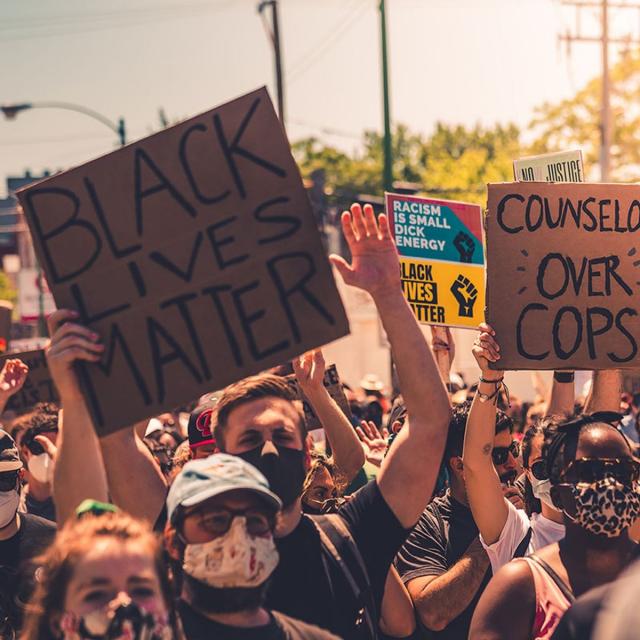
The #BlackLivesMatter movement is the most significant political movement in African American life in the United States in the last fifty years. BLM leaders denounced anti-black racism, white supremacy, and police brutality and reshaped how we think about gender, sexuality, social justice, economic injustice, and crime.

Aug 31st 2026
4 Weeks