Protect the Protest: Using Our Rights to Freedom of Assembly and Expression (FutureLearn)

Offered by Amnesty International,
Protect the Protest: Using Our Rights to Freedom of Assembly and Expression (FutureLearn)

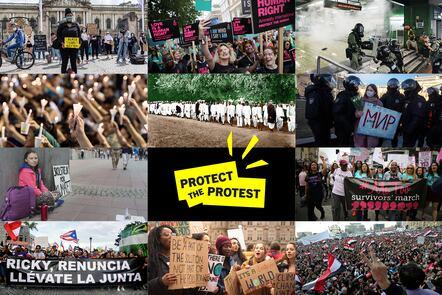
Investigate the concept of protesting as a tool for social change, as well as how the freedom to protest is under threat. Examine the power of protest and its part in protecting human rights. Protesting is a powerful tool for promoting and defending human rights, used throughout history to change mindsets and agendas. On this three-week course from Amnesty International, you’ll investigate the power of protest as a force for change and explore current challenges to the right to protest.

Class Deals by MOOC List - Click here and see FutureLearn's Active Discounts, Deals, and Promo Codes.

Explore our fundamental right to protest
Protest has a long history across the UK. Things we take for granted today, such as an eight-hour work day or a woman’s right to vote, were the result of protesters standing up for their beliefs and speaking out.
On this course, you’ll learn what is meant by our right to protest and examine protest within the UK and around the world.
With this overview, you’ll be able to define freedom of assembly and freedom of expression, and discuss the right to protest within historical and global contexts.

Identify challenges and restrictions to the right to protest
Many acts of protest, throughout history and today, have been met with repression, punishment, and prevention measures.
You’ll examine the steps taken to limit protests, including criminalisation and digital restrictions. You’ll also learn how proportionate policing is key to protecting and upholding our right to protest.
With this knowledge, you’ll be able to explain how individual experiences and perspectives of protest can differ and the reasons why.

Investigate how political and social activism can help defend the right to protest
In the final week of this course, you’ll focus on how you can defend the right to protest, learning practical tips and ideas for organisation and participation.
By the end of this course, you’ll have a broad understanding of protest as a human right, and have gained the tools to feel empowered to take part in a protest yourself.

Syllabus

Week 1: What is the right to protest?
Week 2: What are the challenges to the Right to Protest?
Week 3: How can the right to protest be defended?

What will you achieve?
By the end of the course, you‘ll be able to...

  • Describe the scope of the right to protest
  • Reflect on the power of protest
  • Summarise the challenges to the right to protest around the UK
  • Identify how people experience violations of the right to protest differently
  • Identify responsible and rights-respecting policing practises
  • Apply what you have learned and feel empowered to attend a protest
  • Engage with actions to defend the right to protest

Who is the course for?
This course is designed for everyone who wants to understand their right to protest. It is suitable for anyone who wants to learn more about key human rights within the UK and around the world.
Go to Class
MOOC List is learner-supported. When you buy through links on our site, we may earn an affiliate commission.

Related Courses

Public Health in Humanitarian Crises 1 (Coursera) Coursera
Johns Hopkins University

Public Health in Humanitarian Crises 1 (Coursera)

This course, Public Health in Humanitarian Crises 1, introduces discussions about the public health approach to problems experienced by people affected by disasters, both natural and related to conflict. The course discusses the many changes which occur in people’s lives when they are uprooted by a disaster, ranging from changes in disease patterns, access to health care, livelihoods, shelter, sanitary conditions, nutritional status, etceteras. We will explore what humanitarian interventions could look like if we want to mitigate the effects of disasters. The course content is a mix of theoretical knowledge and many practical examples from recent disasters. We think this course is unique because it contains so many practical ‘real-life’ examples and is taught by instructors and guest lecturers who together have over 200 years of experience in this field.

Aug 31st 2026
5-12 Weeks
Human Rights-based Approach to Dignity in Care (DIGNISPACE) (Coursera) Coursera
University of Edinburgh,University of Strathclyde

Human Rights-based Approach to Dignity in Care (DIGNISPACE) (Coursera)

Dignispace is an innovative and evidence informed digital resource underpinned by the PANEL principles - Participation, Accountability, Non Discrimination, Empowerment and Legality] principles of the Scottish Human Rights Framework [Scottish Human Rights Commission, 2017]. Dignispace was co-produced with students through interdisciplinary research. It is the first such resource on Dignity education using a Human Rights lens to interrogate the abstract nature of Dignity.

Aug 31st 2026
4 Weeks
Indigenous Peoples' Rights (edX) EdX
Columbia University

Indigenous Peoples' Rights (edX)

Examine how Indigenous Peoples have been contesting norms, institutions and global debates in the past 50 years, and how they have been re-shaping and gradually decolonizing these systems at international and national levels. Indigenous Peoples, numbering more than 476 million in some 90 countries and about 5000 groups and representing a great part of the world’s human diversity and cultural heritage, continue to raise major controversies and to face threats to their physical and cultural existence.

Self Paced
Self-Paced
Ethical Decision-Making in Care (FutureLearn) FutureLearn
University of Exeter,University of Surrey

Ethical Decision-Making in Care (FutureLearn)

Raise your awareness of everyday ethical issues in care and learn techniques to make ethical decisions. Learn how to use ethical frameworks to make decisions in care. On this course, you’ll explore ethical issues that arise in daily care, and learn the best practices for reflecting on and making moral decisions.

Oct 11th 2021
4 Weeks
Providing Culturally Safe Care for Aboriginal and Torres Strait Islander Peoples (FutureLearn) FutureLearn
Victoria University

Providing Culturally Safe Care for Aboriginal and Torres Strait Islander Peoples (FutureLearn)

Learn about the skills required to recognise, engage, and apply best practice approaches to provide culturally safe care. Improve your cultural understanding to provide better care A culturally capable health workforce is vital to ensure culturally safe services that meet the needs of Aboriginal and Torres Strait Islander peoples to improve their health outcomes.

Sep 13th 2021
4 Weeks
Making Universal Social Protection a Reality (edX) EdX
SDGAcademyX,SDG Academy

Making Universal Social Protection a Reality (edX)

This course provides an introduction to social protection, covering different issues including the human right to social security, the need for social protection over the life cycle, the process of building universal social protection systems and the key role of social protection in confronting the major challenges that the world is facing.

Self Paced
Self-Paced
Forced Marriage: Challenges and Dilemmas (FutureLearn) FutureLearn
University of Strathclyde

Forced Marriage: Challenges and Dilemmas (FutureLearn)

Develop your knowledge of human rights and societal issues as you explore the impact of forced marriage and measures to combat it. Learn how to define forced marriages. Forced marriage is recognised internationally as a violation of women and children’s human rights and as a form of violence against women. This course will explore the meaning and impact of forced marriage on the individual and communities where it takes place.

May 30th 2022
4 Weeks
Alfabetização Midiática, Informacional e Diálogo Intercultural - UNESCO e UNICAMP (Coursera) Coursera
Universidade Estadual de Campinas - UNICAMP

Alfabetização Midiática, Informacional e Diálogo Intercultural - UNESCO e UNICAMP (Coursera)

Este curso quer pensar junto com você sobre um fenômeno recente no Brasil, que é a presença de uma grande quantidade de informação via mundo digital. Vamos mostrar diferentes caminhos do que podemos fazer com essa quantidade incrível de midias e como participar da construção de conteúdo digital de maneira sóbria e segura.

Aug 31st 2026
5-12 Weeks
Human Rights for Open Societies (Coursera) Coursera
Universiteit Utrecht

Human Rights for Open Societies (Coursera)

Law

Human rights are under pressure in many places across the globe. Peaceful protests are violently quashed. Voting is tampered with. And minorities are often excluded from decision-making. All of this threatens the ideal of an open society in which each of us can be free and participate equally. A solid protection of human rights is needed for an open society to exist and to flourish. But it is often an uphill battle to work towards that ideal. Equip yourself and learn more about what human rights are and how they work.

Sep 6th 2026
5-12 Weeks
Freedom of expression in the African media and digital policy landscape (edX) EdX
Stellenbosch University,StellenboschX

Freedom of expression in the African media and digital policy landscape (edX)

This course explores freedom of expression, access to information, and online freedoms in Africa, considering disinformation and issues with Internet companies’ models. It addresses AI's impact on media and journalism, examining colonial legacies and neo-colonial control of communications for political repression, and civil society's role in achieving change.

Self Paced
Self-Paced