EdX

Freedom of expression in the African media and digital policy landscape (edX)

Freedom of expression in the African media and digital policy landscape (edX)

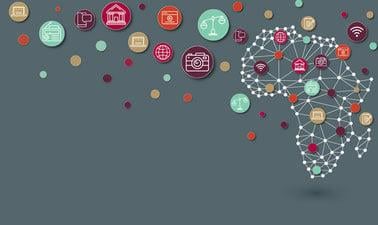
This course explores freedom of expression, access to information, and online freedoms in Africa, considering disinformation and issues with Internet companies’ models. It addresses AI's impact on media and journalism, examining colonial legacies and neo-colonial control of communications for political repression, and civil society's role in achieving change.

Class Deals by MOOC List - Click here and see EdX's Active Discounts, Deals, and Promo Codes.

The course delves into transforming inhibiting policies and practices, enabling better communication freedoms through appropriate laws.
The course’s foundation is an overview of the principles of freedom of expression and access to information and how these apply to media and online freedoms in Africa today. These freedoms are basic human rights, recognised the world over and codified in international and African documents as well as many national laws. The course offers a frame for assessing whether any restrictions on these rights meet international standards of being necessary or justifiable in order to protect other basic rights. Apart from legal frameworks, it also looks at other elements that make up an enabling environment where communications media can thrive and play a positive role in democracy and development. These elements include pluralism of service providers, a diversity of content and inclusive journalism.
The course looks closely at the implications of Internet communications. The key issue here is the promotion of digital rights, the right of everyone in the online world to access, use, create and publish information on digital media, blogs, websites and social messaging. It further examines the growing danger of disinformation and the problems of Internet companies’ business models. Artificial Intelligence (AI) and its possible effects on the media and journalism are also interrogated.
The course is designed to support participants with knowledge for taking effective civil action to work for positive change in free expression in their country and beyond.
Course participants have the opportunity to learn from the experience of experts and to gain ideas by engaging in discussion forums.
It is highly recommended that participants take both courses in the Professional Certificate in Media and Digital Policy in Africa. The second course, which builds on the first, closely examines the regulation of media, the internet and artificial intelligence (AI), as well as issues of access to information, the challenge of the economic viability of media and further tips for civil action.
This course is part of the Media and Digital Policy in Africa Professional Certificate.

What you'll learn

Free expression, access to information and media freedom:
Freedom of expression as a two-sided right.
A tool to check whether restrictions on freedom of expression are justifiable.
The interrelation of international agreements and national law.

Media independence, safety, pluralism and diversity:
Criteria for the independence of media.
Standards of professional journalism.
Safety of journalists and media.
Pluralism and diversity in the media.
Different types of media.
Gender diversity in the media.

The internet and freedom of expression
Universal access to the internet.
Government interference with internet access.
Surveillance and cybercrime legislation.
The challenge of Artificial Intelligence (AI).
Disinformation and how to combat it.
How to protect the integrity of online expression.

Effective civil society engagement in support of democratic media policy:
The role of civil society.
Formal and informal channels of civil society engagement.
Getting a handle on law reform.
Civil society may be undermined.

Go to Class
MOOC List is learner-supported. When you buy through links on our site, we may earn an affiliate commission.

Related Courses

Constitutional Struggles in the Muslim World (Coursera) Coursera
University of Copenhagen

Constitutional Struggles in the Muslim World (Coursera)

Learn what motivates the restive Muslim youth from Tunis to Tehran, what political positions Islamists from Mali to Chechnya are fighting for, where the seeming obsession with Islamic law comes from, where the secularists have vanished to, and whether it makes sense to speak of an Islamic state. This course is a survey of the constitutional ideas and institutions that have developed since the mid 19th century throughout predominantly Muslim countries, but its focus will lie on the actors that have dominated this discourse and shaped its outcomes. We will look at the large body of classical writings on the Islamic state only in so far as it is necessary to understand the contemporary debate, but concentrate on the legal and political developments of the 20th and 21st centuries.

Sep 14th 2026
5-12 Weeks
Búsqueda avanzada y verificación de información (Coursera) Coursera
RTVE

Búsqueda avanzada y verificación de información (Coursera)

Este curso trata de facilitar una serie de competencias y destrezas necesarias para combatir la desinformación y así afrontar mejor los desafíos que plantea la era digital. Desarrollar unas habilidades esenciales a la hora de buscar información por medio de Internet mediante el uso de herramientas audiovisuales, recursos digitales, aplicaciones y programas, sin olvidar las fuentes humanas directas, para contrastar los materiales que circulan por las redes sociales.

Sep 14th 2026
4 Weeks
Wie funktioniert eine Suchmaschine? (openHPI) OpenHPI
Hasso-Plattner-Institut

Wie funktioniert eine Suchmaschine? (openHPI)

In diesem Kurs wollen wir in die technischen Grundlagen einführen und einfache Konzepte des „Information Retrievals“ im Webkontext näher beleuchten: Wie ist eine Suchmaschine aufgebaut? Was passiert, wenn ich eine Suchanfrage eintippe? Nach welchen Kriterien werden Ergebnislisten erstellt? Auf Themen wie Suchmaschinenoptimierung (SEO) oder die konkrete Benutzung bestimmter Suchmaschinen wird dabei nicht näher eingegangen.

Self Paced
Self-Paced
COVID-19 in Africa: Managing the Outbreak in Primary Care Settings (FutureLearn) FutureLearn
St George's, University of London,Ilara Health

COVID-19 in Africa: Managing the Outbreak in Primary Care Settings (FutureLearn)

Learn how to better manage COVID-19 patients in African primary care settings where patient attendance is down due to COVID-19. Enhance your knowledge of COVID-19 patient care and the virus' impact in Africa. Since the COVID-19 pandemic, there’s been a decrease in primary care attendance noticed across peri-urban settings in Africa.

Self Paced
2 Weeks
International Standards on Freedom of Expression and Safety of Journalists (edX) EdX
University of Oxford

International Standards on Freedom of Expression and Safety of Journalists (edX)

Law

This Massive Open Online Course (MOOC) is co-organised by the Bonavero Institute of Human Rights (Faculty of Law, University of Oxford) and the United Nations Educational, Scientific, and Cultural Organisation (UNESCO). It explores the regional and international standards relating to freedom of expression, including press freedom, access to public information, safety of journalists and challenges created by the digital world.

May 29th 2023
5-12 Weeks
Répondre aux défis de santé en Afrique (FUN) FUN
Université Sorbonne Paris Cité

Répondre aux défis de santé en Afrique (FUN)

Les pays francophones d’Afrique subsaharienne, bien que divers, sont confrontés à des défis similaires en matière de santé. Des études rigoureuses récentes, réalisées dans différentes régions du monde, ouvrent un certain nombre de pistes pour améliorer la santé des populations les plus vulnérables.

No sessions available
5-12 Weeks
Ressources naturelles et développement des territoires en Afrique (FUN) FUN
Université Paris 1 Panthéon-Sorbonne

Ressources naturelles et développement des territoires en Afrique (FUN)

Depuis le début des années 2000, le contexte africain du développement est marqué par une augmentation de la pression sur les ressources naturelles, du fait de la croissance démographique de l'Afrique et de la demande mondiale. Il en résulte notamment des destructions environnementales, des tensions foncières et des conflits. La régulation de l’exploitation des ressources naturelles est donc plus que jamais un enjeu central du développement. L’approche territoriale proposée permet d’éclairer les interactions entre acteurs dont les stratégies se déploient à différents niveaux, et souvent entre local et global. L'objectif de ce cours est de vous permettre de comprendre les enjeux liés aux ressources naturelles et de renforcer vos capacités d'analyse et d'action (gestion, négociation, plaidoyer) dans ce domaine.

No sessions available
5-12 Weeks
Afrique et mondialisation, regards croisés (Coursera) Coursera
Sciences Po

Afrique et mondialisation, regards croisés (Coursera)

Au-delà des relations internationales classiques, le processus de mondialisation mobilise quantité d'acteurs économiques, sociaux et culturels, individuels et collectifs, qui agissent dans l'espace mondial. Nous étudions ensemble, Africains, Latino-américains et Européens, comment il en dérive de nouvelles relations internationales. Ce cours prend sa source dans les approches sociologique et historique françaises des relations internationales, comme celles promues en Afrique et en Amérique latine.

Sep 14th 2026
5-12 Weeks