EdX

Indigenous Peoples' Rights (edX)

Offered by Columbia University,
Indigenous Peoples' Rights (edX)

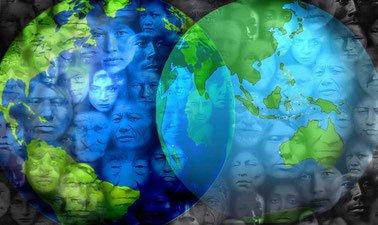
Examine how Indigenous Peoples have been contesting norms, institutions and global debates in the past 50 years, and how they have been re-shaping and gradually decolonizing these systems at international and national levels. Indigenous Peoples, numbering more than 476 million in some 90 countries and about 5000 groups and representing a great part of the world’s human diversity and cultural heritage, continue to raise major controversies and to face threats to their physical and cultural existence.

Class Deals by MOOC List - Click here and see EdX's Active Discounts, Deals, and Promo Codes.

We will analyze the achievements, challenges, and potential of the dynamic interface between the Indigenous People’s movement—one of the strongest social movements of our time—and the international community, especially the UN system. Centered on the themes laid out in the UN Declaration on the Rights of Indigenous Peoples (2007), the course will examine how Indigenous Peoples have been contesting and reshaping norms, institutions and global debates in the past 50 years, re-shaping and gradually decolonizing international institutions and how they have contributed to some of the most important contemporary debates, including human rights, development, law—specifically the concepts of self-determination, governance, group rights, inter-culturality and pluriculturality, and cultural rights.

What you'll learn
Learners in the course will be able to:

  • discuss how Indigenous Peoples, through their global movement, have been contesting and reshaping international norms and institutions.
  • understand how Indigenous Peoples have been working with the UN system, States and others to advance their rights on the ground.
  • explain the three pillars of the United Nations Declaration on the Rights of Indigenous Peoples (UNDRIP).
  • analyze how Indigenous Peoples have impacted and contributed to some of the most important contemporary global debates, including human rights, development, and climate change—specifically through the concepts of self-determination, group rights, land rights, environmental rights, inter-culturality and cultural rights.

Syllabus

  • The Indigenous Peoples' Rights Movement
  • Right to Self-Determination
  • Right to Land, Territories, and Resources
  • Cultural Rights
  • UN Indigenous Peoples-Related Mechanisms: The Power of Advocacy
Go to Class
MOOC List is learner-supported. When you buy through links on our site, we may earn an affiliate commission.

Related Courses

Open and Smart Government (edX) EdX
Delft University of Technology,DelftX

Open and Smart Government (edX)

Explore the challenges, benefits and processes that governments and citizens face when deciding to join the Open Government Movement. How can governments become more open and transparent, while simultaneously dealing with various challenges, such as data sensitivity? How can open government data be used to improve policy making? Which technologies are available to make governments more open and to use open government data?How can data be turned into smartness?

Self Paced
Self-Paced
Quantitative Methods (Coursera) Coursera
University of Amsterdam

Quantitative Methods (Coursera)

Discover the principles of solid scientific methods in the behavioral and social sciences. Join us and learn to separate sloppy science from solid research! This course will cover the fundamental principles of science, some history and philosophy of science, research designs, measurement, sampling and ethics. The course is comparable to a university level introductory course on quantitative research methods in the social sciences, but has a strong focus on research integrity. We will use examples from sociology, political sciences, educational sciences, communication sciences and psychology.

Sep 14th 2026
5-12 Weeks
Reconciliation Through Indigenous Education (edX) EdX
The University of British Columbia,UBCx

Reconciliation Through Indigenous Education (edX)

Advancing reconciliation in classrooms, organizations, and communities through the teaching and learning of Indigenous ways of knowing. This course will help you envision how Indigenous histories, perspectives, worldviews, and approaches to learning can be made part of the work we do in classrooms, organizations, communities, and our everyday experiences in ways that are thoughtful and respectful.

Sep 22nd 2026
5-12 Weeks
The Right to Protest (edX) EdX
Amnesty International,AmnestyInternationalX

The Right to Protest (edX)

Learn why protest is protected by human rights, how the freedom to protest is under threat throughout the world, and how you can defend your right to protest. The freedom to call for change, and to amplify that call through mass mobilization, is vital for open and rights-respecting societies. Protests enable people to air grievances, express opinions, petition for remedies for wrongdoing, and to publicly demand accountability. Through protest, those who have been silenced, disempowered or disenfranchised can claim their voice, their strength and their political power.

No sessions available
3 Weeks
International Standards on Freedom of Expression and Safety of Journalists (edX) EdX
University of Oxford

International Standards on Freedom of Expression and Safety of Journalists (edX)

Law

This Massive Open Online Course (MOOC) is co-organised by the Bonavero Institute of Human Rights (Faculty of Law, University of Oxford) and the United Nations Educational, Scientific, and Cultural Organisation (UNESCO). It explores the regional and international standards relating to freedom of expression, including press freedom, access to public information, safety of journalists and challenges created by the digital world.

May 29th 2023
5-12 Weeks
Decolonising Evaluation (edX) EdX
Wits University,WitsX

Decolonising Evaluation (edX)

Learn to identify the intersection between evaluation and decolonization debates by understanding how evaluation has evolved with the development sector. Evaluation plays an integral role in understanding how different visions of development are expressed and contested in programme design and management. Decolonization has been a central concern of the field, and there is a need to bring together a wide range of discussions concerned with decolonized evaluation.

No sessions available
Self-Paced
One Health: A Ten-Thousand-Year-Old View into the Future (edX) EdX
University of Alaska Fairbanks,AlaskaX

One Health: A Ten-Thousand-Year-Old View into the Future (edX)

Explore the connectedness of people, animals, and the environment through this unique approach to One Health that connects traditional ways of knowing with the natural and social sciences. Combine Western and Indigenous knowledge to form a holistic understanding of the future of life in the Circumpolar North.

Self Paced
Self-Paced
Hacer las Paces en Colombia (edX) EdX
The Pontificia Universidad Javeriana,JaverianaX

Hacer las Paces en Colombia (edX)

¡Sabias qué en Colombia hace mucho hacemos paz! ¡Ven y descúbrelo! en este curso que busca brindarte otra mirada de los procesos comunitarios y de movilidad social que ha tenido Colombia. Este curso te permitirá reconocer que la paz en Colombia hace mucho se viene desarrollando desde comunidades marginadas y anónimas.

No sessions available
5-12 Weeks
Global Business and Human Rights (edX) EdX
ZHAWx,ZHAW Zurich University of Applied Sciences

Global Business and Human Rights (edX)

Explore how companies can understand, address and manage their human rights impacts. Discover links of business activities, global supply chains and human rights from different perspectives. Globalization includes the promise of economic development and wellbeing for all. However, from the early days of international trade until today this scarcely came without unfavorable, sometimes dreadful consequences for humans, be it slavery in colonial crop plantations, health and safety risks for coal miners throughout industrialization or, more recently, discrimination of factory workers in sweatshops.

Self Paced
Self-Paced