Processing of Space Monitoring Information (Coursera)

Processing of Space Monitoring Information (Coursera)

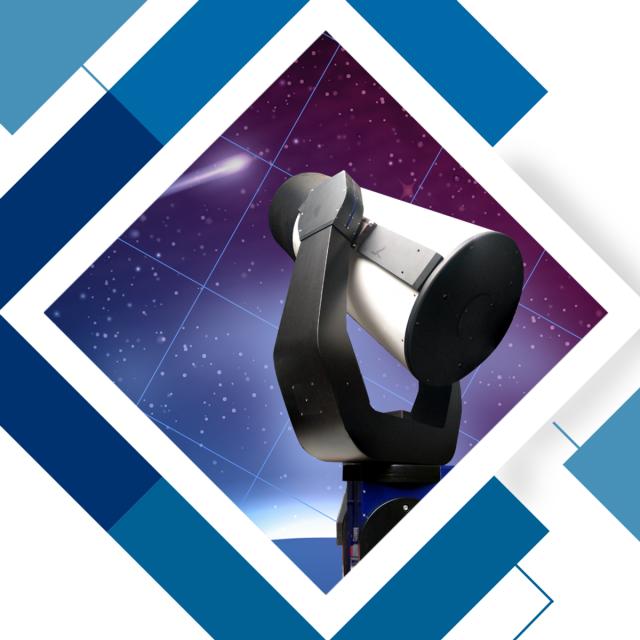
Observation of near-Earth outer space is an important task for astronomers and scientists at the present time. This task is to determine the coordinate and non-coordinate characteristics of artificial space objects. According to data obtained, a catalogue of objects is created, which should be maintained and updated. For this, optical means (telescopes) can be involved. The data from these means should be processed in order to obtain information about objects in space.

Class Deals by MOOC List - Click here and see Coursera's Active Discounts, Deals, and Promo Codes.

In this course, we will talk about steps that should be done to detect satellites and estimate their parameters with the methods of background suppression, detection of isolated groups of bright pixels to classify them as stars or tracks. One of the items includes information about star catalogues and the astrometric reduction of the image. The examples of images in different observation conditions will be shown. Usually, during observation, a sequence of images is done and it is important to define the mutual displacement of images for suppressing the spatially correlated background. One more topic for discussion is spatiotemporal methods of filtering observation background and further extraction of spatially resolved point objects from the image.

Syllabus

WEEK 1
Image processing pipeline
The lectures of the first week cover the following stages of space monitoring information processing: background suppression; detection of isolated groups of bright pixels (areas); estimation of shape parameters of extracted bright areas for classification as stars or tracks; estimation of positions of detected stars; estimation of parameters of detected tracks; astrometric reduction of the image; photometric reduction.

WEEK 2
Correlation methods for determining the mutual displacement of images
Second week discusses a method for determining the mutual displacement of images based on the presence of spatial correlation of the observation background. This method can be used in a situation when the survey is carried out in such a way that the object does not go beyond the field of view of the telescope during the time between two successive frames, and these frames have a significant intersection in absolute angular space.

WEEK 3
Spatiotemporal methods of filtering observation background
Lectures of the third week describe spatio-temporal methods of filtering the observation background. General principles of these methods are considered. The most commonly used methods are described in detail: the simplest nonparametric time filtering algorithm, adaptive autoregression algorithm and algorithm of calculation filter coefficients as an explicit shift function.

WEEK 4
Extraction of spatially resolved point objects from digital image
The fourth week is dedicated to selecting and classifying allowed point objects in a digital image. The general limitations of using the proposed methods are considered. The general structure of the optimal algorithm is described. A method for detecting a single object in a fixed window is proposed. Based on this method, the case of determination the decision-making statistics in the image reference points for a symmetric PSF, conjugated with pixel dimensions, is considered. A suboptimal algorithm for detecting objects at image reference points is proposed.
Go to Class
MOOC List is learner-supported. When you buy through links on our site, we may earn an affiliate commission.

Related Courses

Advanced Engineering Systems in Motion: Dynamics of Three Dimensional (3D) Motion (Coursera) Coursera
Georgia Institute of Technology

Advanced Engineering Systems in Motion: Dynamics of Three Dimensional (3D) Motion (Coursera)

This course is an advanced study of bodies in motion as applied to engineering systems and structures. We will study the dynamics of rigid bodies in 3D motion. This will consist of both the kinematics and kinetics of motion. Kinematics deals with the geometrical aspects of motion describing position, velocity, and acceleration, all as a function of time. Kinetics is the study of forces acting on these bodies and how it affects their motion.

Aug 10th 2026
5-12 Weeks
Fundamentals of Digital Image and Video Processing (Coursera) Coursera
Northwestern University

Fundamentals of Digital Image and Video Processing (Coursera)

In this class you will learn the basic principles and tools used to process images and videos, and how to apply them in solving practical problems of commercial and scientific interests. Digital images and videos are everywhere these days – in thousands of scientific (e.g., astronomical, bio-medical), consumer, industrial, and artistic applications. Moreover they come in a wide range of the electromagnetic spectrum - from visible light and infrared to gamma rays and beyond.

Aug 10th 2026
5-12 Weeks
Nanotechnology: A Maker’s Course (Coursera) Coursera
Duke University,University of North Carolina,North Carolina State University

Nanotechnology: A Maker’s Course (Coursera)

How can we create nano-structures that are 10,000 times smaller than the diameter of a human hair? How can we “see” at the nano-scale? Through instruction and lab demonstrations, in this course you will obtain a rich understanding of the capabilities of nanotechnology tools, and how to use this equipment for nano-scale fabrication and characterization.

Aug 10th 2026
5-12 Weeks
Journey Conversations: Weaving Knowledge and Action (Coursera) Coursera
Yale University

Journey Conversations: Weaving Knowledge and Action (Coursera)

Journey of the Universe weaves together the discoveries of the evolutionary sciences together with humanities such as history, philosophy, art, and religion. This course draws on the Journey of the Universe Conversations, a series of 20 interviews with scientists and environmentalists. The first 10 interviews are with scientists and historians who deepen our understanding of the evolutionary process of universe, Earth, and humans.

Aug 17th 2026
5-12 Weeks
Materials Data Sciences and Informatics (Coursera) Coursera
Georgia Institute of Technology

Materials Data Sciences and Informatics (Coursera)

This course aims to provide a succinct overview of the emerging discipline of Materials Informatics at the intersection of materials science, computational science, and information science. Attention is drawn to specific opportunities afforded by this new field in accelerating materials development and deployment efforts.

Aug 10th 2026
5-12 Weeks
Kinematics: Describing the Motions of Spacecraft (Coursera) Coursera
University of Colorado Boulder

Kinematics: Describing the Motions of Spacecraft (Coursera)

The movement of bodies in space (like spacecraft, satellites, and space stations) must be predicted and controlled with precision in order to ensure safety and efficacy. Kinematics is a field that develops descriptions and predictions of the motion of these bodies in 3D space. This course in Kinematics covers four major topic areas: an introduction to particle kinematics, a deep dive into rigid body kinematics in two parts (starting with classic descriptions of motion using the directional cosine matrix and Euler angles, and concluding with a review of modern descriptors like quaternions and Classical and Modified Rodrigues parameters).

Aug 10th 2026
4 Weeks
Interpersonal Communication for Engineering Leaders (Coursera) Coursera
Rice University

Interpersonal Communication for Engineering Leaders (Coursera)

This course covers communication skills that engineering leaders use every day to motivate, inspire, and support the people in their organizations. Speaking and writing are basic leadership communication skills. (We covered these topics in the Specialization course 1 and 3.) However, leaders also need to be skillful interpersonal communicators.

Aug 17th 2026
4 Weeks
Biosphere 2 Science for the Future of Our Planet (Coursera) Coursera
University of Arizona

Biosphere 2 Science for the Future of Our Planet (Coursera)

Are you ready to take an incredible journey around Planet Earth and beyond? In this course, you will delve into a world of innovative science and learn from a team of Biosphere 2 and University of Arizona researchers. From plants and soils, to oceans and rainforests, the Moon, Mars, and more, this course is an exciting opportunity for anyone interested in science and Earth stewardship.

Aug 17th 2026
5-12 Weeks
Ingeniería de Tráfico (Coursera) Coursera
Pontificia Universidad Católica de Chile

Ingeniería de Tráfico (Coursera)

El curso presenta en primer lugar las principales relaciones que caracterizan la circulación de vehículos y que dan pie a la teoría de circulación de vehículos sobre redes de transporte. Posteriormente se discutirán aspectos relativos al control de tráfico en intersecciones, sean estas de prioridad o semaforizadas. Finalmente, discutiremos sobre las características que presentan algunos modelos dinámicos de tráfico bastante utilizados en la actualidad.

Aug 10th 2026
4 Weeks
Cómo autoconstruir tu vivienda (Coursera) Coursera
Universidad Nacional Autónoma de México

Cómo autoconstruir tu vivienda (Coursera)

Aprenderás las bases y los procedimientos precisos paso a paso para que puedas llevar a cabo la autoconstrucción de una vivienda básica, segura y económica para ti y tu familia; también te será de gran utilidad si estás buscando aprender a reparar, mejorar la estructura de tu vivienda e incluso si buscas autoemplearte.

Aug 17th 2026
4 Weeks