EdX

Poetry in America: Modernism (edX)

Poetry in America: Modernism (edX)

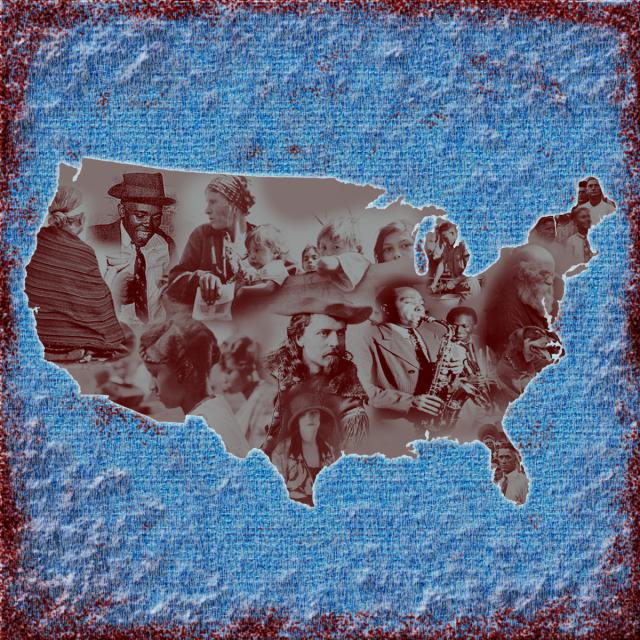
We will consider how American Modernist poets—poets like Robert Frost, T.S. Eliot, Langston Hughes, Marianne Moore, William Carlos Williams, and Wallace Stevens—created, in the first half of the 20th Century, a poetic tradition that was new and different. This literature course, the sixth module in the Poetry in America series, explores a diverse array of American Modernist poets and poems. While “Modernism” is notoriously difficult to define, the movement spanned the decades from the 1910s to the mid-1940s, and the poetry of this period marked a clear break from past traditions and past forms.

Class Deals by MOOC List - Click here and see EdX's Active Discounts, Deals, and Promo Codes.

Throughout this module, we will encounter such poets as Robert Frost, T.S. Eliot, Marianne Moore, Langston Hughes, William Carlos Williams, Edna St. Vincent Millay, Claude McKay, Dorothy Parker, and Wallace Stevens. We will study how these poets employed the language of rejection and revolution, of making and remaking, of artistic appropriation and cultural emancipation, in creating an American poetic tradition that was new and different. Traveling to the homes and workplaces of Robert Frost and Wallace Stevens; to the Poetry Foundation in Chicago, where the institution of American Modernism was born; and even exploring the River Thames in the London of Eliot's THE WASTE LAND, we will see the sites that witnessed—and cultivated—the rise of American Modernism.

Led by Harvard Professor Elisa New, the Poetry in America series surveys nearly 400 years of American poetry. Through video lectures, archival images and texts, expeditions to historic sites, interpretive seminars with large and small groups, interviews with poets and scholars, and conversations about poems with distinguished Americans, Poetry in America takes learners on a journey through the literature of a nation. Along the way, distinguished guests including Elena Kagan, Henry Louis Gates, Eve Ensler, John McCain, Andrea Mitchell, Michael Pollan, Drew Faust, Tony Kushner, and Nas, among others, bring fresh perspectives to the study of American poetry.

What you'll learn:

  • Best practices for reading, analyzing, and discussing poems and other texts
  • An understanding of American Modernism (ca. 1910-1945) in its historical, social, cultural, and artistic contexts
  • Strategies for identifying formal and thematic features that make the diverse array of American Modernist poems “Modern”

Go to Class
MOOC List is learner-supported. When you buy through links on our site, we may earn an affiliate commission.

Related Courses

Poetry: How to Read a Poem (FutureLearn) FutureLearn
University of York

Poetry: How to Read a Poem (FutureLearn)

Discover what poetry can tell us about human emotion and learn key ideas and techniques for understanding and interpreting verse. Dive into the wonderful world of poetry and learn how to analyse a poem. Humans have communicated their thoughts, ideas, and feelings through poetry throughout history. At its best, it tells us new truths about the human experience. However, it’s often presented as hard to understand without expert knowledge. On this course, you’ll build your confidence in reading and enjoying poetry.

Self Paced
4 Weeks
Literature and Mental Health: Reading for Wellbeing (FutureLearn) FutureLearn
The University of Warwick

Literature and Mental Health: Reading for Wellbeing (FutureLearn)

Find out how poems, plays and novels can help us understand and cope with deep emotional strain in this free online course. The great 18th century writer Dr Samuel Johnson, who suffered from severe bouts of depression, said “the only end of writing is to enable the reader better to enjoy life or better to endure it.” This free online course will explore how enjoying literature can help us to endure life.

No sessions available
5-12 Weeks
Modern Poetry and Poetics (saylor.org) Saylor Academy
Saylor.org

Modern Poetry and Poetics (saylor.org)

The decades between roughly 1890 and 1950 witnessed unprecedented efforts to create new art, new values, and a new culture in Europe and the United States. During this time Western writers, artists, and intellectuals questioned accepted aesthetic norms and produced radically experimental works of art and new understandings of what it means to live in modern times.

Legacy Course
Self-Paced
Global Shakespeares: Re-Creating the Merchant of Venice (edX) EdX
MIT,MITx

Global Shakespeares: Re-Creating the Merchant of Venice (edX)

Learn how performance of William Shakespeare’s The Merchant of Venice provides occasions for creative, thoughtful communication across personal, historical, and cultural boundaries on topics including language and theatricality, gender relations, and religious prejudice. William Shakespeare is the most performed playwright on the globe; this course brings his play The Merchant of Venice into the 21st century by comparing multiple recent performances, from film and television stagings to an international production that marked the first performance of the play in the former Jewish Ghetto of Venice, Italy.

Self Paced
Self-Paced
Sexing the Canvas: Art and Gender (Coursera) Coursera
University of Melbourne

Sexing the Canvas: Art and Gender (Coursera)

What do paintings tell us about sex? How is art gendered? In this course we will study some of the world’s most beloved pictures guided by expert curators and art historians who step outside of the square, bringing a gendered reading to the masterpieces contained in the magnificent collections that we have been lucky enough to bring to the Coursera platform.

Oct 24th 2022
5-12 Weeks
AP® English Literature & Composition – Part 2: Poems (edX) EdX
University of California, Berkeley,BerkeleyX

AP® English Literature & Composition – Part 2: Poems (edX)

Learn how to read and interpret poetry and enhance your reading and writing skills in preparation for the AP® English Literature & Composition exam. This course prepares you to read more deeply and write more clearly about works of literature. Through an engaging collection of videos, authentic readings, and support material from a variety of sources, you will learn to appreciate literature from different genres. You will learn about different genres of poetry and the history of some of our greatest poets.

Self Paced
Self-Paced
Plagues, Witches, and War: The Worlds of Historical Fiction (Coursera) Coursera
University of Virginia

Plagues, Witches, and War: The Worlds of Historical Fiction (Coursera)

A unique and exciting introduction to the genre and craft of historical fiction, for curious students, aspiring authors--anyone with a passion for the past. Read classics of the genre, encounter bestselling writers of historical fiction, and discover your own historical archive while interacting with a global community of interested readers.

Aug 3rd 2026
5-12 Weeks
The Great Poems Series: Unbinding Prometheus (OpenLearning) OpenLearning
OpenLearning

The Great Poems Series: Unbinding Prometheus (OpenLearning)

Jean-Jacques Rousseau wrote “Man is born free, but he is everywhere in chains.” Poet Percy Shelley believed words could be stronger than shackles, and wrote poems intended to free mankind from their chains. Some have argued that poetry can do nothing--or as W.H. Auden said, "Poetry makes nothing happen." Yet Henry David Thoreau, Karl Marx, Mahatma Gandhi, Martin Luther King and Nelson Mandela were inspired by Shelley's words to live in the service of freedom and dignity, and they changed the world. The Unbinding Prometheus MOOC investigates both what Shelley's words have meant over time, and what his words might mean for us today.

Self Paced
Self-Paced
Dante tra poesia e scienza (Federica Web Learning) Federica Web Learning
University of Naples Federico II

Dante tra poesia e scienza (Federica Web Learning)

La Commedia di Dante, una delle opere più importanti della letteratura di tutti i tempi, è endiadi di poesia e scienza. Certamente la cultura scientifica di Dante è vasta per i suoi tempi; essa è talmente fusa nel discorso poetico che non disturba l’orecchio e la mente del lettore; essa non è espressione di mera conoscenza, ma rientra sempre nel concetto del poeta di leggere unitariamente il mondo e le sue espressioni; e di sicuro essa è la manifestazione più alta della scienza del Medioevo, frutto di non poche letture di una cultura scientifica non solo europea, ma anche araba, conosciuta attraverso le traduzioni latine delle opere o dalla frequentazione, come appare dalle ultime ipotesi di ricerche, di musulmani residenti in paesi dell’Italia settentrionale.

Mar 6th 2017
5-12 Weeks
Poetry and the Holocaust (FutureLearn) FutureLearn
Yad Vashem

Poetry and the Holocaust (FutureLearn)

Explore personal accounts of the Holocaust through poetry and discover how poems can help you understand events of the past. Study Holocaust poetry to better comprehend this dark period in history. On this course, you’ll understand the events of the Holocaust and World War II through poetry which underlines the individual experience.

Available Now
3 Weeks