How To Make A Poem (FutureLearn)

How To Make A Poem (FutureLearn)

Learn how to 'make' your own poetry by exploring different poetic techniques and styles. Discover the power of poetry, and learn to write your own. This course explores what inspires poetry, how we write poems and how to tell when your poem is finished.

Class Deals by MOOC List - Click here and see FutureLearn's Active Discounts, Deals, and Promo Codes.

Whether you’ve never written a poem before, or you‘ve been secretly writing away for some years, this course provides a positive environment in which to begin writing and to share your work with others.
The course follows the story of a poem from start to end, guiding you through the process of writing your own work step by step.
To help us, we will be hearing from poets across world and throughout history, learning from the advice they have given others.

What topics will you cover?
On this course we will be asking questions such as:

  • What is poetry and what is a poet?
  • What choices go into writing a poem?
  • What is the difference between craft and technique?

We will also be considering different poetic forms such as found poetry, the cento, sonnets, free verse, ghazal, as well as things to help you make formal choices such as line breaks, metre, rhyme, and rhythm. As well a developing your writing skills we will think about developing your inner editor and how to support others in writing their work in a poetry workshop.

What will you achieve?
By the end of the course, you'll be able to...

  • Experiment with different techniques and new exercises to help generate new work
  • Develop your own ‘voice’ in your poems
  • Discuss how to read poetry for new ideas
  • Investigate what poets from the past and present say about how we write poetry
  • Collaborate on each other’s work and reflect on how to give positive and encouraging comments
Go to Class
MOOC List is learner-supported. When you buy through links on our site, we may earn an affiliate commission.

Related Courses

Shakespeare: Context and Stagecraft (FutureLearn) FutureLearn
King's College London

Shakespeare: Context and Stagecraft (FutureLearn)

Explore Shakespeare’s stagecraft through three of his most well-known plays: Romeo and Juliet, The Merchant of Venice and Macbeth. Study fascinating theatrical and social contexts that shaped Shakespeare’s plays. On this course, you’ll explore the language, themes, and contexts of three of Shakespeare’s most widely studied and frequently performed plays.

Self Paced
2 Weeks
Reasoning Across the Disciplines (Coursera) Coursera
University of North Carolina

Reasoning Across the Disciplines (Coursera)

Critical reasoning skills are a key success factor for students entering their first year of college. They must be able to think logically and form arguments. This course, designed with incoming college freshmen in mind but open to anyone, provides an essential grounding in critical reasoning skills. Faculty from multiple disciplines at the University of North Carolina at Chapel Hill offer guidance on applying critical thinking skills in the context of specific disciplines. By developing these skills, students will learn more, enjoy their courses more, and experience greater academic success.

Aug 10th 2026
5-12 Weeks
Penshurst Place and the Sidney Family of Writers (FutureLearn) FutureLearn
Lancaster University

Penshurst Place and the Sidney Family of Writers (FutureLearn)

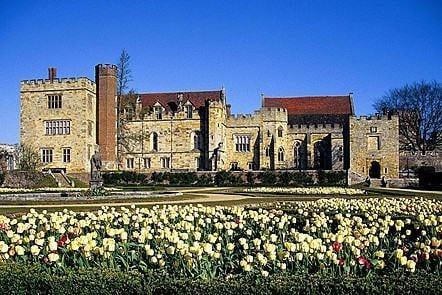
Uncover the literary history of Penshurst Place, the 16th-century home of the Sidney family of writers and poets. Learn how Lady Mary Wroth and the Sidney family shaped the English Renaissance. In the 16th century, Penshurst Place was the home to the Sidney family, renowned for their literary works in the age of Shakespeare. The family, including Lady Mary Wroth and her uncle Sir Philip Sidney, wrote poetry and prose that still appeal to audiences today.

No sessions available
4 Weeks
Humphry Davy: Laughing Gas, Literature, and the Lamp (FutureLearn) FutureLearn
Lancaster University,Royal Institution - RI

Humphry Davy: Laughing Gas, Literature, and the Lamp (FutureLearn)

Discover Humphry Davy and his contribution to science and the arts. Before culture was divided into the sciences and the arts there was a chemist who was also a poet. Sir Humphry Davy (1778-1829) is one of the best known men of science of the nineteenth century: he was the first person to inhale nitrous oxide; he isolated nine chemical elements; and he invented the miners’ safety lamp known as the Davy lamp. This course will consider Davy’s life and career using manuscript sources held at the Royal Institution of Great Britain.

Oct 9th 2023
4 Weeks
Modern American Poetry (Coursera) Coursera
University of Illinois at Urbana-Champaign

Modern American Poetry (Coursera)

Twelve experienced faculty members from across the United States present their analyses of ground-breaking modern American poets in richly illustrated video lectures. The course highlights both major poets—from Walt Whitman and Emily Dickinson through T.S. Eliot, H.D., Amy Lowell, Hart Crane, Langston Hughes, Muriel Rukeyser, and many others—and influential movements. The course mixes historical overview with close readings of individual poets and poems.

Aug 17th 2026
4 Weeks
Reading Macondo: the Works of Gabriel García Márquez (FutureLearn) FutureLearn
Universidad de los Andes

Reading Macondo: the Works of Gabriel García Márquez (FutureLearn)

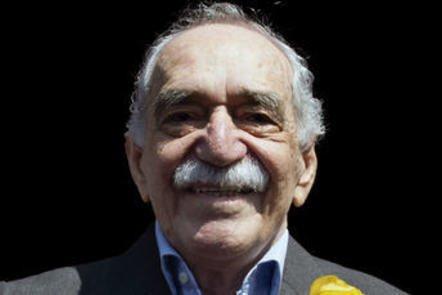
Explore why the author of One Hundred Years of Solitude is one of the 20th century’s leading writers in this free online course. Gabriel García Márquez is a Colombian writer, who won the Literature Nobel Prize in 1982. He has been recognised as one of the world’s leading writers in the second half of the 20th century. His works have been translated into many languages, been adapted for TV and film, and inspired many subsequent works of art.

No sessions available
5-12 Weeks
Playing with Poetry: Creative Writing and Poetics (FutureLearn) FutureLearn
The University of Newcastle, Australia

Playing with Poetry: Creative Writing and Poetics (FutureLearn)

Have fun writing poetry as you explore and create various forms of poetry and experiment with different poetic ideas. Get creative with a playful and practical exploration of poetry. Poetry often has the reputation of being an abstract and complicated form of expression, guarded by the pretentious elite. On this three-week course, you’ll discover the fun and value that can be found in writing your own poetry.

No sessions available
3 Weeks
Literature of the English Country House (FutureLearn) FutureLearn
The University of Sheffield

Literature of the English Country House (FutureLearn)

Take a journey through the literature of English country houses from the time of Thomas More to Oscar Wilde. Trace the history and context of country house literature. Through the course you will investigate and discuss the role and representation of the English country house in literature, and learn how to build your own authoritative interpretation of these texts.

Feb 8th 2021
5-12 Weeks