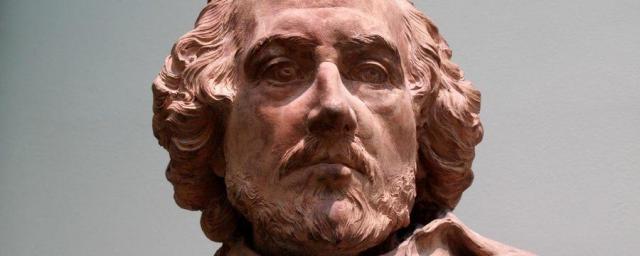
Shakespeare (saylor.org)

Offered by Saylor.org,
Shakespeare (saylor.org)

Many consider William Shakespeare the greatest dramatist—even the greatest writer—of all time. His impact on Western culture and language is unmistakable, but his works have also been continuously read and performed around the world, illustrating his global significance.

Over the course of this semester, we will attempt to determine why his works have become so widely revered, or why they seem, to quote Ben Jonson, “not for an age, but for all time.” We will begin by familiarizing ourselves with Elizabethan theatre, language, and culture—the world in which Shakespeare lived and breathed. We will then conduct close readings of a number of Shakespeare’s most acclaimed plays, progressing through his dramatic works by categorizing them in three groups: comedies, tragedies, and histories. Finally, we will turn to some of his poetry, which Shakespeare (perhaps surprisingly) considered superior to his plays. By the end of this course, you will have developed a strong understanding of Shakespeare’s works—their style, their linguistic accomplishments, their hallmarks—as well as a working knowledge of the Elizabethan Period in which he wrote.
Upon successful completion of this course, the student will be able to:

  • Identify, compare, and contrast the major dramas and poems produced by William Shakespeare.
  • Describe Shakespeare’s identity as well as provide an account of his life and the legacy of his work.
  • Describe Elizabethan England in social and historical context.
  • List the major figures who likely shaped the work of Shakespeare.
  • Explain the origins of Shakespearean drama in Greek theater.
  • Define a variety of Shakespearean dramatic forms, including Shakespearean tragedy, history, and comedy plays.
  • Identify and describe the major themes of Shakespearean tragedy, comedy, and history plays.
  • Explain the roots of the Shakespearean sonnet in earlier sonnet traditions.
  • Identify and describe the major themes and ideas at work in Shakespearean sonnets.

Course Requirements: Have completed Cultural and Literary Expression in the English Renaissance.

Go to Class
MOOC List is learner-supported. When you buy through links on our site, we may earn an affiliate commission.

Related Courses

AP® English Literature & Composition – Part 3: Plays (edX) EdX
University of California, Berkeley,BerkeleyX

AP® English Literature & Composition – Part 3: Plays (edX)

Enhance your reading and writing skills as you interpret and learn about plays in preparation for the AP® English Literature & Composition exam. This course prepares you to read more deeply and write more clearly about works of literature. This course will focus on great pieces of drama and how we read and interpret them. We will discuss the works of William Shakespeare and Edmond Rostand. Through an engaging collection of videos, authentic readings, and support material from a variety of sources, you will learn to appreciate literature from different genres.

Self Paced
Self-Paced
William Shakespeare's Twelfth Night: Comedy, Conflict, and Community (Coursera) Coursera
University of Colorado Boulder

William Shakespeare's Twelfth Night: Comedy, Conflict, and Community (Coursera)

This course introduces and explores William Shakespeare’s classic comedy, Twelfth Night. Interviews with actors who appeared in the Colorado Shakespeare Festival’s 2019 production of Twelfth Night, as well as lectures by scholars and theater professionals who work and teach at the University of Colorado Boulder, offer students insight into Shakespeare’s artistic vision and its applications.

Jun 22nd 2026
5-12 Weeks
Playing with Poetry: Creative Writing and Poetics (FutureLearn) FutureLearn
The University of Newcastle, Australia

Playing with Poetry: Creative Writing and Poetics (FutureLearn)

Have fun writing poetry as you explore and create various forms of poetry and experiment with different poetic ideas. Get creative with a playful and practical exploration of poetry. Poetry often has the reputation of being an abstract and complicated form of expression, guarded by the pretentious elite. On this three-week course, you’ll discover the fun and value that can be found in writing your own poetry.

No sessions available
3 Weeks
Shakespeare: On the Page and in Performance (edX) EdX
Wellesley College,WellesleyX

Shakespeare: On the Page and in Performance (edX)

An introduction to Shakespeare that combines literary study with theatrical analysis to understand both Shakespeare’s continuing popularity and his greatness. Shakespeare wrote for a popular audience and was immensely successful. Shakespeare is also rightly regarded as one of the greatest playwrights the world has known. This course will try to understand both Shakespeare’s popularity and his greatness by starting from a simple premise: that the fullest appreciation of Shakespeare can be achieved only when literary study is combined with analysis of the plays as theatre.

No sessions available
4 Weeks
Introduction to Who Wrote Shakespeare (Coursera) Coursera
University of London,Goldsmiths, University of London

Introduction to Who Wrote Shakespeare (Coursera)

This free course from the University of London explores critical thinking, and the interpretation of texts, through the Shakespeare authorship question. Using doubt about Shakespeare’s authorship as our playground, we will explore the key concept of authorship attribution, while developing skills in literary analysis, interpretation, and argument. Through forensic exploration of key texts, you will learn why Shakespeare’s authorship is questioned, and what evidence is cited on both sides of the debate.

Jun 29th 2026
4 Weeks
The Great Poems Series: Unbinding Prometheus (OpenLearning) OpenLearning
OpenLearning

The Great Poems Series: Unbinding Prometheus (OpenLearning)

Jean-Jacques Rousseau wrote “Man is born free, but he is everywhere in chains.” Poet Percy Shelley believed words could be stronger than shackles, and wrote poems intended to free mankind from their chains. Some have argued that poetry can do nothing--or as W.H. Auden said, "Poetry makes nothing happen." Yet Henry David Thoreau, Karl Marx, Mahatma Gandhi, Martin Luther King and Nelson Mandela were inspired by Shelley's words to live in the service of freedom and dignity, and they changed the world. The Unbinding Prometheus MOOC investigates both what Shelley's words have meant over time, and what his words might mean for us today.

Self Paced
Self-Paced
Shakespeare’s Othello: The Moor (edX) EdX
HarvardX,Harvard University

Shakespeare’s Othello: The Moor (edX)

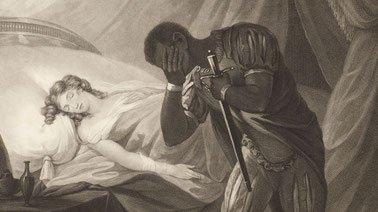
Explore acts of storytelling in Shakespeare's Othello alongside world-class artists who interpret Othello's story in new forms and contexts today. In this course, we'll read William Shakespeare’s Othello and discuss the play from a variety of perspectives. The goal of the course is not to cover everything that has been written on Othello.

Self Paced
Self-Paced
Shakespeare on the Page and in Performance: Young Love (edX) EdX
Wellesley College,WellesleyX

Shakespeare on the Page and in Performance: Young Love (edX)

Explore Shakespeare's plays of young love, Romeo & Juliet and A Midsummer Night’s Dream, to learn what makes them so compelling and magical. This literature and theater course will delve into two wonderful plays of young love, Romeo & Juliet and A Midsummer Night’s Dream, and try to bring alive what makes them so compelling and popular -- as both literature and drama.

No sessions available
3 Weeks