EdX

The Divine Comedy: Dante's Journey to Freedom (edX)

The Divine Comedy: Dante's Journey to Freedom (edX)

Jorge Luis Borges, the great Argentine writer, said that no one should deny themselves the pleasure of reading Dante's Divine Comedy. In this course, you will discover precisely what Borges meant.

Class Deals by MOOC List - Click here and see EdX's Active Discounts, Deals, and Promo Codes.

Learning to read poetry is learning to do the deep magic of language. It's learning to speak to the dead. At first the book just sits there silent as the grave, but if we listen carefully then, softly at first, the poetry begins to speak to us and we find ourselves speaking to it in response. Dante is the master of speaking with the dead. He convinces us that the dead can tell us things we do not know—things we cannot discover about the meaning of life because we are still in the middle of it. He shows us that conversations with the dead can change the way that we look at life. You and I may not have enough imagination to explore the realms of death that open up in the middle of life, and Dante knows that no one can find their way through life without a guide. This course will help you discover the magic of Dante's poetry and Dante will teach you to imagine the deepest terrors and the highest hopes that are still undiscovered in your heart. Only then will you be in a position to decide finally, for yourself, who you choose to become.
In this course, you will begin to question for yourself the meaning of human freedom, responsibility and identity by reading and responding to Dante Alighieri's Divine Comedy. The Comedy, which is richly steeped in the medieval culture of 14th century, still speaks vividly to modern readers struggling with the questions “who am I?” and “what meaning or value can my life have?” Dante struggled with the same questions before coming to a moment of vision that wholly transformed him as a person.
This course is presented to you through the MyDante platform, an online environment developed by Professor Frank Ambrosio in collaboration with the Georgetown University Center for New Designs in Learning and Scholarship (CNDLS). Throughout the course, you will be asked to reflect on Dante's interpretation of freedom, how it functions in the formation of personal identity, and whether we might be able to find appropriate metaphors to discuss these issues in our modern lives. You, the modern reader, will only understand the full implications of Dante's poetry if you participate with it in a way that is personal and genuinely contemplative. Through the MyDante platform, you will learn to know yourself in your own historical, personal, and spiritual contexts as you journey toward a richer understanding of your freedom, identity, and responsibility as a person.

What you'll learn

  • Become familiar with the theory and practice of “Contemplative Reading” that constitutes one of the principal structural dynamics of Liberal Arts education
  • Be able to apply the general practice of “Contemplative Reading” to Dante’s Divine Comedy
  • Demonstrate in-depth and relatively advanced familiarity with and knowledge of Dante’s Divine Comedy, an epic poem of the highest cultural significance
  • Begin to articulate for yourself your own personal convictions in response to reflection questions about human dignity, freedom, and responsibility with which the Divine Comedy inevitably confronts its readers
  • Engage with the most fundamental goal of Liberal education, promoting the universal dignity of personhood
  • Become acquainted with the specific contributions the Christian, Catholic and Jesuit traditions of Georgetown University bring to the promotion of human dignity

Go to Class
MOOC List is learner-supported. When you buy through links on our site, we may earn an affiliate commission.

Related Courses

Global Shakespeares: Re-Creating the Merchant of Venice (edX) EdX
MIT,MITx

Global Shakespeares: Re-Creating the Merchant of Venice (edX)

Learn how performance of William Shakespeare’s The Merchant of Venice provides occasions for creative, thoughtful communication across personal, historical, and cultural boundaries on topics including language and theatricality, gender relations, and religious prejudice. William Shakespeare is the most performed playwright on the globe; this course brings his play The Merchant of Venice into the 21st century by comparing multiple recent performances, from film and television stagings to an international production that marked the first performance of the play in the former Jewish Ghetto of Venice, Italy.

Self Paced
Self-Paced
Modern & Contemporary American Poetry (“ModPo”) (Coursera) Coursera
University of Pennsylvania

Modern & Contemporary American Poetry (“ModPo”) (Coursera)

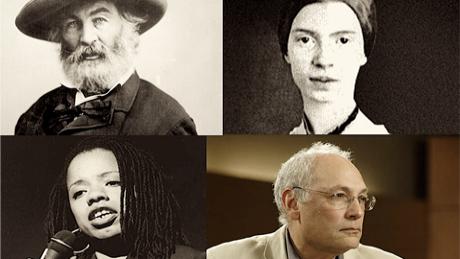
ModPo is a FREE (no fee, no charge) fast-paced introduction to modern and contemporary U.S. poetry, with an emphasis on experimental verse, from Emily Dickinson and Walt Whitman to the present. Participants (who need no prior experience with poetry) will learn how to read poems that are supposedly "difficult." We encounter and discuss the poems one at a time. It's much easier than it seems! Join us and try it!

Jun 14th 2026
5-12 Weeks
Dante tra poesia e scienza (Federica Web Learning) Federica Web Learning
University of Naples Federico II

Dante tra poesia e scienza (Federica Web Learning)

La Commedia di Dante, una delle opere più importanti della letteratura di tutti i tempi, è endiadi di poesia e scienza. Certamente la cultura scientifica di Dante è vasta per i suoi tempi; essa è talmente fusa nel discorso poetico che non disturba l’orecchio e la mente del lettore; essa non è espressione di mera conoscenza, ma rientra sempre nel concetto del poeta di leggere unitariamente il mondo e le sue espressioni; e di sicuro essa è la manifestazione più alta della scienza del Medioevo, frutto di non poche letture di una cultura scientifica non solo europea, ma anche araba, conosciuta attraverso le traduzioni latine delle opere o dalla frequentazione, come appare dalle ultime ipotesi di ricerche, di musulmani residenti in paesi dell’Italia settentrionale.

Mar 6th 2017
5-12 Weeks
So You Think You Know Tango? (Coursera) Coursera
Emory University

So You Think You Know Tango? (Coursera)

How well do you think you know tango? This two-week mini-course is designed for music lovers, musicians, and dancers who are interested in learning more about the Argentine Tango. It will explore the many dimensions of the Argentine Tango music, including its origins, popularization during the Golden Age, dissemination abroad, evolution into an artistic music-dance form, and adoption by Argentine and international art-music composers to date.

Jun 8th 2026
2 Weeks
Poetry and the Holocaust (FutureLearn) FutureLearn
Yad Vashem

Poetry and the Holocaust (FutureLearn)

Explore personal accounts of the Holocaust through poetry and discover how poems can help you understand events of the past. Study Holocaust poetry to better comprehend this dark period in history. On this course, you’ll understand the events of the Holocaust and World War II through poetry which underlines the individual experience.

Available Now
3 Weeks
What Is Poetry? An Introduction to Literary Analysis (FutureLearn) FutureLearn
The University of Newcastle, Australia

What Is Poetry? An Introduction to Literary Analysis (FutureLearn)

Understand the basics of poetry analysis and learn key skills for studying English literature by exploring a variety of texts. Explore, understand and critique poetry. What are the different ways you can understand a poem? How do different elements of a poem work together? What difference does context make to literature?

Jul 19th 2021
3 Weeks
The Great Poems Series: Unbinding Prometheus (OpenLearning) OpenLearning
OpenLearning

The Great Poems Series: Unbinding Prometheus (OpenLearning)

Jean-Jacques Rousseau wrote “Man is born free, but he is everywhere in chains.” Poet Percy Shelley believed words could be stronger than shackles, and wrote poems intended to free mankind from their chains. Some have argued that poetry can do nothing--or as W.H. Auden said, "Poetry makes nothing happen." Yet Henry David Thoreau, Karl Marx, Mahatma Gandhi, Martin Luther King and Nelson Mandela were inspired by Shelley's words to live in the service of freedom and dignity, and they changed the world. The Unbinding Prometheus MOOC investigates both what Shelley's words have meant over time, and what his words might mean for us today.

Self Paced
Self-Paced
Dante (saylor.org) Saylor Academy
Saylor.org

Dante (saylor.org)

Many scholars consider Dante the ultimate Italian poet of his time. He introduced innovative stylistic techniques to the poetic tradition while also drawing from the philosophy, history, and mythology of the ancient world. As we will see in the course, he composed his works in the Italian vernacular, setting an important precedent in the literary world of his time, when most of his contemporaries wrote only in Latin.

Legacy Course
Self-Paced