Palliative Care Always Capstone Course (Coursera)

Offered by Stanford University,
Palliative Care Always Capstone Course (Coursera)

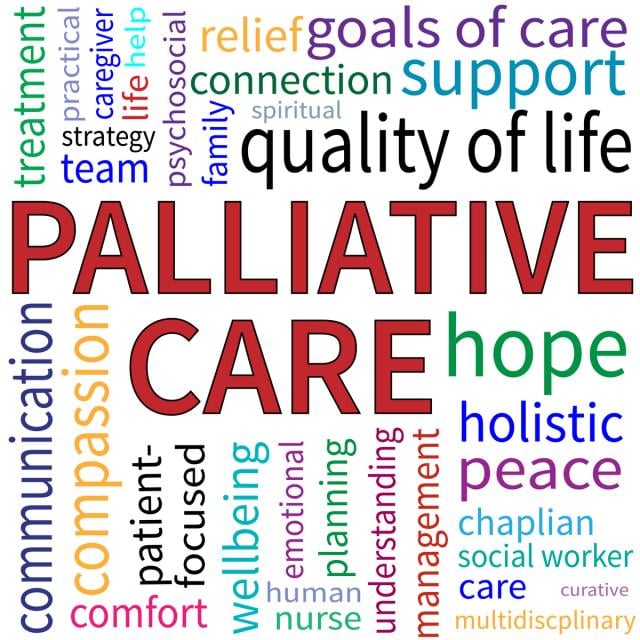
The Palliative Care Always Capstone course is designed to let you test your knowledge about palliative and help others understand the value of palliative care, while showing your creative side. In this course, you will impact community awareness about palliative care, promote self-care and wellness, show-off your communication skills in a virtual environment, and finish the course off by proving your thoughts on ways to offer psychosocial support to a patient and family.

Class Deals by MOOC List - Click here and see Coursera's Active Discounts, Deals, and Promo Codes.

Course 5 of 5 in the Palliative Care Always Specialization.

What You Will Learn

  • Explain the scope of palliative care in comprehensive care for patients and families to a variety of audiences.
  • Outline ways to manage stress and nurture one's physical, emotional and spiritual wellbeing in a care plan.
  • Provide coping mechanisms or other methods to support patients and families.
  • Practice demonstrating empathy and compassion via a virtual or remote communication.

Syllabus

WEEK 1
Course Introduction and Overview
This module will introduce you to the exercises and projects you will be creating over the next four weeks. You will also explore how your opinion of palliative care has changed over the course of this specialization.

WEEK 2
Advocating for Palliative Care
This module focuses on creative ways to help your community, workplace, or family and friends learn what palliative care is, who can benefit, and how.

WEEK 3
Promoting Self-Care and Wellness
In this module, we explore self-care and wellness. You’ve learned about compassion fatigue, burnout and caregiver burden in the previous courses, now it is time to create an action plan.

WEEK 4
Communication Skills
Now we want to get back to basics with communication skills. Covid-19 has dramatically changed the way we interact with patients, family and friends. Many people have appointments now by phone or online. Families and friend often have to support each other remotely. This new way of interacting can make non-verbal communication and demonstrating empathy more difficult. In this module, you will explore virtual ways to “put a hand on another's shoulder to show support”.

WEEK 5
Psychosocial Support for the Patient and Family
This module explores distress – emotional and psychosocial, and coping with that distress.
Final Thoughts
This module recaps the key learnings of the specialization Palliative Care Always.

Go to Class
MOOC List is learner-supported. When you buy through links on our site, we may earn an affiliate commission.

Related Courses

Disease Screening in Public Health (Coursera) Coursera
University of Geneva

Disease Screening in Public Health (Coursera)

Current and future public health is characterized by the increase of chronic and degenerative diseases, corresponding to the worldwide ageing of the population. The increasing prevalence of these conditions together with the long incubation period of the chronic diseases and the restless technological innovations, offer new opportunities to develop strategies for early diagnosis.

Sep 14th 2026
5-12 Weeks
Weight Management: Beyond Balancing Calories (Coursera) Coursera
Emory University

Weight Management: Beyond Balancing Calories (Coursera)

Across the globe, more people are suffering from obesity than at any other time in our history. Why has obesity become so common and so challenging? In this course, we will look at the root cause of obesity, as explained by the latest science. We will see how our food environment has evolved over the last half-century, and how it is altering our biology to over-consume calories and resist sustained weight loss.

Sep 14th 2026
5-12 Weeks
Case Studies in Personalized Medicine (Coursera) Coursera
Vanderbilt University

Case Studies in Personalized Medicine (Coursera)

Learn how advances in biomedicine hold the potential to revolutionize drug development, drug treatments, and disease prevention: where are we now, and what does the future hold? This course will present short primers in genetics and mechanisms underlying variability in drug responses. A series of case studies will be used to illustrate principles of how genetics are being brought to bear on refining diagnoses and on personalizing treatment in rare and common diseases. The ethical and operational issues around how to implement large scale genomic sequencing in clinical practice will be addressed.

Sep 14th 2026
5-12 Weeks
Career 911: Your Future Job in Medicine and Healthcare (Coursera) Coursera
Northwestern University

Career 911: Your Future Job in Medicine and Healthcare (Coursera)

This course aims to help high school students, recent graduates, and those considering career transitions explore health care career options and learn strategies for entry into the health care workforce and health related fields. There are lots of amazing job opportunities in medicine and healthcare! Join us, as we share the strategies and secrets for getting those jobs.

Sep 14th 2026
5-12 Weeks
Biochemical Principles of Energy Metabolism (Coursera) Coursera
Korea Advanced Institute of Science and Technology - KAIST

Biochemical Principles of Energy Metabolism (Coursera)

Everyone knows that energy is essential for sustaining life. How can you define energy in life? Have ever thought about ways of how carbohydrates like glucose from your diet can be used for extracting energy? A scientific field that focuses on energy production and flow though living cells and organisms is called bioenergetics. Energy metabolism covers various biochemical ways of energy transformation and regulatory mechanisms of over thousands chemical reactions. Without fine control of those metabolic processes, cells and organisms cannot maintain activities linked to life.

Sep 14th 2026
5-12 Weeks
Interprofessional Healthcare Informatics (Coursera) Coursera
University of Minnesota

Interprofessional Healthcare Informatics (Coursera)

Interprofessional Healthcare Informatics is a graduate-level, hands-on interactive exploration of real informatics tools and techniques offered by the University of Minnesota and the University of Minnesota's National Center for Interprofessional Practice and Education. We will be incorporating technology-enabled educational innovations to bring the subject matter to life. Over the 10 modules, we will create a vital online learning community and a working healthcare informatics network.

Sep 14th 2026
5-12 Weeks
Evidence-based Toxicology (Coursera) Coursera
Johns Hopkins University

Evidence-based Toxicology (Coursera)

Welcome to the Evidence-based Toxicology (EBT) course. In medicine and healthcare, evidence-based medicine has revolutionized the way that information is evaluated transparently and objectively. Over the past ten years, a movement in North America and Europe has attempted to translate this revolution to the field of toxicology.

Sep 14th 2026
5-12 Weeks
HPV-Associated Oral and Throat Cancer: What You Need to Know (Coursera) Coursera
Icahn School of Medicine at Mount Sinai

HPV-Associated Oral and Throat Cancer: What You Need to Know (Coursera)

This course, offered by the Department of Otolaryngology – Head and Neck Surgery at the Icahn School of Medicine at Mount Sinai, is designed to inform primary care physicians and otolaryngologists (general and head and neck surgeons), as well as medical students, residents, nurses, physician assistants, medical assistants, about HPV-associated oral and throat cancers. It is also applicable to individuals who wish to broaden their knowledge and vernacular about this disease process, especially those who may have been diagnosed with HPV and/or HPV-associated oropharyngeal cancers.

Sep 14th 2026
5-12 Weeks
An Introduction to the U.S. Food System: Perspectives from Public Health (Coursera) Coursera
Johns Hopkins University

An Introduction to the U.S. Food System: Perspectives from Public Health (Coursera)

A food system encompasses the activities, people and resources involved in getting food from field to plate. Along the way, it intersects with aspects of public health, equity and the environment. In this course, we will provide a brief introduction to the U.S. food system and how food production practices and what we choose to eat impacts the world in which we live. Through several case studies, we will discuss some key historical and political factors that have helped shape the current food system and consider alternative approaches from farm to fork.

Sep 14th 2026
5-12 Weeks