Non-Communicable Diseases in Humanitarian Settings (Coursera)

Non-Communicable Diseases in Humanitarian Settings (Coursera)

NCDs are the leading cause of death in almost every region of the world, and place a huge burden on individuals, families and societies. Humanitarian settings have a negative effect on the levels of disease, and the possibility of treatment. The importance of NCDs in global health is acknowledged by their inclusion in the Sustainable Development Goals, which call for a reduction of a third in premature mortality from NCDs by 2030. However, NCDs have until recently received little attention in humanitarian settings, leaving prevention, care and treatment needs largely unaddressed among some of the most vulnerable populations. According to the World Health Organization, 70 percent of global deaths are due to NCDs.

Class Deals by MOOC List - Click here and see Coursera's Active Discounts, Deals, and Promo Codes.

The four main disease groups which cause the greatest number of deaths are cardiovascular disease, cancer, diabetes and chronic obstructive pulmonary disease (including asthma).
The course will provide knowledge about issues and dilemmas that occur around NCDs in humanitarian settings and possible solutions.
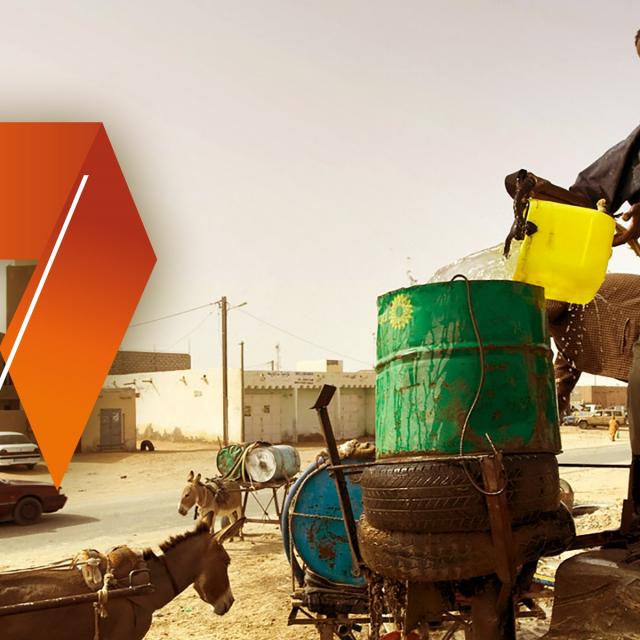
Why are NCDs a problem in humanitarian emergencies or crises? Natural disasters and complex emergencies, including armed conflict, have a negative effect on the levels of disease, and on the possibilities for preventing, treating and caring for people with NCDs. People living with NCDs often need continuous care to avoid disease progression, and disrupted treatment due to natural disaster or emergencies pose a large health challenge. In conflict situations and fragile contexts, the challenge of disrupted care and treatment may be exacerbated – an estimated 65 million people have been forcibly displaced by conflict, displacement lasts longer, and at times health systems and health personnel are deliberately targeted.

Syllabus

WEEK 1
Why is it important?
In module one you will learn about why NCDs have increased in the world as a whole and about why NCDs are a particular problem in humanitarian emergencies or crises. Natural disasters and complex emergencies including armed conflict may have a negative effect, both on the levels of disease, and on the possibilities for preventing, treating or caring for people with NCDs.

WEEK 2
What is being done?
In module two you will learn about some of the basic approaches of humanitarian action and how they might that apply to NCDs. This would include basic concepts, and how they might help or hamper the response to NCDs.

WEEK 3
Challenges and Opportunities
In module three you will learn about prioritization (the classical first priority for health response to save lives, and concentrate on excess mortality and morbidity), the importance of risk analysis (the risk equation), the challenges involved in transition from acute to longer term assistance – from blueprint to contextualizing and building capacity – as well as about longer term budgetary issues.

Go to Class
MOOC List is learner-supported. When you buy through links on our site, we may earn an affiliate commission.

Related Courses

Impacting the Opioid Crisis: Prevention, Education, and Practice for Non-Prescribing Providers (Coursera) Coursera
University of Michigan

Impacting the Opioid Crisis: Prevention, Education, and Practice for Non-Prescribing Providers (Coursera)

This course will empower non-prescribing providers to directly impact the ongoing opioid crisis in the United States through increased knowledge and tools that will transform practice and policies. The course will inform you about the opioid epidemic and provide information and research about evidence-based strategies that are focused on prevention, intervention, education, or policy.

Aug 17th 2026
5-12 Weeks
Business Models for Innovative Care for Older People (Coursera) Coursera
University of Copenhagen,Copenhagen Business School

Business Models for Innovative Care for Older People (Coursera)

This course will introduce you to healthcare innovation within the field of healthy living and active aging. By following two specific cases on diabetes and rehabilitation, this interdisciplinary course will provide you with key theories, tools and concepts for analyzing and developing viable innovative solutions for aging populations. The lectures will cover demographic, biological, economic, social and cultural aspects of active aging and healthy living, along with lectures on current innovation theories and methods.

Aug 17th 2026
5-12 Weeks
Preventing Chronic Pain: A Human Systems Approach (Coursera) Coursera
University of Minnesota

Preventing Chronic Pain: A Human Systems Approach (Coursera)

Chronic pain is at epidemic levels and has become the highest-cost condition in health care. This course uses both creative and experiential learning to better understand chronic pain conditions and how they can be prevented through self-management in our cognitive, behavioral, physical, emotional, spiritual, social, and environmental realms.

Aug 17th 2026
5-12 Weeks
Population Health: Fundamentals of Population Health Management (Coursera) Coursera
Leiden University

Population Health: Fundamentals of Population Health Management (Coursera)

What are the principles of Population Health Management as a pro-active management approach to improve health and to tackle health disparities? In this course we will discuss the basic principles of Population Health Management that will help you as (future) health care professional or policymaker to analyse current healthcare challenges and to design possible solutions using the Population Health Management Approach.

Aug 17th 2026
4 Weeks
Weight Management: Beyond Balancing Calories (Coursera) Coursera
Emory University

Weight Management: Beyond Balancing Calories (Coursera)

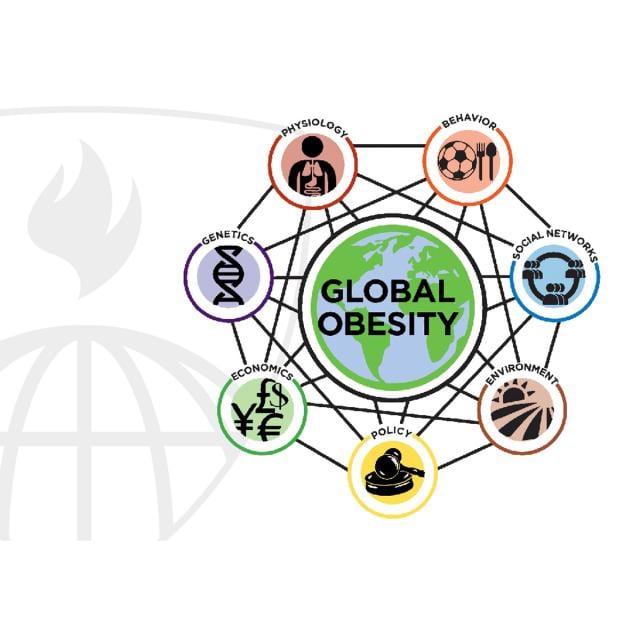
Across the globe, more people are suffering from obesity than at any other time in our history. Why has obesity become so common and so challenging? In this course, we will look at the root cause of obesity, as explained by the latest science. We will see how our food environment has evolved over the last half-century, and how it is altering our biology to over-consume calories and resist sustained weight loss.

Aug 17th 2026
5-12 Weeks
eHealth: More than just an electronic record (Coursera) Coursera
The University of Sydney

eHealth: More than just an electronic record (Coursera)

The MOOC, "eHealth: More than just an electronic record!", is multidisciplinary in nature, and aims to equip the global audience of health clinicians, students, managers, administrators, and researchers to reflect on the overall impact of eHealth on the integration of care. It explores the breadth of technology application, current and emerging trends, and showcases both local and international eHealth practice and research.

Aug 17th 2026
5-12 Weeks
Schizophrenia (Coursera) Coursera
Wesleyan University

Schizophrenia (Coursera)

The main goal of this class are to gain an introductory exposure to the nature of the psychiatric disorder known as schizophrenia as revealed by the scientific method. We will discuss a broad range of findings from the scientific investigation of biological and psychological factors related to schizophrenia and its treatment.

Aug 17th 2026
5-12 Weeks
A Life of Happiness and Fulfillment (Coursera) Coursera
Indian School of Business - ISB

A Life of Happiness and Fulfillment (Coursera)

What are the determinants of a happy and fulfilling life? This is surely one of life’s biggest questions, and a question that has interested many of our ancestors. Buddha famously gave up his kingdom in search of happiness. Several Greek philosophers (from Aristotle to Epicurus and Plato to Socrates) had their own views on what it takes to be happy. And of course, we all have our own theories about happiness too.

Aug 17th 2026
5-12 Weeks
Psychology of Popularity (Coursera) Coursera
University of North Carolina

Psychology of Popularity (Coursera)

The level of popularity you experienced in childhood and adolescence is still affecting you today in ways that you may not even realize. Learn about how psychologists study popularity and how these same concepts can be used in adulthood to be more successful at work, become better parents, and have a happier life.

Aug 17th 2026
5-12 Weeks
Evidence-based Toxicology (Coursera) Coursera
Johns Hopkins University

Evidence-based Toxicology (Coursera)

Welcome to the Evidence-based Toxicology (EBT) course. In medicine and healthcare, evidence-based medicine has revolutionized the way that information is evaluated transparently and objectively. Over the past ten years, a movement in North America and Europe has attempted to translate this revolution to the field of toxicology.

Aug 17th 2026
5-12 Weeks
Epidemics (Coursera) Coursera
University of Hong Kong

Epidemics (Coursera)

“If history is our guide, we can assume that the battle between the intellect and will of the human species and the extraordinary adaptability of microbes will be never-ending.” Despite all the remarkable technological breakthroughs that we have made over the past few decades, the threat from infectious diseases has significantly accelerated. In this course, we will learn why this is the case by looking at the fundamental scientific principles underlying epidemics and the public health actions behind their prevention and control in the 21st century.

Aug 17th 2026
5-12 Weeks